Plant care apps · 12 min read
Planta app alternative — per-plant intelligence vs. a species database
Planta has a beautiful species database and solid reminders, but its advice is generic — calibrated to the species, not your specimen. Here's the honest gap between lookup-based care and a living simulation that learns your plant.
Botanical Legacy · Field notes ·
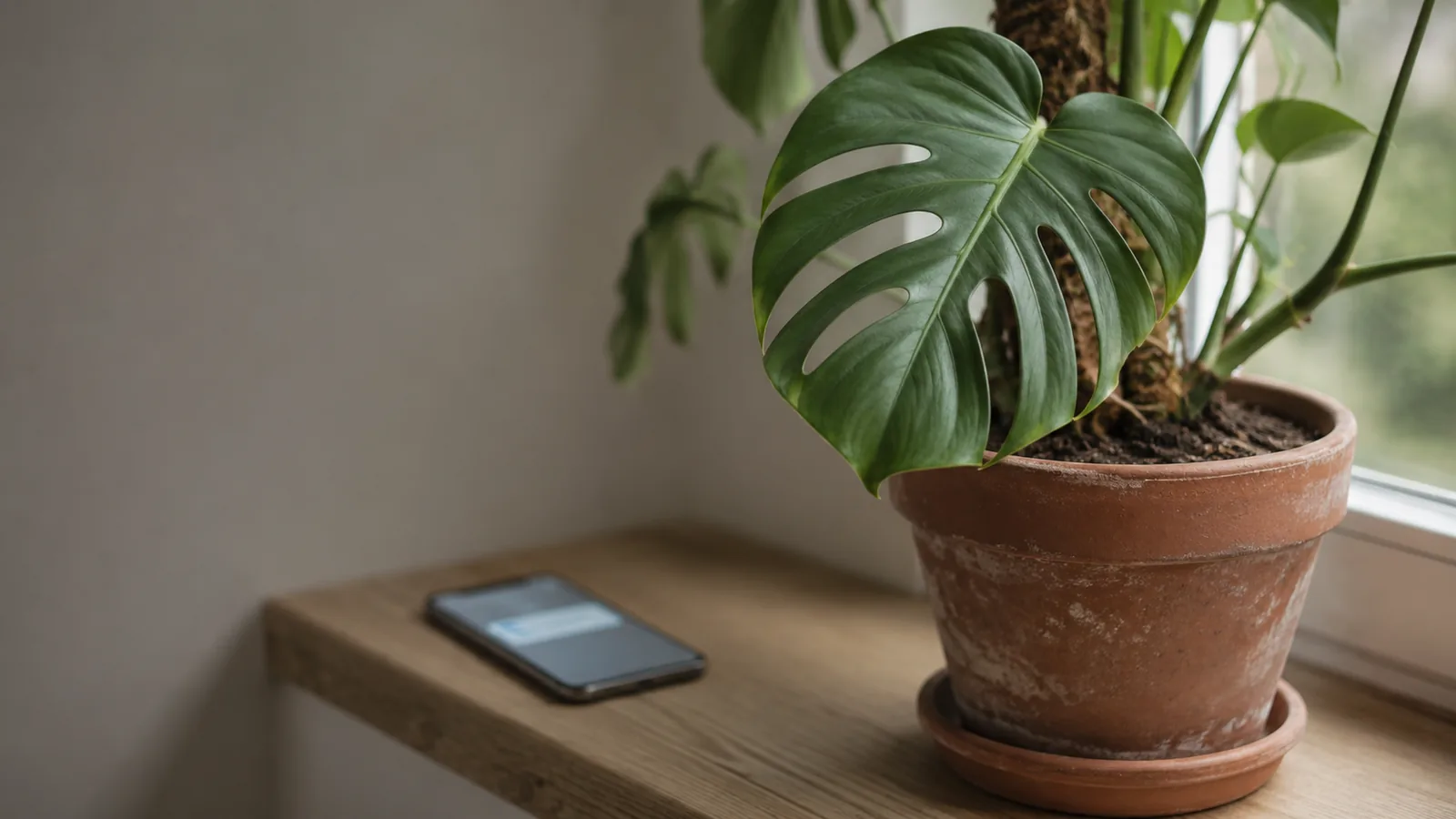
Planta knows everything about Monstera deliciosa. It doesn't know your Monstera — the one in the 6" terracotta pot, in the bright corner, repotted six weeks ago.
Why people are searching for a Planta alternative
Planta is one of the most polished plant care apps on the market. The species database is enormous — 25,000+ entries, with photographs, common names, and care notes for plants most apps have never heard of. The UI is calm. The reminders are reliable. For a lot of plant parents, Planta is the first app that feels both beautiful and useful at the same time, and that's a rare combination.
The "Planta app alternative" search exists not because the product is bad, but because the database-lookup model has a ceiling. Once your collection grows past a handful of well-behaved specimens — once you notice the same species behaves differently in two different rooms, or that your particular Calathea defies whatever the database says about Calatheas — the species card starts feeling less like advice and more like a starting point you have to second-guess.
This piece isn't here to dunk on Planta. If you have a few easygoing houseplants and want a beautifully designed app to remind you when to water them, Planta is excellent. The rest of this post is for readers who've outgrown that — whose plants don't follow the species norm, who keep a parallel notebook because the in-app history is too thin, who want an app that learns this plant, not plants like this.
What Planta does well
Before the gap argument, the credit Planta is owed:
The species database is exceptional. 25,000+ species is a lot, and the coverage of rare cultivars is better than most competitors. If you have an obscure aroid or something from a small specialty nursery, Planta probably already knows what it is. The identification feature builds on the same database.
The visual design sets a bar for the category. Plant care apps tend to be busy — too many tabs, too many badges. Planta feels like a considered product rather than a feature list. That matters when you're checking the app twice a week for years.
The Expert tier is real curation. Planta's premium content includes human-written guides and season-by-season care notes that go beyond the auto-generated species card. For users who want to learn about their plants rather than just be reminded, the editorial layer has genuine value.
Reminders are calm, not nagging. The notification cadence is reasonable, the copy is friendly without being twee, and the schedules from onboarding inputs are sensible defaults.
If those four things cover what you need, stay where you are. The rest of this post is about what happens when they don't.
Three honest tests
Before recommending Botanical Legacy or anything else, here are the three tests we'd apply to any plant care app you're considering as a Planta alternative.
Test 1 — Does the app know your plant, or just its species?
When you tap on a plant in your collection, does the care advice reflect what the app has observed about that specific specimen over time — or is it the same paragraph it would show any other user with the same species? For most database-driven apps the answer is the latter. The Monstera card looks identical whether the plant has been in your sanctuary for two years or arrived last week. A specimen-aware app should tell you something true about your plant a database can't: its actual drinking pattern, its growth rate, the date of its last decline.
Test 2 — When your plant deviates from the species norm, does the app adapt?
Plants are not their averages. A Goeppertia ornata (sold as Calathea ornata) that the database says needs water every 10 days might, in your specific room, need it every 4 — small pot, fast-draining substrate, hot radiator nearby. The test: log a few watering events that diverge from the suggested schedule. Does the next suggestion incorporate what you did, or does it reset to the species default each time?
Test 3 — Can you see why the schedule shifted?
If your watering schedule moves from "every 9 days" to "every 7 days," the app should be able to tell you what changed. A heatwave? A photo that showed early stress? A sensor reading that came in low? An explanation isn't a UX nicety — it's the only way to know whether to trust the recommendation. Apps that present schedules as opaque outputs are asking you to defer to the algorithm without a way to interrogate it.
These are the bars. Anyone — including us — should be measured against them.
The gap that a species database can't close
This is the core argument, and it's worth being precise about it.
A species database is a remarkable artefact. Tens of thousands of plants, each with a care card built from horticultural sources — water frequency, light needs, humidity, soil, temperature. For identification, it's almost magic. For care, it's a useful starting point with a hard ceiling: every card is an average across the species.
No real plant is the average. Two Monsteras in the same apartment can end up on different watering rhythms because of factors the database doesn't see:
- Pot size relative to root ball. A Monstera freshly potted into a too-large container stays wet far longer; the same plant in a snug pot drinks far faster.
- Substrate. A well-draining aroid mix dries out fast. A peat-heavy commercial blend stays wet much longer. Two ZZ plants in the same room with different soil are on different planets.
- Pot material. Terracotta wicks moisture out through its walls; glazed ceramic and plastic hold it in. Same species, same room, two schedules.
- Microclimate. A pot next to a forced-air heating vent dries faster than one two metres away. A windowsill in winter is colder than the room. The species card has no idea where the plant sits.
- Repotting recency, individual physiology. Both compound until the "species average" is off in either direction.
A species database can't close any of this. It's a better starting point than guessing, and it saves you reading three care guides before you buy a plant. But for ongoing care of a plant you already own, the database stops being the right tool somewhere around month three. The schedule it produces is the schedule it produced at onboarding, plus your manual corrections — and your manual corrections are exactly the signal a learning app should be using.
The next layer up isn't a bigger database. It's a model of your plant.
What the Digital Shadow adds
Botanical Legacy is built around a different mental model: every specimen in your sanctuary gets a Digital Shadow — a continuously updated simulation of what's happening inside that specific pot, recalculated every night.
The Shadow knows things a database doesn't:
- The actual time elapsed since the last watering — the real timestamp, not the species default.
- The local weather — your city's temperature, humidity, and forecast feed the depletion model, so a heatwave and a calm week produce different schedules.
- What your last check-in photo showed — Botanical Vision v5 analyses growth, leaf condition, and early stress signals, feeding those observations into the simulation.
- What your soil sensors are reading — Home Assistant–connected probes anchor the Shadow against real measurements instead of modelled estimates.
- Per-plant learning over time — if your particular Calathea consistently goes longer or shorter between waterings than the species average, the Shadow's depletion factor tunes to your specimen.
The schedule isn't a number you set at onboarding. It's an output the model produces each night, with reasons behind it you can read. When watering day shifts, you can see why.
This is what specimen-level intelligence means in practice. Not a bigger database. A real-time model of the plant you own.
Pricing comparison
For completeness, the headline numbers:
- Planta — free tier with limits on plant count and features; the paid tier runs roughly $17.99–$47.99 a year depending on region and promotion, or about $7.99–$9.99 month-to-month; an Expert tier adds curated editorial content. Pricing varies by region and store, so check what yours shows before comparing.
- Botanical Legacy — Observer free forever for up to 5 specimens, including the nightly Digital Shadow, reminders, propagation tools, full data export, and 3 photo reads a month to identify or diagnose. Cultivator €6.99/month or €49.99/year (≈€4.17/month annual) for 50 specimens, 120 photo reads a month, the full Digital Shadow, weather, sensor integration, and smart watering. Conservancy €14.99/month for larger collections. Every new account starts with a 14-day Cultivator trial.
Both apps have a free tier worth using. The choice isn't really about price — it's about what the app is doing for your plants.
Who should stay on Planta
This is the section most "alternative" posts skip, and that's why most of them feel dishonest. So:
Stay on Planta if you have a small collection of well-behaved species — a few pothos, a snake plant, a peace lily — and what you want from the app is a beautifully designed reminder layer plus a reliable species reference. Planta does that as well as anyone.
Stay on Planta if breadth of species coverage is your priority, especially for rare cultivars and obscure plants. Our catalogue is growing but smaller; if identification of unusual specimens is core to your use case, that gap may matter.
Stay on Planta if the editorial Expert content is the value you're paying for. We don't compete on long-form curated species writing. Our editorial work is on the blog, not inside the app's species cards.
The choice between Planta and Botanical Legacy isn't a binary "one is better." It's a question of what you want the app to be doing on your behalf. Lookup, or simulation. Both are valid product categories. The switching cost should be zero in either direction, or it's not a fair comparison.
If you're a Planta user thinking about switching
The same database-vs-simulation tension shows up in our Greg app alternative comparison (from the reminder-vs-intelligence angle), our PlantIn alternative comparison (from the pricing-model-trust angle), and our PictureThis alternative comparison (from the identification-vs-care angle). Different apps, same axis. For all five major apps laid out in one place, see our best plant care app comparison for 2026.
Practical notes if you decide to try us:
No direct import from Planta. Planta doesn't expose a public export format we can read. The realistic path is to re-add your plants manually — for a typical five-to-twenty plant collection, that takes 20–30 minutes. Photo histories don't transfer; export anything you care about before you walk away.
Start on the free Observer plan. Five plants, no payment, no trial that converts. Pick your most-watched plants and a couple of harder cases — anything that's been stubborn under Planta's schedule. Run them in parallel with Planta for two or three weeks. If the Digital Shadow earns its keep on the divergent plants, the 14-day Cultivator trial unlocks the full simulation, weather, and sensor integration.
Your data is portable from day one on any plan, free included. If we don't earn the upgrade, you walk away with everything.
FAQ
Is Planta free?
Yes — Planta has a free tier with limits on plant count and features. The paid tier unlocks the full app and runs roughly $17.99–$47.99 a year depending on region and promotion (about $7.99–$9.99 month-to-month), and the Expert tier adds curated editorial content above that. Pricing varies by region and platform store.
What's the difference between Planta and Botanical Legacy?
Planta is built around a 25,000+ species database — your plant gets matched to a species card with generic care advice, and the schedule is derived from that card plus your onboarding inputs. Botanical Legacy is built around a Digital Shadow — a per-specimen simulation that runs nightly, learns from your photos and sensor readings, and adjusts to local weather. The difference is species-level lookup vs. specimen-level intelligence. Both work; they're optimising for different things.
Can Botanical Legacy import data from Planta?
No direct import — Planta doesn't expose a public data format we can read. The realistic path is to re-add your plants manually, which takes most users 20–30 minutes for a typical collection. Once the Digital Shadow starts running on each specimen, the per-plant schedules tune themselves as the model learns from your care actions, photos, and (if connected) sensors.
Does Botanical Legacy have a species database?
Yes, but it's not our headline feature. We recognise thousands of species, focused on what most home growers keep. Planta's catalogue is larger in raw count, especially for rare cultivars. If breadth of identification coverage is core to your use case, that gap matters; if ongoing care precision for the plants you already own matters more, the specimen-level model is the bigger differentiator.
What is a Digital Shadow in plant care?
A Digital Shadow is a continuously updated simulation of what's happening inside a specific pot — virtual soil moisture, projected next-care dates, health trajectory, growth tracking. It runs nightly for every specimen on your account, anchored against your photos, your care history, your local weather, and (when available) your soil sensors. Read the full Digital Shadow explainer for the mechanics.
Is Botanical Legacy better than Planta for sensor integration?
Yes — Planta doesn't integrate with soil moisture sensors. Botanical Legacy ingests readings from any Home Assistant–connected probe (Miflora-class devices and similar), and the readings anchor the Digital Shadow's moisture model directly. Native sensor integrations for standalone probes are on our roadmap; today the path is via Home Assistant. The practical setup is documented in how to wire a soil sensor to your houseplants.
The shortest version
Planta is a beautifully designed species database with a reminder layer on top. Botanical Legacy is a specimen-level simulation. If species lookup plus reliable reminders covers what you need, Planta is excellent. If you've noticed the species card and your actual plant don't quite agree — and your manual corrections are doing the work the app should be — that's the signal.
Try the free Observer plan on your five most-watched plants. Run it alongside Planta for a few weeks. If the per-specimen approach earns its keep, you'll know within a season.
Botanical Legacy, May 2026. Botanical Legacy and Planta are independent products; feature descriptions and pricing reflect the public state of each at the time of writing. The free Observer plan, the 14-day Cultivator trial, and full data export are part of every account.
Sources
The plant-care facts on this page were checked against these references.
- Missouri Botanical Garden: plantfinder.mobot.org/PlantFinderDetails.aspx
- NC State Extension: plants.ces.ncsu.edu/plants/goeppertia-ornata
- RHS: rhs.org.uk/prevention-protection/overpotting
- CSU Extension: planttalk.colostate.edu/topics/houseplants/1315-houseplants-con…
- UConn Extension: homegarden.cahnr.uconn.edu/factsheets/potting-media
- RHS: rhs.org.uk/plants/types/houseplants/growing-guide
- UW-Madison Extension: chippewa.extension.wisc.edu/2025/11/19/winter-care-of-houseplan…
- UMD Extension: extension.umd.edu/resource/temperature-and-humidity-indoor-plan…