Species care guide
Anthurium
Anthurium andraeanum
Anthurium care for consistent bloom: why the waxy spathe is a modified leaf not a flower, how much light it needs to keep producing them, and the overwatering pattern that rots its roots.

- Light
- Bright indirect light without direct sun — direct sun scorches the glossy leaves; a bright east- or west-facing window is ideal
- Water
- When the top few centimetres of soil are dry, less often in winter; sensitive to overwatering, which causes yellow leaves and root rot
- Humidity
- 60–80% preferred; dry air browns the leaf edges; a bathroom with good light or a humidifier is ideal
- Temperature
- 18–28°C; no cold drafts; keep it above about 15°C in winter, as 10°C or lower can damage or kill it
- Pets & toxicity
- Toxic to cats, dogs, and humans — the same calcium oxalate crystals as peace lilies cause oral burning; wear gloves when handling the sap
- Difficulty
- Moderate; consistent bloom depends on getting the light right; the plant should not be left to dry out, and is very sensitive to overwatering
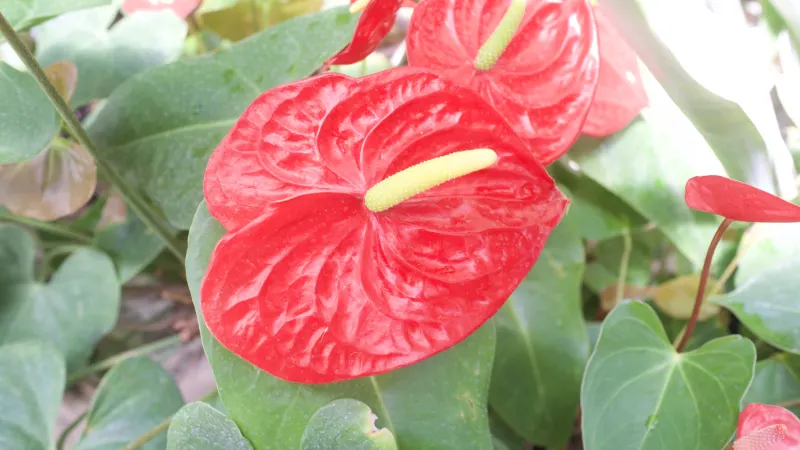
An anthurium holds a lacquered heart of colour above its leaves for weeks at a time - a bloom that is barely a flower, kept coming by good light.
The plant that flowers almost without stopping
Many potted flowering plants, such as chrysanthemums and poinsettias, give you a single show and then a long green wait. An anthurium does something different: in the right conditions it produces its waxy, heart-shaped blooms throughout the year, each one lasting for several weeks, so that a healthy plant is rarely without colour. That near-perpetual bloom, in vivid reds, pinks, oranges, and whites, is what makes the anthurium one of the most rewarding flowering plants you can keep indoors — provided you give it what it needs to keep producing.
It comes from the warm, humid rainforests of Colombia and Ecuador, where it grows in the dappled light beneath the canopy, often perched on other plants with its roots in the open air. That origin sets its whole care: it wants bright but filtered light, high humidity, steady warmth, and a coarse, airy, free-draining root run that never stays soggy. When the blooms stop coming, the usual answer is too little light, or a plant that has gone unfed.
It belongs to the same family as the peace lily, and shares both its signature flower structure and its chemistry: like the peace lily and the heartleaf philodendron, every part of an anthurium contains calcium oxalate crystals that irritate and burn if chewed, so it is toxic to cats, dogs, and people, and worth keeping out of reach.
The spathe and spadix: what you are really looking at
The "flower" of an anthurium is not a flower, and understanding that changes how you read the plant. The broad, glossy, heart-shaped sheet of colour — the part everyone calls the bloom — is a modified leaf called a spathe, a single waxy bract that has taken on a vivid colour. The actual flowers are tiny and crowd the finger-like spike rising from the centre, the spadix. It is the same architecture as the peace lily's white sail and central finger, just lacquered and brightly coloured.
This matters because it explains the anthurium's most prized quality: its blooms last. A single anthurium spathe stays vivid for several weeks, and a well-kept plant flowers several times a year, so it is rarely bare. When the plant is happy, the spathes keep coming; the rate at which it produces them is a direct readout of how well its conditions suit it.
So a flowering anthurium is not having a special moment — it is simply healthy. And a plant that has stopped flowering is not sulking; it is telling you that its light or its feeding has dropped below what continuous bloom requires. The blooms are the gauge, and learning to read them is most of anthurium care.
Light: the bloom depends on it
The bloom-light connection is the heart of anthurium care. These plants flower freely only in good light, within the band they can tolerate - and the band is specific. They want bright, indirect light: enough intensity to fuel continuous flowering, but filtered, never direct. Get that right and the spathes keep coming. Get it wrong in either direction and the plant tells you.
Too little light is a common reason an anthurium stops blooming. In a dim spot the plant survives and keeps making leaves, but it produces few spathes or none - there is not enough light to fund them. People often misread this as the plant needing more water, when what it usually needs is to move closer to a bright window. If your anthurium has gone all-leaf and no-flower, light is the first thing to change.
Too much direct sun is the opposite error and just as damaging. Direct rays through glass bleach the glossy leaves and scorch them into dry, tan patches. The sweet spot is a bright east- or west-facing window, or a south-facing one shaded by a net curtain or thin blind: plenty of light, none of it landing directly on the plant. Bright and filtered is the whole instruction, and it is the difference between a plant that flowers all year and one that does neither well.
Watering and the yellow-leaf read
Overwatering is a common way to lose an anthurium, and it is an easy mistake to make, because the signs of a drowning plant are easily read as thirst. Soggy compost rots the roots, and the visible signs are yellowing leaves and sometimes wilting, which look, to most people, exactly like a plant that is thirsty. So they water again, and the overwatered plant gets more of precisely what is harming it.
Break the cycle by watering on the soil, not the symptom. Water when the top few centimetres of soil are dry, soak thoroughly, drain completely, and empty the saucer - more often in summer and less in winter, but always governed by the soil rather than the date. The plant's coarse rainforest roots want air as much as water, and a pot that stays wet suffocates them. Feel the soil before every watering: dry in the top few centimetres is the cue, and damp means wait. If you are still learning to read a plant's thirst by the soil rather than the leaves, the beginner's guide to houseplant care walks through the finger test that prevents exactly this mistake.
This is where a per-specimen model earns its keep, because the yellow-leaf trap is fundamentally a problem of not knowing the soil's real state. A Digital Shadow — the running model Botanical Legacy keeps for each Specimen in your sanctuary — draws the moisture estimate down on the real light, warmth, and season your plant is living through, and holds off the next watering until the soil has genuinely dried. For a plant whose distress signal is so easily mistaken for thirst, a model that answers not yet when the soil is still damp is the thing that stops a well-meant watering from finishing the job.
Humidity
Humidity matters too. The plant comes from rainforest air thick with moisture, and in the dry air of a centrally heated home it browns at the leaf edges. The target is 60–80% - well above what most rooms naturally hold in winter - and meeting it pays off in cleaner foliage.
The practical ways to raise it are the familiar ones. A bright bathroom or kitchen, where everyday moisture lifts the ambient humidity, suits an anthurium well, provided the light is good. A humidifier running nearby is the most reliable method. A pebble tray under the pot and grouping the plant with other humidity-lovers — a calathea makes a natural companion, wanting the same moist air — both help at the margins. Misting is largely cosmetic and too brief to matter much on its own.
Read the brown leaf tips correctly. When an anthurium's tips go brown and crispy while the soil is properly moist, the likely cause is dry air, not underwatering, and the fix is humidity, not more frequent watering. Pour more water onto a plant that is browning from dry air and you risk rotting the roots while the tips keep browning anyway. The tips are an air signal; the soil is a water signal; keep them separate in your reading.
Common problems
No flowers. Most often insufficient light. The plant has enough to make leaves but not enough to fund spathes. Move it to a brighter spot with bright indirect light. A hungry plant overdue for feeding can also flower less.
Yellow leaves. Usually overwatering or poor drainage, sometimes a lack of nutrients. Check the soil; if it is staying wet, stop watering, improve drainage, and let it dry. Yellow leaves on damp soil mean roots in trouble, not thirst.
Brown, crispy leaf tips. Low humidity or cold draughts, sometimes salt build-up from overfeeding or hard water. Raise the humidity, keep the plant warm and clear of drafts, and flush the pot occasionally. Do not respond by watering more.
Frequently asked questions
How do you get an anthurium to bloom?
Give it bright indirect light - without enough of it, an anthurium will not flower. An anthurium in too dim a spot stops producing spathes and makes only leaves, so move it nearer a bright window without direct sun. Pair good light with humidity above 60%, steady warmth, careful watering, and regular feeding through the growing season, and a healthy anthurium blooms almost year-round.
Why are my anthurium leaves turning yellow?
Most often overwatering. Yellow leaves are a common sign of a pot kept too wet - and they are easily mistaken for thirst, which leads to more watering and more harm. Check the soil: if it is staying wet, stop watering, improve drainage, and let it dry. Poor drainage and a lack of nutrients can also yellow the leaves.
How often should you water an anthurium?
When the top few centimetres of soil are dry - more often in summer and less in winter, governed by the soil rather than the calendar. Soak thoroughly, drain completely, and empty the saucer; the coarse roots want air as well as water and suffocate in a soggy pot. Always feel the soil first, because the plant's distress signal looks deceptively like thirst.
Why is my anthurium not flowering?
Most often, too little light. The plant needs bright indirect light to fund its blooms, and in a dim spot it makes leaves instead of spathes. Move it closer to a bright window without direct sun. A plant overdue for a feed can also flower less, so check that once the light is right.
Is an anthurium toxic to pets?
Yes. Like its relatives the peace lily and dieffenbachia, every part of an anthurium contains calcium oxalate crystals that cause burning and swelling of the mouth, tongue and lips if chewed, making it toxic to cats, dogs, and people. Keep it out of reach of pets and children, wear gloves when handling the sap, and seek veterinary or medical advice if any part is ingested.
Start your sanctuary
Botanical Legacy's free Observer plan covers up to five Specimens, each with its own continuously running Digital Shadow — and an anthurium, whose overwatering distress so easily reads as thirst, is exactly the kind of plant the model protects from a well-meant extra drink. Every new account also includes a 14-day trial of Cultivator, the paid plan, which adds the local weather feed and soil sensor support.
START YOUR SANCTUARY — FIVE FREE SPECIMENS, NO PAYMENT REQUIRED →
Give an anthurium bright filtered light and humid air, water it only when the soil has dried, and it will keep a heart of colour above its leaves for most of the year.
Sources
The plant-care facts on this page were checked against these references.
- NC State Extension: plants.ces.ncsu.edu/plants/anthurium-andraeanum
- Missouri Botanical Garden: plantfinder.mobot.org/PlantFinderDetails.aspx
- RHS: rhs.org.uk/plants/anthuriums/how-to-grow-anthuriums
- UF/IFAS: edis.ifas.ufl.edu/publication/EP159
- UF/IFAS (aroid breeding): edis.ifas.ufl.edu/publication/EP366
- RHS: rhs.org.uk/plants/anthuriums
- RHS: rhs.org.uk/plants/types/houseplants/how-to-help-a-poorly-housep…
- UMD Extension: extension.umd.edu/resource/watering-indoor-plants
- Penn State Extension: extension.psu.edu/humidity-and-houseplants
- NC State Extension (calathea): plants.ces.ncsu.edu/plants/goeppertia
- ASPCA: aspca.org/pet-care/aspca-poison-control/toxic-and-non-toxic-pla…
- ASPCA (peace lily): aspca.org/pet-care/aspca-poison-control/toxic-and-non-toxic-pla…
- ASPCA (heartleaf philodendron): aspca.org/pet-care/aspca-poison-control/toxic-and-non-toxic-pla…
- ASPCA (dieffenbachia): aspca.org/pet-care/aspca-poison-control/toxic-and-non-toxic-pla…