Species care guide
Calathea
Calathea spp. (Goeppertia)
An honest calathea care guide for a genuinely fussy plant — why the edges go crispy, why the leaves curl, the humidity and water quality it really needs, and the prayer-plant movement that reads its health.

- Light
- Medium, indirect light — never direct sun, which fades the markings; too little dulls them too
- Water
- Keep evenly moist, never soggy or bone-dry; water when the top 1–2 cm just dries, with filtered or rainwater
- Humidity
- High — 60%+ is the make-or-break factor; dry air is the single biggest cause of crispy edges
- Temperature
- 18–27°C; keep it above 15°C and well away from draughts and radiators
- Pets & toxicity
- Non-toxic and pet-safe — one of the few statement-foliage plants safe around cats and dogs
- Difficulty
- Demanding — the fussiest plant in this collection; mostly undone by dry air and hard water
A calathea is the most beautiful way to discover that your tap water, your dry air, and your draughty windowsill were problems all along.
The Instagram plant with a temper
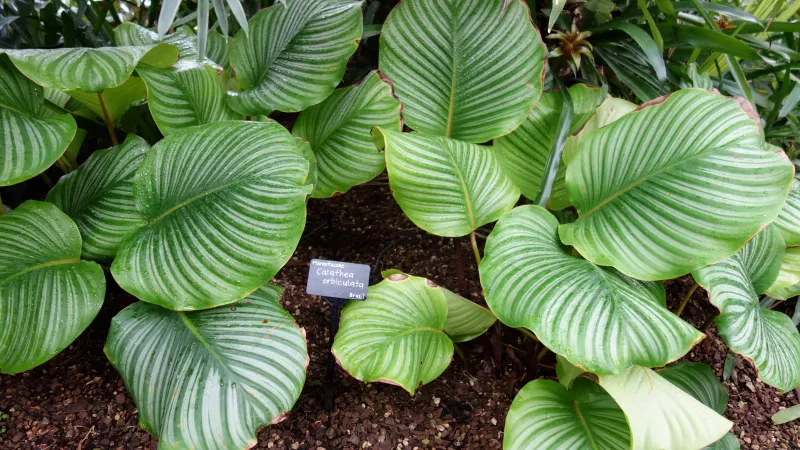
Almost nobody buys a calathea for its temperament. They buy it for the leaves — the painted feathers of a rattlesnake, the brushstroke ovals of an orbifolia, the rose-pink undersides that glow when the light comes through. It is one of the most photographed plants in the house, sold hard as living décor, and the marketing rarely mentions the part where it crisps at the edges, curls its leaves, and sulks if any one of three conditions slips. This is the honest guide the label skipped: the calathea is genuinely demanding, and most of the suffering comes from three fixable causes you may not know you have.
Set expectations correctly and the plant becomes manageable rather than maddening. It is not unkillable like a pothos, not patient like a snake plant; it is a rainforest-floor specialist asking you to recreate a slice of the rainforest floor. Get its water quality, its humidity, and its light into the right range and it rewards you with some of the most striking foliage you can grow indoors — and, unlike most statement plants, it does it without poisoning your pets. If you're newer to reading plants, how to read plant health signs pairs well with this guide, because a calathea communicates constantly, in its edges and its posture.
Light, and why the patterns fade
The plants we call calatheas — many now reclassified into the genus Goeppertia, though the trade still calls them Calathea — grow on the shaded floor of the Brazilian Amazon, beneath a canopy that filters the sun to a soft, even green light long before it reaches them. They never evolved to meet direct sun, and indoors it shows immediately: a few hours of unfiltered light bleach the markings pale and scorch crisp patches into the leaves. The vivid pattern that sold you the plant is, in effect, sun-shy pigment.
But the opposite error is just as real. In a genuinely dim corner a calathea doesn't scorch — it dulls. The contrast washes out, new leaves come in muted, and growth slows toward a halt. The sweet spot is medium, indirect light: a position a little back from a bright window, or right beside an east- or north-facing one, where the light is generous but never lands directly on the leaves. Get the light right and the patterns stay saturated; that vividness is itself a readout that the placement is correct.
How often to water a calathea
A calathea breaks the usual houseplant rule. Where a pothos or philodendron wants a full dry-down between drinks, a calathea wants to stay evenly moist — never soggy, but never bone-dry either. The window is narrower, which is part of why the plant has its reputation. Water when the top 1–2 cm of soil just begin to dry to a finger; you are topping up moisture, not waiting for the pot to run out. Let it dry out completely and the leaves curl and crisp; keep it waterlogged and the roots rot. The target is a steady dampness in between.
The bigger watering issue, though, isn't when — it's what. Calatheas are unusually sensitive to the chemistry of tap water. The chlorine, fluoride, and dissolved salts in hard supplies accumulate in the leaves and burn the margins brown, and no amount of careful timing fixes a water-quality problem. Use filtered water, rainwater, or distilled; if you must use tap, let it stand overnight to off-gas the chlorine, though that won't remove fluoride. This single change resolves more "mystery" brown edges than any other adjustment.
Because the moist-not-wet window is narrow and the plant punishes both edges of it, a calathea is exactly the kind of plant a per-pot model helps with. Botanical Legacy keeps a Digital Shadow of each Specimen in your Sanctuary — a running estimate of how much moisture is left in that pot, drawn down on the warmth and light it's living in — so you can top up before it dries to the curling point rather than after. It can't soften your water for you, but it can keep you on the right side of the line. The general method is in when to water your houseplants; the calathea simply asks you to aim for the wetter half of it.
Humidity — the condition that decides everything
If you remember one thing about calatheas, remember this: humidity is not a nicety for this plant, it is the deciding condition. On the Amazon floor it lives in air that rarely drops below 60–70%, and in the parched air of a centrally heated room — often nearer 30% in winter — its leaf edges dry faster than the plant can supply them, and they brown and crisp from the margin inward. More calatheas are ruined by dry air than by any watering mistake.
The reliable fix is a humidifier, run near the plant to hold the local air at 60% or above. The half-measures help only at the margins: grouping plants together raises the humidity in their shared pocket of air, and a wide tray of pebbles and water under the pot adds a little more. Misting, the remedy everyone reaches for first, does almost nothing useful — the bump lasts minutes, and water sitting on the leaves can encourage fungal spots. If you cannot or won't run a humidifier, a calathea is an honest plant to skip; it will not thrive in dry air, and no other kindness compensates. A glass cabinet or a naturally humid bathroom with decent light is the calathea's happiest home.
Temperature rides alongside humidity. Keep the room between 18 and 27°C and above 15°C at night, and protect the plant from the two local extremes that the thermostat never shows: cold draughts spilling from doors and windows, and the hot, drying blast of a nearby radiator. Either will crisp and curl a calathea quickly.
Soil and potting
A calathea wants a mix that holds moisture without going airless — the same balancing act its watering needs imply. A peat-free houseplant compost lightened with perlite, with a little coir or fine bark to retain even dampness, hits the mark: moisture-retentive enough that it never swings bone-dry between waterings, open enough that the roots still get air. A dense, compacted mix stays wet at the core and rots the roots; a gritty, fast-draining cactus-style mix dries past the plant's tolerance and crisps it.
The pot needs a drainage hole — a calathea's taste for even moisture makes a sealed pot a fast route to rot, since you cannot let excess water escape. Plastic and glazed ceramic suit this plant better than bare terracotta, because they hold the steady moisture it likes rather than wicking it away. If you use a decorative cachepot without a hole, keep the plant in a plastic nursery pot inside it and lift it out to water and drain.
Repot every year or two in spring, moving up a single pot size. Beyond making room for roots, repotting refreshes the mix and clears the fertiliser salts and hard-water minerals that accumulate over a year and scorch the leaf margins — for a calathea, that periodic reset is part of the cure for brown edges, not just a growth measure.
Feeding
A calathea is a light feeder with a low tolerance for fertiliser salts — and since salt buildup is one of the things that browns its edges, over-feeding actively works against the look you're trying to keep. Through spring and summer, while it's growing, feed monthly at a quarter to half the label strength, no more. From autumn, stop almost entirely; a plant slowed by the shorter days can't use the food, and the surplus just adds to the salt load that crisps the margins. Flushing the pot occasionally with plain soft water — letting it run through freely and drain — clears accumulated salts and is worth doing a few times a year.
Common problems
A calathea is expressive, which is a gift once you learn to read it: most of its troubles announce themselves in the edges and the posture of the leaves, and most trace back to the same short list of causes.
Brown, crispy edges. The defining calathea complaint, and almost always a combination of low humidity and hard or chlorinated water, with fertiliser-salt buildup a frequent third. Work the causes in order: raise the humidity to 60%+, switch to filtered or rainwater, and ease off the feeding while flushing the pot. Trim the crisp edges to tidy the leaf if you like, but understand you're treating the symptom — the next leaf stays clean only if the conditions change.
Curling or rolling leaves. A calathea curls its leaves inward to conserve moisture when it's stressed — usually too dry at the roots, too dry in the air, or both, and sometimes too much direct light. Leaves that curl by day and relax overnight are telling you the daytime conditions are too harsh. Check the soil first (it should be lightly moist), then the humidity, then the light. Persistent curling is the plant rationing water it isn't getting.
Fading or washed-out patterns. Markings going pale and contrast draining away is usually too much light — direct sun bleaches calathea pigment — or, less often, too little, which dulls rather than bleaches. Move it to bright but fully indirect light and judge by the new leaves, which come in correctly coloured once the placement is right.
Yellowing leaves. Scattered yellowing with persistently wet, heavy soil points to overwatering and the start of root trouble — back off and let the top of the mix dry slightly more between drinks. A single oldest leaf yellowing and dying back while the rest looks well is ordinary ageing.
Spider mites. The calathea's signature pest, and a near-certainty in dry air — fine webbing in the leaf joints and a faint pale stippling across the surface. They thrive in exactly the low humidity that already stresses the plant, so raising humidity both prevents and helps treat them. Rinse the leaves, wipe both sides, and use insecticidal soap or diluted neem if they persist; check the undersides, where they live.
Leaves not moving. Calatheas raise their leaves at night and lower them by day — the "prayer plant" movement, driven by a small hinge at the base of each leaf. Healthy plants do it visibly; a plant that stops moving, or freezes with its leaves stuck upright, is usually telling you it's thirsty or the air is too dry. The movement is a built-in health gauge — watch it.
Frequently asked questions
How often should you water a calathea?
Water when the top 1–2 cm of soil just begins to dry — a calathea wants to stay evenly moist, never soggy and never bone-dry, which is a narrower window than most houseplants. Just as important is the water itself: use filtered, distilled, or rainwater, because the chlorine, fluoride, and salts in hard tap water are a leading cause of brown, crispy edges. In a warm room with good humidity that often lands around twice a week, but read the soil rather than the calendar.
Why does my calathea have brown crispy edges?
Almost always a mix of dry air and hard or chlorinated tap water, often with fertiliser-salt buildup added in. Calatheas come from humid rainforest floors and need 60%+ humidity; in dry household air the leaf edges dry faster than the plant can supply them and crisp from the margin in. Raise the humidity with a humidifier, switch to filtered or rainwater, and lighten the feeding while flushing the pot occasionally. Existing brown edges won't recover — you're protecting the next leaves.
Why are my calathea leaves curling?
Curling is how a calathea conserves moisture under stress — usually too dry at the roots, too dry in the air, or too much direct light. Check that the soil is lightly moist (not bone-dry), that humidity is at 60% or above, and that the plant is out of direct sun. Leaves that curl during the day and relax at night are pointing at the daytime conditions. Steady moisture and humid air uncurl most calatheas within days.
Are calatheas safe for cats and dogs?
Yes — calatheas (and the closely related prayer plants) are non-toxic to cats and dogs, one of the few statement-foliage plants you can keep safely around pets. A curious nibble may cause mild stomach upset as any plant matter can, but they carry none of the calcium-oxalate toxicity of a pothos, philodendron, or peace lily. This pet-safety is genuinely the calathea's standout practical virtue.
Do I really need a humidifier for a calathea?
For most homes, yes. Humidity is the single condition a calathea won't compromise on, and ordinary heated indoor air — often around 30% in winter — is far below the 60%+ it needs. Grouping plants and a pebble tray help a little; misting barely helps at all. A small humidifier near the plant is the one reliable fix. If running one isn't realistic, a humid, well-lit bathroom or a glass cabinet works — and if none of those is possible, a calathea is an honest plant to admire and skip.
Can Botanical Legacy help me keep a fussy calathea alive?
It helps with the timing, which is half the battle. Each Specimen carries a Digital Shadow that estimates the moisture left in its pot and prompts you before it dries to the curling point — useful for a plant with such a narrow moist-not-wet window. What it can't do is soften your water or humidify your air, which are the calathea's two hardest demands, so treat the app as the scheduler and yourself as the climate. Logged photos also fold leaf condition into the plant's model over time, helping you see whether a change you made is working.
Start your sanctuary
Botanical Legacy's free Observer plan covers up to five Specimens, each with its own continuously running Digital Shadow. A calathea is a more demanding first plant than most — but if you have the humidity for it, few plants reward attention so vividly, and none of this collection is safer around pets. Every new account also includes a 14-day trial of Cultivator, the paid plan, which adds the local weather feed and soil sensor support that make a fussy plant's conditions legible.
The leaves were never the hard part. The water, the air, and the light were — and once those are right, the calathea simply gets on with being beautiful.
START YOUR SANCTUARY — FIVE FREE SPECIMENS, NO PAYMENT REQUIRED →
A calathea doesn't ask for much — only that your tap water, your air, and your light all happen to suit a rainforest floor.