Species care guide
Croton
Codiaeum variegatum
Croton care for a plant that rewards effort with spectacular foliage: why it needs bright light with some direct sun to hold its colour, how to handle the leaf drop after a move, and the humidity it genuinely requires.

- Light
- Bright light with some direct sun, but out of full summer sun through glass; the vivid reds, oranges, and yellows depend on it, and in too little light the leaves revert toward green
- Water
- When the top centimetre or two of soil is dry, and consistently; soil left too dry or too wet for long spells makes it drop leaves
- Humidity
- High, roughly 40–80%; dry air causes brown crispy leaf edges, leaf drop and spider mite outbreaks; a humidifier near the plant is the most effective intervention
- Temperature
- 18–27°C; keep it above 15°C and away from cold draughts and sudden temperature swings, which cause leaf drop
- Pets & toxicity
- Toxic to cats and dogs; mildly irritating to humans — the latex sap causes skin irritation and is toxic if ingested; wear gloves when pruning
- Difficulty
- Challenging; it has very specific requirements for light, humidity, and temperature stability — beautiful when they are met, punishing when they are not
A croton paints itself in fire — reds, oranges, and golds laid over green — but only for a guardian who gives it the light, warmth, and steadiness it refuses to do without.
The most demanding beauty on the shelf
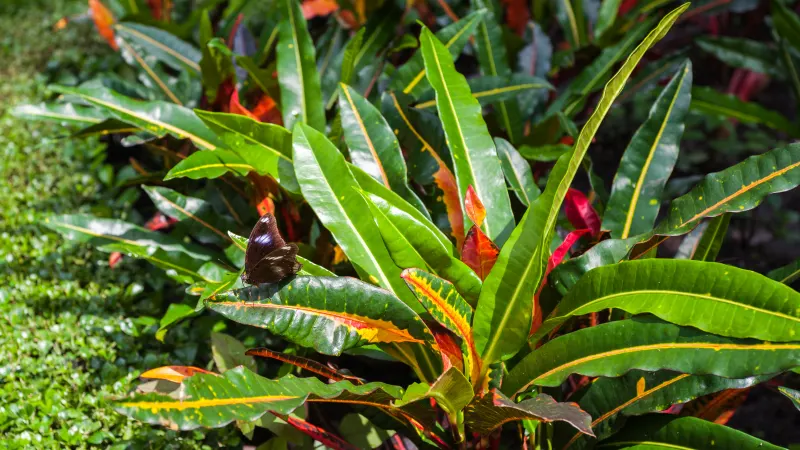
A croton is grown for its colour: thick, leathery leaves splashed and veined in red, orange, yellow, burgundy, and green, often several of those colours on a single leaf, in patterns that look painted on. And it is willing to make you work for it. The croton is genuinely demanding, and it does not hide its displeasure — it drops leaves dramatically, browns at the edges, and fades to green when its needs are not met.
It is native to Malaysia, the Pacific islands and northern Australia, and as a tropical plant it wants warmth, bright light and humid air. Every one of its difficulties indoors traces back to that origin: it wants more light than many rooms offer, more humidity than a heated room provides, and a stability of temperature that a draughty windowsill does not give. Meet those three and a croton is spectacular; miss any of them and it soon tells you.
This is not a beginner's plant, and it is honest to say so. If you want the colour without the commitment, a rubber plant gives you bold, glossy foliage with far more tolerance, and a heartleaf philodendron gives you easy green for almost no effort. A croton is for the guardian who wants the fireworks and will give the plant what it asks for in return.
Light and colour: the non-negotiable requirement
The single fact that governs croton care is that its colour depends on light. Bright light brings out the reds, oranges, and yellows; in too little light the leaves revert toward green. A croton in insufficient light does not merely grow more slowly. It loses the very thing you grow it for.
So give it the brightest light in the house, with some direct sun, but keep it out of full summer sun through glass, which can scorch the leaves and leave them grey and dull. In good light the colours stay vivid. Move the same plant into medium or low light and the new growth emerges greener, the existing colours dull, and the plant may drop its lower leaves until a fiery croton has faded to a muted, mostly-green shadow of itself. The fade is gradual, which is the trap - by the time you notice, the low light has already done it.
There is no real substitute for brightness here. Even the cultivars chosen to hold their colour indoors, such as 'Petra', eventually lose some of it without enough light. If your brightest window is genuinely dim, this may not be the plant for that room — and that is worth knowing before you buy, rather than after the colour drains away.
The move problem: leaf drop is not failure
Crotons are known for one alarming behaviour: they can drop leaves, sometimes many of them, when their circumstances change quickly. Bring one home from the nursery and it may shed leaves. Move an established plant from one spot to another and it can do the same. To a new owner this looks like the plant dying, and the instinct is to intervene — more water, more attention, a panic of corrections that usually makes things worse.
The reassurance is that this is a shock response, not necessarily a sign the plant is dying. A croton is sensitive to changes in light, humidity, and temperature, and a sudden move - even the gentle one from a humid nursery greenhouse to your drier living room - can shock it into dropping leaves. The leaves it sheds are spent; what matters is whether the growing tips keep producing.
The right response is patience and stillness. Put the plant in its final bright spot the first time, and then leave it there. Resist moving it again to "find a better place," because each move restarts the shock. Hold the conditions steady — consistent watering, steady warmth, decent humidity — and resist the urge to overwater a plant that looks stressed, because a soggy pot adds root trouble to the adjustment. In time, new leaves push from the tips; they often emerge green and colour up as they mature, provided the light is right. The plant that looked like it was dying is often simply settling in.
Watering and consistency
A croton wants steady, even moisture, and the operative word is steady. Water when the top centimetre or two of soil is dry, soak thoroughly, and drain completely - but the goal is consistency, not a fixed schedule. What a croton handles badly is the swing: bone-dry for a week, then suddenly soaked, then dry again. Soil left too dry or too wet for long spells makes it drop leaves, so an erratic rhythm delivers both stresses in turn. Keep the soil in a narrow band — lightly moist, never waterlogged, never fully parched — and the plant holds its leaves.
That makes the croton a plant where knowing the soil's real state matters more than usual, and where guessing leads straight to the swings it punishes. A moisture sensor pushed into the root zone takes the guesswork out entirely — the post on moisture sensors for houseplants explains how a live reading replaces the finger test for plants this sensitive to inconsistency. Pair that with a humidifier and you have removed the two variables a croton is fussiest about.
This is exactly the consistency a per-specimen model is built to hold. A generic "water weekly" reminder knows nothing about whether your pot is in the narrow band a croton wants today, but a Digital Shadow — the running model Botanical Legacy keeps for each Specimen in your sanctuary — draws the moisture estimate down on the real light, warmth, and season your plant is living through, and flags the drink when the soil reaches the point this plant prefers rather than when the calendar says so. For a plant that drops its leaves over an inconsistent watering rhythm, a model that keeps the moisture steady is doing the one thing that prevents the drama.
Humidity: the second binding constraint
After light, humidity is what a croton will not do without. It comes from a tropical climate where the air is heavy with moisture, and in the dry air of a centrally heated home it suffers in two specific, predictable ways. The first is brown, crispy leaf edges and tips — the visible sign of moisture stress, often mistaken for underwatering. The second is spider mites, the tiny pests that thrive in warm dry air and find a stressed croton an easy target; fine webbing on the leaf undersides and a faint stippling on top are the tell.
The target is roughly 40–80% humidity, which is far above what most heated rooms hold in winter. Misting is too transient to matter on its own, because the extra moisture evaporates within minutes, and a pebble tray raises the local humidity modestly. The genuinely effective intervention is a humidifier running near the plant, which helps it hold its leaves through the dry months of winter heating. Grouping the croton with other humidity-loving plants also helps, as their combined transpiration lifts the air around them.
Read the brown edges correctly. When a croton's leaf margins go crispy and brown while the soil is properly moist, the cause is dry air, not thirst, and watering more will not fix it — it may rot the roots while the edges keep browning. The answer is humidity. And because dry air invites spider mites, raising the humidity solves two problems at once: it eases the moisture stress and makes conditions less favourable for the pests.
Common problems
Leaf drop after moving. A shock response to a change in light, humidity, or temperature. Settle it in its final bright spot, hold the conditions steady, and wait for new growth rather than intervening.
Persistent leaf drop with yellowing. Beyond the settling-in period, ongoing leaf loss points to cold drafts, overwatering, or root rot. Check for a chilly draught, feel the soil, and rule out a soggy pot — sustained drop is a signal that one of the plant's needs is genuinely unmet.
Brown, crispy leaf edges. Low humidity, most often. Raise it with a humidifier; do not respond by watering more. Salt build-up from hard water or excess feed can contribute, so flush the pot occasionally.
Faded, washed-out colour. Usually insufficient light: the plant is not getting the intensity it needs for its warm colours. Move it to your brightest spot with some direct sun, and new growth will colour up as it matures. If it already sits in full sun through glass, too much light can also fade and dull the leaves.
Spider mites. Fine webbing and stippling, driven by dry air. Rinse the plant, raise the humidity, and treat persistent infestations — and recognise them as a signal that the air is too dry for the plant.
Frequently asked questions
Why is my croton dropping leaves?
Often because it was recently moved. Crotons are sensitive to changes in light, humidity, and temperature, and a sudden move - even from the nursery to your home - can shock the plant into dropping leaves. Settle it in its final bright spot, keep the conditions steady, and let new growth follow. Persistent drop beyond that points to cold drafts, soil kept too wet or too dry, or low humidity.
How much light does a croton need?
A lot - your brightest spot, with some direct sun, but out of full summer sun through glass, which can scorch. A croton's red, orange, and yellow colour depends on bright light, so in medium or low light the foliage fades toward plain green. There is no real substitute for genuine brightness.
Why is my croton losing its colour?
Usually not enough light. A croton's fiery colour depends on bright light, and in a dim spot the leaves gradually revert toward plain green. Move it to your brightest spot with some direct sun, and new leaves will colour up as they mature. Too much harsh sun through glass can also fade the leaves, so the brightest spot should still be out of full summer sun.
How often should you water a croton?
When the top centimetre or two of soil is dry, aiming for steady, even moisture rather than a fixed schedule. The key is consistency - crotons drop leaves when the soil stays too dry or too wet for long spells. Keep the soil lightly moist but never waterlogged, drain fully after each drink, and pair the steady watering with high humidity for the best results.
What humidity does a croton need?
High - roughly 40–80%, well above what most heated homes provide in winter. In drier air the leaf edges go brown and crispy, leaves may drop, and spider mites become likely. A humidifier running near the plant is the most effective way to meet the need; pebble trays and grouping with other plants help modestly. Brown crispy edges on a well-watered croton mean dry air, not thirst.
Start your sanctuary
Botanical Legacy's free Observer plan covers up to five Specimens, each with its own continuously running Digital Shadow — and a croton, which drops its leaves over an inconsistent watering rhythm, is exactly the kind of plant a steady per-specimen model keeps calm. Every new account also includes a 14-day trial of Cultivator, the paid plan, which adds the local weather feed and soil sensor support.
START YOUR SANCTUARY — FIVE FREE SPECIMENS, NO PAYMENT REQUIRED →
A croton asks for bright sun, steady warmth, and humid air — give it all three and hold them constant, and it will burn brighter than anything else in the room.
Sources
The plant-care facts on this page were checked against these references.
- NC State Extension: plants.ces.ncsu.edu/plants/codiaeum-variegatum
- Missouri Botanical Garden: plantfinder.mobot.org/PlantFinderDetails.aspx
- Wisconsin Extension: hort.extension.wisc.edu/articles/croton-codiaeum-variegatum
- RHS: rhs.org.uk/plants/codiaeum/growing-guide
- RHS houseplant problems: rhs.org.uk/plants/types/houseplants/how-to-help-a-poorly-housep…
- Penn State Extension: extension.psu.edu/humidity-and-houseplants
- Missouri Botanical Garden (rubber plant): plantfinder.mobot.org/PlantFinderDetails.aspx
- NC State Extension (heartleaf philodendron): plants.ces.ncsu.edu/plants/philodendron-hederaceum
- Colorado State Extension: planttalk.colostate.edu/topics/houseplants/1346-croton-codiaeum…
- UF/IFAS: gardeningsolutions.ifas.ufl.edu/plants/ornamentals/crotons
- UMD Extension: extension.umd.edu/resource/watering-indoor-plants
- RHS red spider mite: rhs.org.uk/biodiversity/glasshouse-red-spider-mite
- Iowa State Extension: yardandgarden.extension.iastate.edu/faq/why-does-my-houseplant-…
- Toxicity of House Plants to Pet Animals (Toxins, 2023): pmc.ncbi.nlm.nih.gov/articles/PMC10220692