Species care guide
English ivy
Hedera helix
English ivy care indoors: why it struggles in warm dry rooms but thrives in cool bright ones, the spider-mite problem that follows dry air, and how to keep a vigorous vine contained.

- Light
- Bright indirect light; tolerates moderate shade; variegated cultivars need more light to hold their markings; avoid harsh direct afternoon sun
- Water
- Keep the soil evenly moist but not waterlogged — check every 3–5 days; allow the surface to dry slightly between waterings; do not let it dry completely
- Humidity
- 50–70%; dry heated air below 40% is the primary trigger for spider mite outbreaks and brown crispy tips — ivy prefers cool humid conditions
- Temperature
- 10–21°C; cooler than most tropical houseplants; performs poorly in warm rooms above 24°C and loves a cool bathroom or unheated hallway
- Pets & toxicity
- Toxic to cats, dogs, and humans if ingested; the sap also causes contact dermatitis in some people — wear gloves when pruning
- Difficulty
- Moderate; the cool-humid requirement conflicts with most centrally heated homes; spider mites are a persistent challenge in warm dry rooms
English ivy carries the cool green of a hedgerow indoors — vigorous, ancient, and quietly insistent that the room be cooler and damper than most homes care to be.
A hedgerow plant in a centrally heated room
English ivy is one of the most recognisable plants in the temperate world — the dark, lobed, evergreen vine that climbs garden walls, drapes woodland trees, and turns up in a hundred trailing cultivars on indoor shelves. As a houseplant it is genuinely beautiful, fast-growing, and available in a paintbox of leaf shapes and variegations. But it carries a quiet conflict that most guides skip past: it is a cool-climate plant, and most homes are warm. Understand that one tension and the whole of indoor ivy care makes sense.
It is native to the woodlands and hedgerows of temperate Europe, where it grows in cool, often shaded, reliably humid conditions, climbing toward the light through air that rarely gets hot or bone-dry. That is the environment it is built for, and it is almost the opposite of a centrally heated living room — warm, dry, and stable in a way ivy finds difficult. An ivy in the wrong indoor microclimate does not fail dramatically; it declines slowly, growing weakly, dropping leaves, and — almost inevitably — attracting spider mites. None of that is a care failure on your part. It is the plant telling you the room is too warm and too dry.
The good news is that the fix is placement, not fuss. Put English ivy somewhere cool, bright, and humid, and it becomes the easy, vigorous trailer of its reputation — closer in temperament to forgiving vines like pothos and the heartleaf philodendron than its difficult reputation suggests. The difficulty is entirely about matching it to the right spot.
Why warm rooms are wrong for ivy
The most important thing to get right with English ivy is temperature, and it runs against the grain of almost all houseplant advice. Most popular indoor plants are tropical and want warmth; ivy is temperate and wants cool. Its comfortable band is roughly 10–21°C, several degrees below what most living rooms sit at, and above about 24°C it begins to struggle. A warm, dry, centrally heated room is not a neutral environment for ivy — it is an actively stressful one.
In that warmth and dryness the plant weakens in a recognisable sequence: growth slows and thins, the older leaves yellow and drop, the plant looks tired, and spider mites — which thrive precisely in warm dry air — move in and accelerate the decline. Owners often respond by watering more or feeding, which does nothing, because the problem is not water or nutrients. The problem is the microclimate. The single most effective thing you can do for a struggling indoor ivy is move it somewhere cooler.
Fortunately, the cool spots in a home are real and usable. An unheated hallway, a cool bedroom, a bright bathroom that does not bake, a porch or stairwell away from radiators, a windowsill in a room you keep cool — these are where ivy thrives. It is one of the few houseplants you should deliberately keep out of the warmest, cosiest room. Think of it as a plant for the edges of the heated house, not its centre, and most of its problems never start.
Light
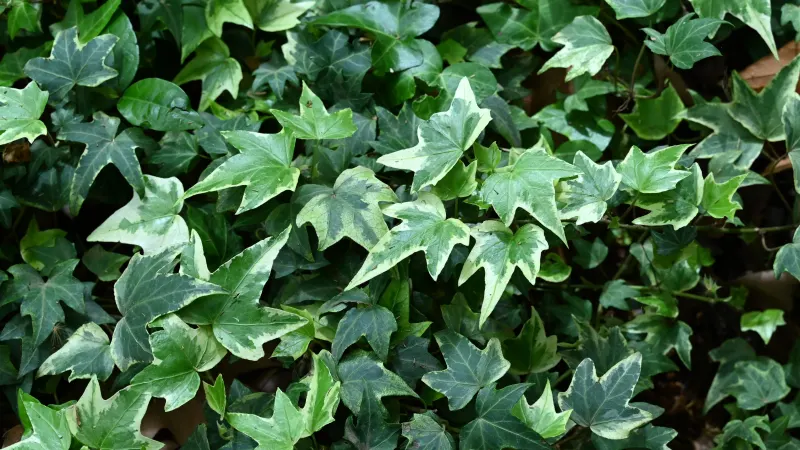
English ivy is more shade-tolerant than most trailing plants, which gives you some flexibility in placement, but the detail depends on the cultivar. Plain green ivies take moderate shade well and grow happily in bright indirect light without direct sun. Variegated cultivars — the cream-splashed 'Glacier', the gold-marked 'Goldheart', and the many other patterned forms — need noticeably more light to hold their markings; in too dim a spot, their variegation fades back toward plain green as the leaf produces more chlorophyll to compensate.
So match the light to the leaf. A green ivy is content in a cool, bright-but-indirect corner, even one that is fairly shaded. A variegated one wants a brighter position to keep its pattern, though still out of harsh direct sun. The one excess to avoid across all of them is hot, direct afternoon light through glass, which scorches the leaves into dry brown patches — the same shade-adapted thinness that lets ivy tolerate low light makes it intolerant of fierce direct sun.
Aim, then, for bright but filtered light in a cool spot — the combination that suits the plant's woodland origins. Light bright enough to keep variegated forms patterned, cool enough to keep the plant comfortable, and indirect enough not to burn it. Turn the pot occasionally so the vine grows evenly rather than leaning hard toward the window.
Watering: even moisture, never bone dry
English ivy waters differently from most popular houseplants, and the difference trips people up. The succulents and tropical aroids that fill most plant guides want a dry-out period between waterings — but ivy does not. It comes from cool, damp woodland soil and wants to stay evenly, consistently moist, never fully parched. Let an ivy dry out completely and it crisps and drops leaves quickly; the margin for drought that a pothos shrugs off, ivy does not have.
The rule, then, is to keep the soil lightly and evenly moist — water when the surface has just dried, roughly every three to five days, before the soil dries deeper down. But "evenly moist" is not "wet": ivy still rots in a waterlogged pot like any plant, so a free-draining mix and a thorough drain after each watering are essential. The target is a narrow band — damp but not soggy, never bone dry — and holding the plant in that band is what keeps it healthy. If reading soil moisture by feel is new to you, the beginner's guide to houseplant care covers the surface-test that suits a plant like this.
That narrow, consistent band is exactly what a per-specimen model is good at holding. A fixed schedule cannot know whether your pot has reached the just-dried-surface point ivy wants today, but a Digital Shadow — the running model Botanical Legacy keeps for each Specimen in your sanctuary — draws the moisture estimate down on the real light, warmth, and humidity your plant is living through, and prompts the next drink before the soil dries out too far rather than after a fixed number of days. For a plant that wants neither drought nor sogginess but a steady damp in between, a model tracking the actual moisture curve keeps ivy in the band it likes.
Spider mites: the defining indoor problem
If you grow English ivy indoors for any length of time, you will eventually meet spider mites, because warm dry air is their ideal habitat and a stressed indoor ivy is their favourite host. They are the single most common reason indoor ivies decline, and recognising them early is the whole battle. The mites are tiny — barely visible specks — and live on the undersides of the leaves, where they pierce the cells and feed. The first signs are a fine, faint stippling or speckling on the upper leaf surface and, as the colony grows, delicate webbing strung between the leaves and stems.
The defence is inspection and humidity. Check the leaf undersides every week, especially through winter when heating dries the air most, and act at the very first sign rather than waiting — a small colony is far easier to clear than an established one. Rinsing the whole plant under a tap or shower physically dislodges the mites and disrupts their webbing; raising the humidity makes the environment less hospitable to them; and persistent infestations may need an insecticidal soap or horticultural oil, applied to the undersides where the mites live.
But the deeper point is that recurring spider mites are a signal, not just a pest. Mites keep coming back to a warm, dry, stressed ivy because the conditions invite them. If you find yourself fighting the same infestation again and again, the most effective treatment is not another spray — it is moving the plant somewhere cooler and more humid, where the mites struggle and the ivy thrives. Treat the environment and the pest problem largely solves itself.
Pruning and training
In conditions it likes, English ivy is vigorous to the point of exuberance, and a little pruning keeps it looking its best. Left unchecked, the vines grow long and the lower stems go bare, so the plant ends up as a few long, sparse runners rather than a full, leafy cascade. The remedy is simple: trim the long runners back to a leaf node — the point where a leaf joins the stem — and the plant branches from there, growing fuller and bushier rather than longer and thinner. Prune whenever it starts to look leggy; ivy takes it well and responds with denser growth.
Nothing needs to be wasted. English ivy is one of the easiest plants to propagate — the trimmings root readily. Stand a cutting with a few leaves in a glass of water and roots appear within a couple of weeks, or push the cuttings straight into moist mix. It is the same root-anywhere ease that makes vines like the arrowhead plant so generous, and it means a single plant quickly becomes several, or a fuller pot if you tuck the rooted cuttings back in around the parent.
The vigour comes with a caution worth repeating: ivy is toxic if eaten, to people and pets alike, and the sap causes a contact rash in some people. Wear gloves when you prune or handle cut stems, keep the trimmings away from curious pets, and wash your hands afterwards. The plant is lovely and easy in the right spot — it simply is not one to chew on.
Frequently asked questions
Why does my English ivy keep getting spider mites?
Because warm, dry air is exactly what spider mites need, and most heated homes provide it. A stressed indoor ivy in a warm dry room is their ideal host, so they return again and again. Inspect the leaf undersides weekly and treat early by rinsing the plant and raising the humidity — but the lasting fix is to move the ivy somewhere cooler and more humid, where the mites struggle and the plant stops being an easy target.
How often should you water English ivy?
Keep the soil evenly moist — water when the surface has just dried, roughly every three to five days, before it dries deeper down. Unlike succulents or tropical aroids, ivy does not want to dry out fully between waterings, but it still rots in a soggy pot, so drain completely each time. The target is a steady damp, never bone dry and never waterlogged.
Why is my English ivy dying or dropping leaves?
Most often the room is too warm and too dry. English ivy is a cool-climate plant that struggles above about 24°C, and in warm dry air it weakens, drops leaves, and attracts spider mites. Move it somewhere cooler and more humid — a hallway, a bright bathroom, or a spot away from radiators — and keep the soil evenly moist. Letting it dry out completely also crisps and drops leaves.
How much light does English ivy need?
Bright indirect light, though it tolerates moderate shade better than most trailing plants. Plain green cultivars take lower light well; variegated ones need brighter conditions to keep their cream or gold markings, which fade toward green in too dim a spot. Keep all of them out of harsh direct afternoon sun, which scorches the leaves.
What temperature and humidity does English ivy like?
It prefers cool conditions — roughly 10–21°C, several degrees below most living rooms — and humidity of 50–70%. It is genuinely a plant for the cooler, more humid corners of a home: an unheated hallway, a bright bathroom, a porch. Warm dry air is the root of most indoor ivy problems, so matching it to a cool, humid spot is the most important thing you can do for it.
Start your sanctuary
Botanical Legacy's free Observer plan covers up to five Specimens, each with its own continuously running Digital Shadow — and English ivy, which wants a steady damp it neither dries out of nor drowns in, is exactly the kind of plant a per-specimen model keeps in its narrow band. Every new account also includes a 14-day trial of Cultivator, the paid plan, which adds the local weather feed and soil sensor support.
START YOUR SANCTUARY — FIVE FREE SPECIMENS, NO PAYMENT REQUIRED →
Find English ivy a cool, bright, humid corner and keep its soil evenly damp — and the difficult plant becomes the vigorous one, spilling green over the edge of its pot.