Species care guide
ZZ plant
Zamioculcas zamiifolia
The ZZ plant stores weeks of water in an underground rhizome. How to water by trigger instead of calendar, read yellowing stalks, and find the light it grows in.
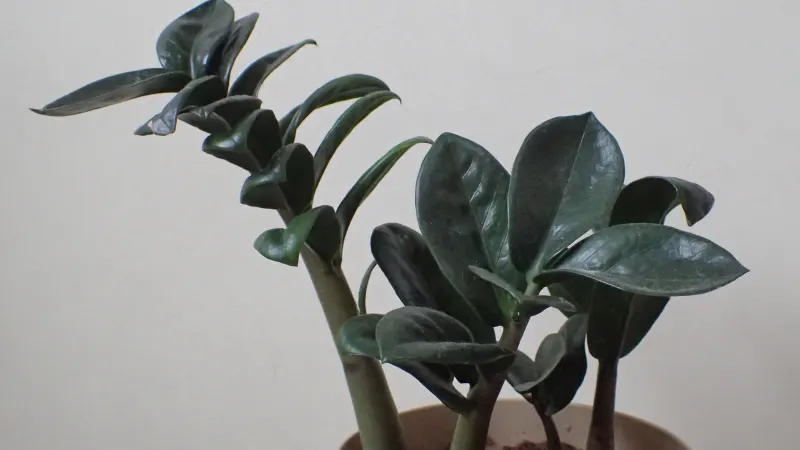

- Light
- Bright, indirect light for steady growth; tolerates deep shade at a near standstill. No harsh midday sun.
- Water
- Only when the soil is dry all the way through — typically every 3–8 weeks. The rhizome stores the rest.
- Humidity
- Indifferent — anything from 30% to 60% household humidity is fine. No misting required.
- Temperature
- 18–26°C ideal; keep above 15°C where possible. Tolerates brief dips toward 10°C.
- Pets & toxicity
- Toxic to cats and dogs; sap mildly irritates human skin (insoluble calcium oxalates).
- Difficulty
- Among the most forgiving houseplants there are — overwatering is the only reliable way to kill one.
The most important organ a ZZ plant owns is one you will never see: a fist of water-storing rhizome under the soil, quietly running its own watering schedule.
Light: the dark-corner reputation is survival, not preference
"Thrives in low light" follows the ZZ plant through every shop label and listicle, and it is half-true in exactly the way that gets plants neglected. Zamioculcas zamiifolia is the only species in its genus — an aroid from the seasonally dry woodlands of eastern Africa, from Kenya down through Tanzania to the northeast of South Africa, where it grows in broken shade beneath trees that shed their leaves in the dry season. It evolved for shifting, dappled light and long stretches without rain, and that history sets both ends of its indoor range.
At the dim end, a ZZ plant in a dark corner survives — for months, for years — but at a near standstill. It holds the glossy leaves it already has and produces almost nothing new. Like the snake plant, its neighbour in the "impossible to kill" aisle, it tolerates gloom by waiting it out, not by enjoying it. Survival and growth are different settings, and the shop label only promised the first one.
At the bright end, harsh direct sun is the one light it cannot take. A few hours in the path of unfiltered midday summer sun, especially behind glass, will bleach the leaflets pale and scorch them into dry, papery patches. The lacquered shine that makes a ZZ plant look almost artificial is built for bright shade, and it burns in full sun.
The spot where it grows — rather than merely persists — is bright and indirect: within a metre or two of a window, with gentle morning sun at most. Give it that and the difference shows within a season: new spears arrive more often, the stalks stand taller, the green runs deeper. Give it the dark corner and it will forgive you; it just will not do much. And if the whole plant slowly leans toward the window, that is its vote on the matter — rotate the pot a quarter turn each month and consider a brighter position.
How often to water a ZZ plant: the rhizome already holds the answer
Press a finger into the pot of an established ZZ plant and just below the surface you will meet something firm and rounded, like a buried potato. That is the rhizome — a swollen underground stem built to store water — and it is the whole story of how this plant wants to be treated. What look like stems above the soil are not stems at all: each glossy, arching stalk is a single compound leaf, pinnate like a feather, rising directly from the rhizome with a slightly swollen base holding reserves of its own.
In its native range, rain arrives in seasons with months of drought between them. The rhizome is the adaptation: it fills while water is available, then meters it out through the dry months while the waxy leaflets sit sealed against evaporation. The specimen on your shelf is still running that program. At any given moment, your ZZ plant is already partly watered — by itself.
This is why a watering schedule is the wrong instrument here. Water weekly — a rhythm that suits a pothos — and you are pouring water into a system whose tank is already full. The rhizome sits in permanently damp soil it has no use for, and it rots. Rhizome rot from overwatering is, for practical purposes, the only way ZZ plants die indoors. Nobody kills this plant with neglect; they kill it with attention.
So the trigger is not a date. It is the soil. Water only when the mix has dried all the way through the pot — not merely dusty on top, but dry at depth, which you can confirm by lifting the pot: a dry pot is conspicuously light. In practice the interval lands somewhere between three weeks for a plant in a warm, bright summer spot and eight weeks for one in a cool, dim winter — numbers that feel negligent and are not. When you do water, water thoroughly, until it runs from the drainage hole, then let the pot drain and empty the saucer. Then put the can away. The fuller method for reading that trigger — on this plant and everything else in your sanctuary — is in when to water houseplants.
If "three to eight weeks" sounds too wide to act on, that is because the right number is specific to your plant — its pot, its light, this month's temperatures — and it moves through the year. That is the gap a per-specimen model closes: Botanical Legacy's Digital Shadow keeps a running estimate of how much moisture is left in that particular pot, draws it down on the conditions your specimen is living in, and stays quiet through the weeks — sometimes months — when the honest answer is not yet. For a plant whose greatest danger is an owner holding a watering can and a guilty conscience, a model that mostly tells you to do nothing is the correct model.
Soil and potting
Everything in the watering section assumes the soil cooperates. A standard peat-heavy potting compost on its own holds moisture for days after watering — precisely the condition the rhizome cannot live with. Cut it with drainage: a cactus mix straight from the bag works well, or ordinary potting soil blended with roughly a third perlite, coarse sand, or fine bark. The goal is a mix that water passes through quickly and air returns to promptly, so the rhizome dries between drinks instead of sitting in a damp sponge.
A drainage hole is non-negotiable; a ZZ plant in a sealed cachepot with water pooling at the bottom is on a countdown. Terracotta is an ally here rather than a liability — the porous walls wick moisture out and shorten the wet period after each watering, which suits this species exactly.
Repotting announces itself with unusual force. Rhizomes expand as they store, and a root-bound ZZ plant will visibly bulge the walls of a plastic nursery pot — sometimes crack them outright. That, along with rhizomes shouldering up above the soil line or water racing straight through the pot, is the signal. Move up a single size — two or three centimetres wider, no more — every two to three years, in spring if you can. An oversized pot surrounds the rhizome with wet soil nothing is drinking from, which recreates the rot conditions you have been avoiding. Rhizomes sitting close to the surface, partly visible, are normal; do not bury them deeper.
Humidity and temperature
This is the shortest section in the guide because the plant barely has an opinion. Anything from roughly 30 to 60 per cent relative humidity — the band almost every home occupies year-round — is fine. The sealed, waxy leaflets are built to keep moisture in, so the dry air of a heated winter flat, which crisps the edges of thirstier rainforest species, passes a ZZ plant by. No misting, no pebble tray, no humidifier. It is one less thing to manage.
Temperature asks slightly more. The comfortable band is 18 to 26°C — an ordinary room — and the plant prefers to stay above 15°C. It tolerates brief dips toward 10°C without lasting harm, but cold is where caution pays, because cold and wet together are the dangerous combination: chilled soil dries slowly, and slow drying is rot's opening. In winter, keep the pot away from draughty doors and off cold single-glazed windowsills, and let the watering interval stretch toward its long end. A cool, dry ZZ plant is resting; a cool, wet one is in trouble.
Feeding
A plant built for drought is usually also built for thin soil, and the ZZ plant is a genuinely light feeder. A balanced houseplant fertiliser at half the strength on the label, once or twice across spring and summer, covers it. Skipping a year does little visible harm. Through autumn and winter, feed nothing — the plant is barely metabolising and cannot use what you give it.
Over-feeding shows up before under-feeding does: brown leaf tips and a crusty white residue on the soil surface mean salts are accumulating in the pot more quickly than the plant's slow metabolism can clear them. Flush the pot through with plain water, let it drain fully, and resume with more restraint. A ZZ plant that is not growing almost never needs food. It needs more light, or it is simply being a ZZ plant — more on that below.
Common problems
Most ZZ plant problems sort into two piles: too much water, and no problem at all. The skill is telling which pile you are looking at before acting.
Yellowing stalks and leaflets. The most common complaint and the most serious. Treat yellowing as overwatering until proven otherwise — especially when whole stalks yellow from the base, the soil is still damp days after watering, and the pot feels heavy. That pattern means rhizome rot is underway, and the confirmation is in your hands: slide the plant out and look. A healthy rhizome is firm and pale; a rotting one is brown, soft, and yields under a thumb. Cut away anything mushy with a clean blade, let the cut surfaces dry for a few hours, repot into fresh, dry, free-draining mix, and withhold water for a fortnight. The look-alike — yellowing from genuine drought — exists but is rare, and it arrives with bone-dry soil and a featherweight pot; the symptom-by-symptom split is in overwatering vs underwatering. One more case worth ruling out: a single old stalk yellowing and dying back while everything else stands glossy is the plant retiring its oldest leaf, which is routine and needs nothing from you.
Drooping or collapsing stalks. Read this one by where the bend is. Stalks toppling from the soil line, soft at the base, point back to rot — see above, and check the rhizome. A whole plant leaning in one direction with firm, healthy stalks is growing toward the light; rotate the pot and find it a brighter spot. And a brand-new spear that emerges bent over like a shepherd's crook is not drooping at all — new growth arrives as an arching spear and straightens as it unfurls over several weeks.
Brown tips. Usually salt build-up from over-feeding or mineral-heavy tap water; occasionally the tail end of a truly prolonged drought. If you have fed recently, flush the pot. If the plant has gone three months without water in a warm room, the reserve finally ran out — the rhizome buys weeks, not seasons.
Leaning toward the window. Light hunger, expressed slowly. The fix costs nothing: a quarter-turn each month for symmetry, and a position closer to the glass if new growth has gone sparse.
Slow growth. The most-reported non-problem this species has. A ZZ plant grows in flushes — a handful of new spears a year, mostly in spring and summer, with long still periods between — and even in generous light it will never match a pothos for speed, because it spends its budget on reserves rather than reach. Stillness is not failure here. It is the design working.
Frequently asked questions
How often should you water a ZZ plant?
Only when the soil has dried all the way through the pot, which typically means every three to eight weeks depending on light, temperature, pot size, and season. Confirm by feel and by weight — a fully dry pot is noticeably light — rather than by date. When you water, do it thoroughly until water runs from the drainage hole, then let the pot drain completely. When in doubt, wait another week; this plant punishes earliness, not lateness.
Why is my ZZ plant turning yellow?
In the great majority of cases, overwatering. Whole stalks yellowing from the base, damp soil days after watering, and a heavy pot point to rhizome rot, and the check is physical: unpot the plant and feel the rhizome — firm and pale is healthy, brown and soft is rot that needs cutting away and a repot into dry mix. Yellowing from drought is possible but rare and comes with bone-dry soil. A single old stalk yellowing while the rest of the plant looks vigorous is normal leaf retirement, not disease.
Can a ZZ plant grow in low light?
It can survive low light better than almost any common houseplant, holding its existing leaves for months or years in a dim corner. But surviving is not growing: in deep shade it produces little or nothing new. For actual growth — fresh spears, taller stalks, deeper colour — it wants bright, indirect light near a window, with harsh midday sun kept off the leaves.
Is the ZZ plant toxic to cats and dogs?
Yes. All parts of the plant contain insoluble calcium oxalates, which cause mouth and throat irritation, drooling, and vomiting if chewed. Cases are rarely serious, but a pet that has eaten any deserves a call to the vet. The sap can mildly irritate human skin too, so wash your hands after pruning or repotting. Keep the plant out of reach of pets that chew.
Why is my ZZ plant not growing?
Probably nothing is wrong. ZZ plants grow slowly by design, in seasonal flushes — a few new spears a year, mostly in spring and summer, with long still stretches between. The plant invests in its underground reserves rather than visible growth. If a full year passes with nothing new, light is the lever to check first; a brighter position changes the pace more than feeding ever will.
Can Botanical Legacy detect rhizome rot before it is visible?
No. Rot happens below the soil line, and a photo cannot see through a pot — by the time damage shows in the stalks, it began weeks earlier underground. What the model does instead is make rot unlikely in the first place: it tracks how much moisture is plausibly left for your specific plant and keeps telling you not to water yet. Prevention is the product. X-ray vision is not.
Start your sanctuary
Botanical Legacy's free Observer plan covers up to five Specimens, each with its own continuously running Digital Shadow — and a ZZ plant, with its long, drifting intervals, is precisely the plant a per-specimen estimate serves best. Every new account also includes a 14-day trial of Cultivator, our paid plan, which adds the local weather feed and soil sensor support, so the model reads your room instead of estimating it.
A plant built to be left alone deserves a model that knows when to say nothing.
START YOUR SANCTUARY — FIVE FREE SPECIMENS, NO PAYMENT REQUIRED →
The rarest skill in plant care is putting the watering can down — and the ZZ plant is where you learn it.