Species care guide
Dragon tree
Dracaena marginata
Dragon tree care without the myths: why it tolerates low light but grows faster in bright rooms, and the two things that mark or kill a long-lived plant: fluoride in tap water and overwatering.

- Light
- Bright indirect light is ideal for fast growth; tolerates low light but grows slowly, loses its best colour and can turn sparse and leggy - a dim corner keeps it alive without giving it much life
- Water
- When the top 5 cm of soil are dry, and less often from autumn to late winter; it is drought-tolerant, but soggy soil rots the roots
- Humidity
- Enjoys humid air; when winter heating drops indoor humidity below 30–40%, a pebble tray or occasional misting helps
- Temperature
- 18–27°C; protect from cold drafts and keep it above about 16°C, as chilling causes leaf spotting and mass leaf drop
- Pets & toxicity
- Toxic to cats and dogs; mildly toxic to humans
- Difficulty
- Easy; a robust, adaptable indoor tree, though fluoride in tap water can brown the leaf tips over time
A dragon tree keeps its own counsel — slow, architectural, and almost impossible to lose, if you can leave its roots dry and its tips out of the tap.
The forgiving architecture plant
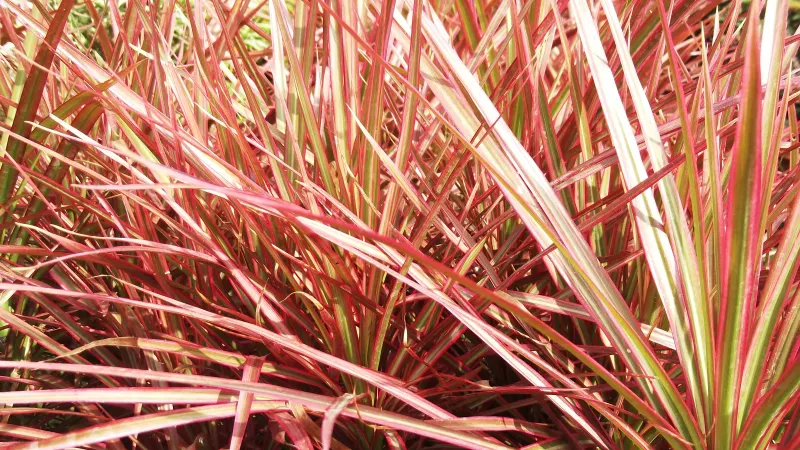
The dragon tree is one of the great survivors of the indoor world: a slim, sculptural plant with thin arching leaves edged in red, riding on top of bare grey canes that lean and branch into living architecture over years. It is sold as a beginner's tree, and it earns the title — it asks for very little, tolerates conditions that would kill fussier plants, and lives for many years in the same corner if you let it.
It comes from Madagascar and nearby islands in the Indian Ocean, and it is drought-tolerant. That is the key to the whole plant: it copes far better with a dry spell than with a wet pot. Botanists now usually classify it as Dracaena reflexa var. angustifolia, though it is still widely sold, and listed by the Missouri Botanical Garden, as Dracaena marginata. Most of what goes wrong with a dragon tree indoors comes from forgetting that the plant is happiest slightly thirsty, and from giving it water that does not suit it.
Like its fellow near-indestructible houseplants the snake plant and the ZZ plant, the dragon tree has a reputation for thriving on neglect, and like them it has essentially one reliable way to die: a pot that stays wet. Get the watering right and the main thing left to manage is the brown leaf tips that tap water can give it. Neither is hard once you understand what the plant is asking for.
Light: it survives the shade, it lives in the brightness
The most useful thing to understand about a dragon tree is the gap between tolerating a condition and thriving in it. This plant tolerates low light well, which is why it is so widely used in homes and offices - it will sit in a dim hallway or a north-facing corner and stay green for years. But tolerating is not the same as living. In low light the canes grow slowly, the colour dulls, and the plant gradually thins out into a sparse, leggy silhouette leaning toward the nearest window.
Give it bright indirect light and you get the plant the nursery photographed: faster growth, thicker and stronger new leaves, and stronger red leaf margins. An east- or west-facing window, or a few steps back from a bright south-facing one, is ideal. The leaf colour is itself a reading — vivid red edges mean the plant is getting the light it wants, while a washed-out, pale plant is either starved of light or, occasionally, scorched by too much harsh direct sun.
Direct midday sun through glass is the one excess to avoid. A dragon tree acclimatised to a shaded shop, then moved abruptly to a fierce south-facing sill, can bleach or scorch — pale, dry patches on the leaves that face the glass. Bright but filtered is the target. If your only bright spot is a hot direct window, set the plant back a metre or filter the light with a sheer curtain, and the plant gets the intensity without the burn.
How often to water a dragon tree — by the soil, not the calendar
Many labels say to water a dragon tree every week or two, but a fixed interval is not your plant. A dragon tree drinks at a rate set entirely by its light, its pot, and the season, and watering it on a fixed day instead of on evidence is exactly how the easy plant becomes the dead one. A drought-tolerant plant does not need topping up on schedule.
The rule that holds is simple: water when the top 5 cm of soil are dry, and not before. In bright summer light a pot dries far faster than the same plant does in a cool, dim winter. Both are correct. Push a finger in to the second knuckle, and if it comes up with damp soil clinging to it, wait. The danger with this plant, as with most drought-tolerant ones, is that root rot begins below the soil line, out of sight, so the defence is never to overwater in the first place. If you are new to reading a plant's thirst, the beginner's guide to houseplant care walks through the finger test and the drainage basics that keep a dragon tree alive.
This is where a per-specimen model earns its place. "Water every two weeks" describes the average dragon tree, and nobody owns the average — yours lives on a particular sill, in a particular pot, through a particular season, drying at its own rate. A Digital Shadow — the running model Botanical Legacy keeps for each Specimen in your sanctuary — holds a live estimate of the moisture left in your actual pot and draws it down on the real light and warmth that pot is living through. A dragon tree on a bright shelf in July and the same plant in a dim hallway in January have completely different drying curves; the Shadow tracks the curve in front of you and stays quiet through the long dry weeks a fortnightly reminder would have interrupted twice. For a plant whose only real enemy is the unnecessary watering, a model that mostly answers not yet is worth more than any reminder that fires on time.
Fluoride, hard water, and brown tips
One of the most common dragon tree problems is brown leaf tips, and the answer surprises people: it is often the water, not the watering. Dracaenas are very sensitive to fluoride, which some tap water contains, and also to the salts in hard tap water and in excess fertiliser. The damage shows at the tips and margins, which yellow and then die back into dry, brown, papery edges. Dry air and watering that swings too far either way can brown the tips too.
A dragon tree with browned tips on otherwise green leaves is usually showing the mineral load of its water, and the fix is upstream. Switch to filtered, distilled, or collected rainwater, and flush the pot every few months with a thorough drench to wash accumulated salts down and out through the drainage hole. Go easy on fertiliser, too — over-feeding adds to the same salt load.
The browned tips themselves will not turn green again; leaf tissue does not heal. But you can trim them. Cut the dead portion away following the natural taper of the leaf — a slim diagonal that mimics the leaf's own point — and the cut edge stays inconspicuous. Once the water is sorted, the new growth comes in clean and unmarked.
Common problems
Yellowing lower leaves. Often nothing to worry about: a dragon tree naturally sheds its oldest, lowest leaves as it grows taller, and a steady, slow turnover of the bottom-most leaves is just the plant building cane. The concern is rate. A few lower leaves yellowing over months is senescence; many leaves yellowing at once, especially with soft canes, is overwatering and the start of root trouble.
Soft, mushy canes. This is the emergency. A cane that gives under gentle pressure is rotting - almost always from a pot kept too wet for too long. Firm, healthy upper sections can be cut off and rooted as cuttings even when the base is lost.
Pale, washed-out colour. Too much harsh direct sun bleaches or scorches the leaves, while too little light dulls the red margins and slows everything down. Read the rest of the plant: a bleached plant in a hot window needs filtering; a dull, leggy plant in a dark corner needs moving closer to the light.
Brown crispy tips. Covered above - fluoride or salts in the water, dry air, or watering that swings too far either way. Switch the water, flush the pot, raise the humidity, and trim the tips at an angle.
Pruning, branching, and height
A dragon tree rewards the brave gardener with a better-looking plant. Left alone, a single cane grows straight up, gradually shedding lower leaves until you have a tuft of foliage on a long bare stem. That is fine if you want height, but if you want a fuller, branching plant — or if the canes have hit the ceiling — pruning is the answer, and the plant takes it remarkably well.
Cut a cane cleanly at the height you want, in spring or summer when the plant is in active growth. In time, two or more new shoots usually push out from just below the cut, and the single cane becomes a branching one. Do this at different heights on different canes over a few seasons and the plant develops the characteristic many-headed, sculptural form that makes mature dragon trees so striking.
Nothing has to be wasted. The pruned top - a length of bare cane with its leaf tuft - will root if you push it into moist, gritty mix. Roots form over several weeks, and you have a second plant. Even the bare middle sections of cane can be cut into short segments, each with at least two nodes, and laid on their side on moist rooting mix, where new roots and shoots form over about two months. A single overgrown dragon tree can become a small grove with patience and a clean blade.
Frequently asked questions
How often should you water a Dracaena marginata?
Water a Dracaena marginata when the top 5 cm of soil are dry, and less often from autumn to late winter; the real interval depends on your light, pot, and season rather than the calendar. The dragon tree is drought-tolerant, so it copes with a dry spell far better than with a wet pot, which rots the roots. When in doubt, wait another few days.
How do you care for a Dracaena marginata?
Give it bright indirect light for the best growth — it survives low light but thins out — water only when the top 5 cm of soil are dry, and drain the pot fully every time. Use filtered, distilled, or rainwater if your tap is fluoridated, keep it above about 16°C and clear of cold draughts, and feed lightly in the growing season. Get the watering right and Dracaena marginata is a very forgiving indoor tree; almost everything that kills one comes down to a pot left too wet.
How do you care for a Dracaena marginata's canes?
The bare canes are the plant's sculptural backbone, so the main job is keeping them firm and well-shaped. Water sparingly - a soft or mushy cane means the pot has stayed too wet and is rotting. To encourage branching, cut a cane cleanly at the height you want in spring or summer, and two or more new shoots usually push out just below the cut. The pruned top roots in moist, gritty mix to make a second plant, so a single leggy cane becomes a fuller, many-headed tree over a few seasons.
Why does my Dracaena marginata have brown tips?
Often fluoride or salts in tap water, which damage the leaf tips and margins; dry air and watering that swings too far either way can do it too. Switch to filtered, distilled, or rainwater, flush the pot every few months to wash out built-up salts, ease off fertiliser, raise the humidity in winter, and trim the dead tips at an angle. New growth comes in clean once the water is sorted.
Can a dragon tree grow in low light?
Yes - it tolerates low light well, which is why it is so widely used indoors. But tolerating is not thriving: in a dim spot it grows slowly, loses its best colour, and thins out over time. Bright indirect light gives you faster growth, thicker and stronger leaves, and stronger red leaf colour.
Why are my dragon tree's leaves turning yellow?
A few yellowing lower leaves are normal — the plant sheds its oldest leaves as it grows taller. Many leaves yellowing at once, especially with soft canes, points to overwatering and root rot. Check the soil and the canes: firm canes plus slow, low-leaf turnover is healthy; soft canes plus widespread yellowing means the pot has been too wet.
How big does a dragon tree get?
Indoors, a dragon tree can reach 1.5–3 metres over many years, growing slowly upward on its canes. It is easily kept smaller by pruning — cut the canes back at the height you want, and the plant branches below the cut rather than simply growing taller, so you control its size and shape entirely.
Start your sanctuary
Botanical Legacy's free Observer plan covers up to five Specimens, each with its own continuously running Digital Shadow — and a dragon tree, whose entire care question is "has the soil dried out yet," is exactly the kind of slow, forgiving plant the model keeps honest over the long dry weeks. Every new account also includes a 14-day trial of Cultivator, the paid plan, which adds the local weather feed and soil sensor support.
START YOUR SANCTUARY — FIVE FREE SPECIMENS, NO PAYMENT REQUIRED →
Give a dragon tree a bright corner, water it suits, and the patience to leave its roots dry — and it will outlast almost everything else you own.
Sources
The plant-care facts on this page were checked against these references.
- NC State Extension: plants.ces.ncsu.edu/plants/dracaena-reflexa-var-angustifolia
- Missouri Botanical Garden: plantfinder.mobot.org/PlantFinderDetails.aspx
- RHS: rhs.org.uk/plants/31916/dracaena-marginata-v/details
- Clemson HGIC: hgic.clemson.edu/factsheet/dracaena
- RHS: rhs.org.uk/plants/dracaena/how-to-grow-dracaena
- NC State Extension (snake plant): plants.ces.ncsu.edu/plants/dracaena-trifasciata
- NC State Extension (ZZ plant): plants.ces.ncsu.edu/plants/zamioculcas-zamiifolia
- UF/IFAS: edis.ifas.ufl.edu/publication/EP149
- UMD Extension: extension.umd.edu/resource/lighting-indoor-plants
- RHS houseplant problems: rhs.org.uk/plants/types/houseplants/how-to-help-a-poorly-housep…
- Clemson HGIC (light): hgic.clemson.edu/factsheet/indoor-plants-cleaning-fertilizing-c…
- UMD Extension: extension.umd.edu/resource/watering-indoor-plants
- Iowa State Extension: yardandgarden.extension.iastate.edu/faq/why-does-my-houseplant-…
- UMD Extension (grooming): extension.umd.edu/resource/grooming-indoor-plants
- ASPCA: aspca.org/pet-care/aspca-poison-control/toxic-and-non-toxic-pla…
- UF/IFAS (Nassau County Extension): blogs.ifas.ufl.edu/nassauco/2017/06/20/q-dracaena-getting-large…
- Iowa State Extension: yardandgarden.extension.iastate.edu/how-to/how-propagate-housep…