Species care guide
Bird of paradise
Strelitzia reginae
Bird of paradise care indoors: why Strelitzia reginae needs your sunniest window, why its growth is slow, what split leaves mean, and how to water and settle it.

- Light
- As much bright light as you can give - beside a large sunny south or west window, with direct sun for part of the day; in poor light growth is slow and flowers unlikely
- Water
- Plentiful in spring and summer, keeping the compost moist but never saturated; much drier in winter; tolerates drought but grows best well watered
- Humidity
- Prefers humid air; very dry indoor air browns the leaf tips and edges
- Temperature
- Warm all year; never below 10-12°C, with nights of around 13-18°C
- Pets & toxicity
- Mildly toxic to cats and dogs
- Difficulty
- Moderate; the main challenge is providing enough light indoors for visible progress
A bird of paradise gives you exactly as much plant as you give it light — and not a leaf more.
A statement plant with a single demand
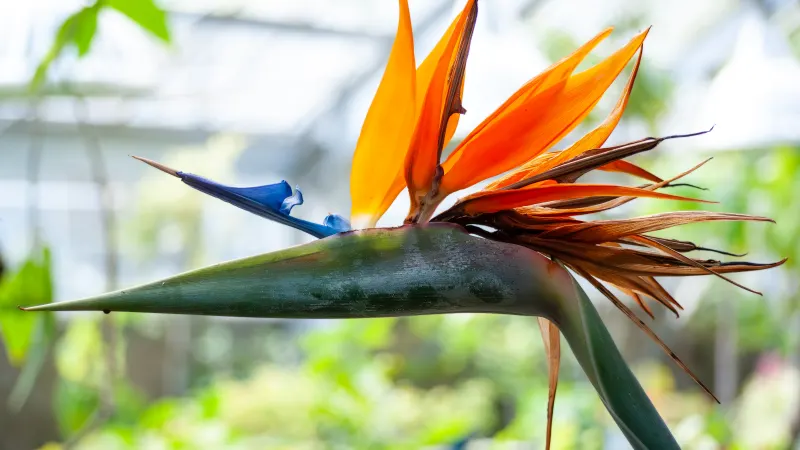
The bird of paradise is the houseplant people fall for on sight: tall, paddle-shaped leaves on long stems, an architectural fountain of green that turns a corner into a feature and, in the right conditions, produces the extraordinary orange-and-blue flower that gives the plant its name. It is sold as a dramatic, tropical centrepiece, and it is one. What the label rarely says is that almost everything about keeping it well comes down to a single variable, and getting that variable wrong is the difference between a thriving specimen and an expensive green statue that never changes.
That variable is light. Strelitzia reginae is a native of the coastal bush of eastern South Africa, where it grows along riverbanks in full sun, and it has carried that appetite indoors unaltered. This is not a low-light tolerant foliage plant in the mould of a peace lily or a heartleaf philodendron — plants that genuinely grow in a moderately lit room. A bird of paradise placed in a dim corner grows slowly at best and is unlikely ever to flower. Owners often read the stall as a watering or feeding problem, but extra water only risks rotting the roots, and the first thing to fix is the light.
Understand that one fact and the rest of the care is straightforward. Give it the strongest light in your home, water it sensibly, keep it warm, and be patient with a plant that grows on its own deliberate schedule — and a bird of paradise will reward you with size and presence over the years, and, once it is mature, perhaps a flower too.
Light: the single binding constraint
There is no way to soften this, so it is best stated plainly: a bird of paradise indoors needs plenty of bright light, including direct sun for part of the day, and a spot beside a large south- or west-facing window is the realistic place for it. In that kind of light it grows steadily, sends up new leaves through the warm months, and develops the robust, upright form the plant is bought for. Light falls off quickly with distance from the glass, so a plant stood a metre or two back gets far less than one beside the window, and in a room with only indirect light its growth is poor. Only the very brightest summer sun through glass is worth screening lightly.
This matters because it is easy to place a bird of paradise as if it were a low-light plant, in a shaded corner that "needs something tall and green." The plant survives there, often for a long time, which disguises the problem: the decline is slow - weak growth, paler leaves, few new leaves and no flowers - rather than a sudden collapse. If you want a plant that grows and changes, give this one your brightest spot without compromise. If your brightest spot is genuinely dim, be honest with yourself before you buy — a bird of paradise will hold on there, but it will not become the lush specimen in the photograph, and no amount of water, fertiliser, or attention will substitute for the sun it is missing.
The flower follows the same logic, only more so. Indoors, Strelitzia reginae is slow to bloom: plants usually need to be a substantial size and five to ten years old before they flower, and they need nearly full sun in summer and as much light as possible in winter. A slightly pot-bound plant flowers more readily. A young plant, or one in moderate light, will grow foliage for years without ever flowering, and that is normal rather than a failure. Treat the leaves as the reward and the flower as a bonus you have engineered the brightest possible conditions to earn.
How often to water a bird of paradise
A bird of paradise tolerates drought - its thick, fleshy roots help it forgive the occasional missed watering - but it is not a succulent like an aloe, and it grows best when it is watered well. Through spring and summer, keep the compost moist but never saturated: water thoroughly whenever the surface starts to dry, then let the pot drain completely. In warm weather a large plant loses a lot of water through its big leaves and can need watering very often. Through autumn, cut back, and in winter let the compost get fairly dry between waterings. As ever, the interval belongs to the conditions, not to the species — a plant in strong summer light drinks far faster than the same plant in January.
The failures cluster at the extremes. Waterlogged or poorly drained soil rots the roots, and both soggy and dry conditions yellow the leaves; irregular watering also browns the leaf tips and edges. The comfortable middle - watered thoroughly, drained freely, never left standing in a saucer of water - is wide and easy to hit once you stop watering by the calendar.
The thing the calendar cannot capture is how sharply the right interval shifts with the seasons for a plant this light-driven. In the bright, warm months a well-lit bird of paradise drinks quickly; through the dim winter it needs far less, and watering it on the summer schedule then is how the roots rot. This is the gap a per-specimen model closes: each Specimen in your sanctuary carries a Digital Shadow, a running estimate of the moisture left in that particular pot, drawn down on the real light and warmth it is living through — so the watering tracks the plant's genuine drying curve and slows itself down in winter without you having to remember to. For a plant whose drinking rate swings as widely with the light as this one's does, a model that adjusts the interval for you is doing real work.
Split leaves are wear, not disease
New owners often panic at the bird of paradise's most characteristic trait: the broad, leathery leaves tear along the veins into a series of long slits, so an older plant looks ragged compared to the smooth paddles of new growth. The splits are physical tears, not a disease. Outdoors, wind shreds the large leaves, which is why a plant moved outside for the summer needs a sheltered spot, and a bird of paradise with split leaves can be perfectly healthy.
What is a care signal is browning along those splits or at the leaf edges, which points to dry air or irregular watering rather than to the tearing itself. The distinction is easy to read once you know to look: a clean tear that follows a vein and leaves green tissue on both sides is just wear; a brown, crisp, dying margin is a care signal. Do not trim along the tears. If a leaf becomes too tatty, remove the whole leaf at its base with sharp secateurs, and attend to any genuine browning.
Slow growth is the species, not a problem
Set your expectations for pace before anything else, because a great deal of misdirected bird of paradise care comes from impatience. Even in good light, this is a slow-growing plant. That measured pace is the plant's normal habit, not a deficiency to correct, and the instinct to push it along with more water does more harm than good: overwatering only rots the roots.
Feeding is the exception. These are hungry plants: give a liquid houseplant feed every fortnight through spring and summer, replace the top 5 cm of compost with fresh each spring, and feed far less in winter. Beyond that, the most useful thing you can do for a healthy bird of paradise in good light is to leave it to grow at its own rate and resist reading the stillness as a problem. The plant is not waiting for you to do something. It is just growing slowly, the way it always has.
Common problems
Brown leaf tips and edges. The most common complaint, and usually environmental: very dry indoor air, particularly in heated winter rooms, or watering and feeding that are too irregular. Raise the humidity a little, move the plant clear of heating vents, and keep the watering steady. Note the difference from the leaf splitting, which is harmless — brown, crispy margins are the signal to act on.
Yellowing leaves. Often overwatering or poor drainage - soggy soil yellows the leaves and rots the roots - though a plant left too dry yellows too. Check that the pot drains freely and is not sitting in a saucer of water, and feel the compost before you water again. An occasional old leaf yellowing and dying back as the plant grows is normal; widespread yellowing is a warning about the roots or the watering.
No new growth. Usually insufficient light, the binding constraint of this whole plant. A bird of paradise in a dim spot grows poorly; the fix is a brighter window, not more water. If the plant is already in strong light and still stalled, check that it is warm enough: it should never drop below 10-12°C.
No flowers. Common indoors, especially on younger plants. Blooming needs a mature plant, usually five to ten years old, in nearly full sun in summer and as much light as possible in winter, ideally slightly pot-bound. Treat the flower as a long-term aspiration earned through the brightest possible conditions, and enjoy the foliage in the meantime.
Propagation — division, not cuttings
A bird of paradise does not propagate from leaf or stem cuttings the way a pothos or philodendron does; it grows as a clump from underground rhizomes, and the way to multiply it is by division. This is a job for a mature, crowded plant, best done in spring or early summer, as it comes into active growth.
Slide the whole plant out of its pot, find where the clump can be separated into sections each carrying its own roots and a healthy set of leaves, and cut down through the rootball - tough work that calls for a sturdy pair of secateurs. Pot each division into its own container of free-draining mix and water it in. Then be patient: keep the compost moist but not waterlogged until the division has rooted in, which takes at least three months, and expect a pause, because division can stop a plant flowering for a few years. Given time and good light, each division re-establishes into a plant of its own. Growing from seed is possible but slow - seed-raised plants usually take five years or more to reach flowering size - so division is the practical route.
Frequently asked questions
How much light does a bird of paradise need indoors?
A lot - plenty of bright light with direct sun for part of the day, which in practice means placing it beside a large south- or west-facing window. This is the single most important thing about the plant. It is not a low-light foliage plant; in a dim or merely indirectly lit room it survives but grows poorly and is unlikely to flower. If you want a bird of paradise that grows and fills out, give it your brightest spot without compromise.
How often should you water a bird of paradise?
Generously in spring and summer: keep the compost moist but never saturated, watering thoroughly whenever the surface starts to dry. Cut back through autumn, and in winter let the compost get fairly dry between waterings. It tolerates drought but grows best well watered, and it must never sit in waterlogged soil, which rots the roots. The exact interval depends on your light, warmth, and season rather than a fixed schedule, so water on the soil's evidence, not the calendar's.
Why are my bird of paradise leaves splitting?
Because the large leaves tear easily along their veins - outdoors, wind shreds them, which is why a plant moved outside needs a sheltered spot. The tears are physical damage, not a disease, and a plant with split leaves can be perfectly healthy. The thing to watch for is browning along the edges or splits, a separate signal of dry air or irregular watering — clean green tears are just wear.
Why won't my bird of paradise grow or flower?
Lack of light is the most common reason. Both growth and flowering depend on strong light, and a plant in moderate light will grow poorly and rarely bloom. Move it to your brightest window first. Flowering also needs a mature plant, usually five to ten years old, and a slightly pot-bound one flowers more readily - so on a young plant in good light, expect foliage for now and treat the flower as a long-term reward.
Can Botanical Legacy tell me if my plant has enough light?
It works the watering side of the equation precisely, tracking how your specific pot dries in your specific conditions so you do not overwater a slow-growing plant in a dim winter. On light itself, the most honest answer is that a bird of paradise's growth is a rough light meter: steady new leaves through the growing season suggest the spot is bright enough, while a long stall points first at the light. The Digital Shadow keeps the water right while you give the plant the sun it needs — the two halves of keeping this species well.
Start your sanctuary
Botanical Legacy's free Observer plan covers up to five Specimens, each with its own continuously running Digital Shadow — and a bird of paradise, whose drinking rate swings hard between bright summers and dim winters, is exactly the plant a per-pot model keeps from being overwatered. Every new account also includes a 14-day trial of Cultivator, the paid plan, which adds the local weather feed and soil sensor support.
START YOUR SANCTUARY — FIVE FREE SPECIMENS, NO PAYMENT REQUIRED →
Light is the whole bargain with a bird of paradise. Meet it, and the patience the plant asks for pays itself back in green.
Sources
The plant-care facts on this page were checked against these references.
- RHS: rhs.org.uk/plants/strelitzia/how-to-grow-strelitzia
- Missouri Botanical Garden: missouribotanicalgarden.org/PlantFinder/PlantFinderDetails.aspx
- SANBI: pza.sanbi.org/strelitzia-reginae
- NC State Extension: plants.ces.ncsu.edu/plants/strelitzia-reginae
- NC State Extension (peace lily): plants.ces.ncsu.edu/plants/spathiphyllum
- NC State Extension (heartleaf philodendron): plants.ces.ncsu.edu/plants/philodendron-hederaceum
- UMD Extension: extension.umd.edu/resource/lighting-indoor-plants
- Wisconsin Extension: hort.extension.wisc.edu/articles/bird-of-paradise-strelitzia-re…
- RHS houseplant problems: rhs.org.uk/plants/types/houseplants/how-to-help-a-poorly-housep…
- UF/IFAS: edis.ifas.ufl.edu/publication/FP563
- Missouri Botanical Garden (aloe): missouribotanicalgarden.org/PlantFinder/PlantFinderDetails.aspx
- UF/IFAS: edis.ifas.ufl.edu/publication/MG106
- Clemson HGIC: hgic.clemson.edu/factsheet/indoor-plants-watering
- UMD Extension: extension.umd.edu/resource/watering-indoor-plants
- ASPCA: aspca.org/pet-care/aspca-poison-control/toxic-and-non-toxic-pla…
- NC State Extension (pothos): plants.ces.ncsu.edu/plants/epipremnum-aureum