Species care guide
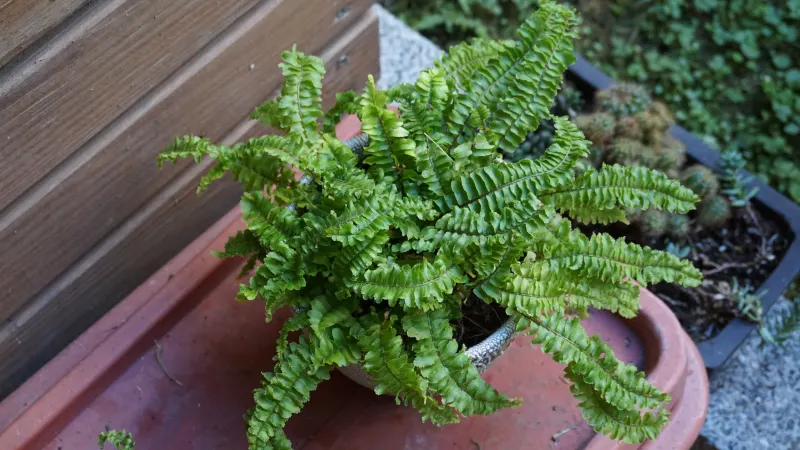
Boston fern
Nephrolepis exaltata
Boston fern care: why central heating browns the fronds, how to keep Nephrolepis exaltata humid and evenly moist, and how to revive a fern that has dried out.

- Light
- Bright indirect light; a north- or east-facing window is ideal — avoid direct sun which scorches fronds
- Water
- Keep the soil consistently moist — never let it dry out completely; check every 2–3 days in warm months; reduce in winter
- Humidity
- 60–80% is the sweet spot; below 40% causes rapid frond browning — a humidifier is nearly essential indoors
- Temperature
- 16–24°C; avoid hot dry air and temperatures below 10°C
- Pets & toxicity
- Non-toxic to cats, dogs, and humans
- Difficulty
- Challenging indoors; the humidity and moisture requirements are demanding in heated homes
A Boston fern is not a difficult plant. It is a humid-forest plant, asked to live in a dry, heated room — and most of its troubles are that mismatch, not your care.
A lush plant fighting the indoor climate
The Boston fern is the classic hanging fern: a generous fountain of arching, feathery fronds that softens a corner or spills from a basket like green water. It has been a houseplant fixture for well over a century, and it is sold as a lush, easy way to bring a wild, leafy abundance indoors. Then people bring one home, and within a few weeks the fronds are shedding crisp brown leaflets all over the floor, and the lush plant becomes a frustrating one. The fern is not being difficult. It is being asked to do something difficult — to live in the dry, warm air of a centrally heated home, which is almost the opposite of where it comes from.
Nephrolepis exaltata is a plant of warm, humid, shaded forests, where it grows in the steady moisture and high humidity of the understorey, its fine fronds bathed in damp air. None of that describes a typical living room in winter. The honest framing of Boston fern care is therefore this: the plant itself is not delicate or temperamental, but its requirements — high humidity and constantly moist soil — are demanding to meet in a normal heated home, which is why it rates as challenging indoors when a fern in a greenhouse or a steamy bathroom is nearly carefree. Get the environment right and the plant looks after itself; get it wrong and no amount of fussing over the watering will stop the browning. It shares this love of moisture and humidity with the prayer plant and the calathea, and like them it punishes dry air first.
Why Boston ferns fail indoors
It is worth being blunt about the binding constraint, because almost every Boston fern problem traces back to it: dry air. The fronds are thin and finely divided, with an enormous surface area for their mass, which makes them lose moisture fast and leaves them acutely vulnerable to low humidity. The fern wants 60–80% humidity; central heating routinely drops a room to 30% or below in winter. That gap is the whole story. A fern in that dry air browns at the frond tips and edges, sheds its fine leaflets, and thins out, no matter how attentively you water the soil — because the problem is not in the soil at all. It is in the air pulling moisture out of the leaves faster than the roots can replace it.
This is why the same plant behaves so differently in different homes. In a humid bathroom with a window, a kitchen full of steam, a conservatory, or a greenhouse, a Boston fern is genuinely easy — the air is doing the hard part. In a dry, heated open-plan living room it is a constant battle. Recognising that the difficulty is environmental rather than horticultural changes how you approach the plant: the highest-leverage thing you can do is not perfect your watering technique but raise and hold the humidity around the fern, and choose where in your home to keep it accordingly. If you have a bright, humid room, that is where the fern belongs.
Light and temperature
A Boston fern wants bright, indirect light — a north- or east-facing window is close to ideal, giving good light without the direct sun that scorches and crisps the fine fronds. It tolerates a moderately shaded spot, growing a little less densely, but deep gloom thins it out. The thing to avoid is direct sunlight through glass, which burns the delicate foliage; the dappled, filtered light of the forest floor is what it is built for, and a curtain-filtered or set-back window position recreates that well.
Temperature is the gentler requirement, but it interacts with the humidity problem. The fern is comfortable between roughly 16–24°C — ordinary room temperature — and should be kept above about 10°C. The trap is the heat sources that come with winter warmth: radiators, heating vents, fireplaces, and warm-air registers all throw out hot, dry air, and a fern parked near one is hit by the double blow of heat and the plummeting humidity that heat brings. Keep the plant warm but clear of any direct heat source, and clear of cold draughts at the other extreme. A stable, moderately warm, draught-free spot with high humidity is the whole environmental recipe.
How often to water a Boston fern
A Boston fern sits firmly at the moisture-loving end of the watering spectrum: it wants its soil kept consistently, evenly damp, and it should never be allowed to dry out completely. The roots are fine and shallow, and a fern that dries through even once will brown a swathe of fronds in response, often irreversibly. In practice that means checking the soil every two or three days in the warm months and watering before the surface dries, keeping the root zone reliably moist. In winter you ease off as growth slows and the plant uses less, but even then the soil should stay damp rather than drying out.
The balance to strike is the same one all moisture-lovers demand: consistently moist is not waterlogged. The pot must drain freely so the roots are damp but never sitting in standing water, which rots them as readily as drought browns the fronds. Aim for the steady middle — evenly moist, well-drained, never bone dry and never swampy — and use soft water where you can, since the fern shares a mild sensitivity to the salts and minerals in hard tap water that show up as browned tips.
The genuine difficulty here is that "keep it evenly moist, never dry" is far easier to state than to deliver, because a fine-rooted fern in a warm room can dry alarmingly fast, and the right interval keeps shifting with the season and the heating. Miss it by a day in a dry July and the fronds pay for it. This is exactly the gap a per-specimen model closes. Each Specimen in your sanctuary carries a Digital Shadow, a running estimate of the moisture left in that pot, drawn down on the real warmth and light it is living through — so for a plant that cannot afford to dry out, you get a live read on how close the soil is to the edge, rather than discovering it too late from a fresh wave of brown. For a fern, where a single full dry-out does lasting damage, that early warning is worth more than for almost any other houseplant — and the case for measuring the moisture directly with a sensor that feeds the same model is made in how soil moisture sensors change houseplant care.
Humidity: the one thing you cannot skip
If there is a single sentence of Boston fern care to remember, it is this: raise the humidity, and keep it raised. Everything else — the light, the watering, the feeding — is ordinary houseplant care; the humidity is what separates a thriving fern from a browning one, and it is the requirement most likely to defeat a heated home.
The genuinely effective measure is a humidifier running near the plant, which lifts the ambient humidity steadily and is the closest you will come to the fern's native air. Standing the pot on a wide tray of pebbles topped with water helps at the margins, as evaporation rises around the foliage, and grouping the fern with other plants raises the local humidity through their shared transpiration. Placement is a free lever and often the best one: a bright bathroom or a kitchen is naturally more humid than a living room, and a Boston fern frequently does far better there with no extra equipment at all. Misting is the popular answer and the weakest one — it raises humidity for only minutes and, if the fronds stay wet in cool, still air, can encourage fungal problems — so treat it as a minor top-up rather than the plan. The blunt truth is that if you are unable to raise the humidity around a Boston fern, it will brown indefinitely; if you can, most of its reputation for difficulty evaporates.
Reviving a struggling fern
A Boston fern that has browned badly — dried out, sat in a dry room too long, or both — looks like a write-off and usually is not, because the plant grows from a crown that survives even when most of the visible fronds have crisped. Reviving one is a worthwhile and surprisingly reliable job.
Start by cutting away all the dead and badly browned fronds at the base, right down to the crown, even if that leaves the plant looking drastically bare — you are clearing the spent growth so the plant can put its energy into new fronds rather than propping up dying ones, and so you can see what is happening at the centre. Then fix the environment that caused the trouble: move the fern to the most humid bright spot you have, a bathroom being ideal, set up a humidifier or pebble tray, and water thoroughly to bring the soil back to evenly moist (a fully dried-out root ball may need a soak in a basin until it rehydrates). Keep the humidity high and the soil steadily damp, and be patient. A crown with life in it will begin pushing fresh fronds from the centre within a few weeks, and over a couple of months a fern cut back to a sorry stump can rebuild into a full plant. The recovery is driven almost entirely by the humidity and moisture you provide during it — fix the air, and the fern does the rest.
Common problems
Browning fronds and shedding leaflets. The headline complaint, and nearly always low humidity rather than a watering fault — the soil can be perfectly moist and the fronds still brown if the air is dry. Raise the humidity, move the plant away from heat sources, and the new growth comes in clean. Tip and edge browning specifically points at dry air or salt buildup from hard water or overfeeding.
Whole fronds yellowing. Often the watering boundary: either the soil dried out completely (the most damaging fern mistake) or, less commonly, it has been waterlogged and the roots are suffering. Check the soil — restore even moisture if it dried, improve drainage if it is soggy. A few old fronds yellowing and dying back as new ones grow is normal.
A thin, sparse plant. Too little light, or chronic low humidity, or both — the fern cannot sustain dense growth in a dim, dry spot. Move it to a bright indirect position with higher humidity, feed lightly in the growing season, and remove the dead fronds so energy goes to new ones.
Crispy, scorched fronds in a bright spot. Direct sun. The fine foliage burns where stronger plants would only tan. Move the fern out of the direct beam into filtered or indirect light.
Frequently asked questions
Why does my Boston fern keep getting brown fronds?
Almost always dry air. Boston ferns want 60–80% humidity, and a centrally heated room often sits at 30% or below — the fine fronds lose moisture faster than the roots can replace it, and the tips and edges brown and shed as a result. The soil can be perfectly moist and it still happens, because the problem is the air, not the watering. Raise the humidity with a humidifier or by moving the fern to a bright bathroom, and keep it away from radiators and heating vents.
How often should you water a Boston fern?
Keep the soil consistently, evenly moist and never let it dry out completely — in practice check every two or three days in the warm months and water before the surface dries, easing off in winter as growth slows. A Boston fern that dries through even once will brown a wave of fronds in response, so this is a plant where drying out is the more damaging mistake. Keep the pot draining freely, though, since waterlogged soil rots the fine roots.
Can a dried-out Boston fern be saved?
Usually, yes. The plant grows from a crown that survives even when nearly all the visible fronds have crisped. Cut away all the dead and browned fronds at the base, move the fern to the most humid bright spot you have, set up a humidifier or pebble tray, and rehydrate the soil to evenly moist. Keep the humidity high and the soil damp, and a crown with life in it will push fresh fronds from the centre within a few weeks, rebuilding over a couple of months.
Are Boston ferns safe for cats and dogs?
Yes — Nephrolepis exaltata is non-toxic to cats, dogs, and humans, which makes it one of the safer larger foliage plants for a household with pets. A curious pet that chews a frond comes to no harm. Botanical Legacy surfaces pet-safety directly on each Specimen's card, so the safe and unsafe plants in your sanctuary are clear at a glance.
Can Botanical Legacy stop my fern from drying out?
It gives you the early warning a fern needs most. Because a Boston fern does lasting damage if it dries through even once, the useful thing is knowing how close the soil is getting to the edge — and that is what the Digital Shadow tracks: a running estimate of the moisture left in your specific pot, based on how fast it dries in your warmth and light. Instead of discovering the problem from a fresh wave of brown fronds, you get a read on the soil drifting dry in time to act. Add a soil sensor and the model measures that moisture directly.
Start your sanctuary
Botanical Legacy's free Observer plan covers up to five Specimens, each with its own continuously running Digital Shadow — and a Boston fern, which cannot afford to dry out even once, is exactly the plant that benefits from an early read on the soil drifting dry. Every new account also includes a 14-day trial of Cultivator, the paid plan, which adds the local weather feed and soil sensor support.
START YOUR SANCTUARY — FIVE FREE SPECIMENS, NO PAYMENT REQUIRED →
Give a Boston fern humid air and steady moisture, and the difficult plant becomes an easy one — the trouble was never the fern.