Species care guide
Nerve plant
Fittonia albivenis
Nerve plant care for the most visually striking of small foliage plants: why it wilts dramatically but recovers quickly, and why attempting to grow it in a dry room will always end the same way.

- Light
- Low to medium indirect light; one of the few plants that tolerates genuinely dim rooms; avoid direct sun which bleaches the markings
- Water
- Keep the soil consistently moist — never let it dry out completely; the plant wilts dramatically when dry but recovers within an hour of watering; check every 2–3 days
- Humidity
- 70–90% is ideal; below 60% causes brown edges and wilting that does not recover; this is the binding constraint and makes a terrarium or humidity tray near-essential
- Temperature
- 18–26°C; sensitive to cold drafts and temperatures below 15°C
- Pets & toxicity
- Non-toxic to cats, dogs, and humans
- Difficulty
- Challenging in most home environments; genuinely easier in a terrarium where humidity is self-sustaining
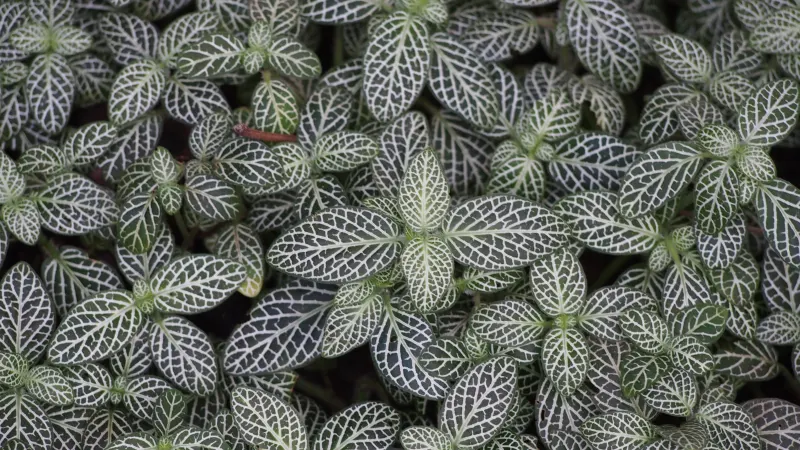
A nerve plant wears its veins like lacework — pink or white tracery laid over green — and faints theatrically at the first hint of a dry pot, only to rise again the moment you relent.
The little drama queen of the plant shelf
The nerve plant is one of the most striking small foliage plants you can grow: low, spreading mounds of oval leaves laced with a fine network of veins in brilliant white, pink, or red, so vivid they look painted on. It is the kind of plant that draws the eye in a crowded collection, and it stays small and tidy, which makes it tempting for desks, shelves, and terrariums. It is also, in an ordinary heated room, one of the more challenging plants to keep happy — not because it is delicate in some vague way, but because it has one specific, non-negotiable demand that most homes cannot meet.
It comes from the warm, wet rainforests of Peru and the surrounding tropics, where it grows along the forest floor in deep shade and air that is permanently humid. Everything about it is built for that environment: thin, soft leaves that lose water fast, shallow roots that want constant moisture, and no tolerance at all for dry air. Bring it into a dry living room and it tells you immediately and theatrically. Understand its one demand — humidity — and the rest of its care is genuinely simple.
It keeps good company with other moisture-loving plants. A nerve plant alongside a prayer plant, a calathea, or a Boston fern makes a natural grouping — all of them want the same humid, shaded conditions, and clustered together they raise the humidity around each other.
The dramatic wilt
The first thing a nerve plant will do to alarm you is faint. Let the soil go dry — even briefly — and the whole plant collapses: the leaves go limp, the stems flop, and the entire thing lies flat against the pot as though it has died on the spot. New owners panic. It looks terminal. It is not. This is the nerve plant's signature behaviour, and it is one of the few houseplants that gives such an unmistakable, urgent, impossible-to-miss signal that it needs water now.
The reassurance is in the recovery. Water a wilted nerve plant thoroughly and it stands back up within an hour — sometimes within minutes — looking as though nothing happened. The collapse is dramatic precisely because it is fast and complete, but so is the recovery, and a plant that has fainted once or twice from a missed watering takes no lasting harm. The drama is the feature, not the failure: the plant is essentially a living moisture alarm, telling you in the clearest possible terms when its soil has run dry.
That said, do not make a habit of letting it faint. Each collapse is genuine stress, and a plant repeatedly pushed to the wilting point will eventually shed leaves and weaken. The goal is to water before the drama — keep the soil consistently, evenly moist, checking every two to three days and watering when the surface starts to dry. The plant never wants to be bone dry; it wants a steady damp. If you are still learning to read soil moisture by feel, the beginner's guide to houseplant care covers the surface test that keeps a nerve plant out of its faint.
Because the margin is so tight — a nerve plant punishes a forgotten watering within a day — it is a plant where knowing the soil's real moisture pays off. A Digital Shadow — the running model Botanical Legacy keeps for each Specimen in your sanctuary — draws the moisture estimate down on the real warmth and light your plant is living through and prompts the drink before the soil dries to the fainting point, rather than after a fixed number of days. For a plant that collapses the moment it runs dry, a model that flags the watering early is the difference between steady moisture and a weekly faint.
Humidity is the real constraint
The wilt is recoverable; the dry-air problem is not. This is the distinction that decides whether you can keep a nerve plant. A faint from dry soil reverses the moment you water — but the steady damage from dry air does not. Below about 60% humidity, the thin leaf edges go brown and crispy, the foliage loses its lustre, and the plant declines in a way that watering and misting cannot reverse, because the problem was never in the soil. Humidity is the binding constraint, and in a centrally heated home — where winter air can fall below 30% — meeting it is the whole challenge.
The target is high: 70–90%, far above what any ordinary room holds. Misting helps for a few minutes and then the moisture is gone, so it is not a real solution on its own. A pebble tray and grouping the plant with other humidity-lovers lift the local humidity a little. A humidifier running nearby does genuinely raise it. But the most reliable answer for this particular plant is an enclosure that holds humidity for it — which is why the nerve plant is so strongly associated with terrariums.
Read the brown edges correctly. When a nerve plant's leaf margins go crispy while the soil is properly moist, the cause is dry air, and the fix is humidity, not more water. Pour more water onto a plant that is browning from dry air and you will rot the roots while the edges keep browning. The soil tells you about water; the leaf edges tell you about the air; keep the two readings separate.
The terrarium case
For a nerve plant in a heated home, a terrarium is not a novelty — it is the most reliable home you can give it. A covered glass terrarium solves the plant's single hardest problem automatically: inside the enclosure, moisture transpired by the plants and evaporated from the soil cannot escape, so the humidity stays high and self-sustaining without any daily effort from you. The plant that faints and crisps on an open shelf simply thrives in the closed, humid air of a terrarium, holding full, unblemished, vividly veined leaves.
The fit is almost perfect. A nerve plant stays small and low, so it suits the confined space of a terrarium without quickly outgrowing it. It tolerates the lower, indirect light that filters into a terrarium from above. And it combines beautifully with other small, humidity-loving plants — a planting of nerve plants with a prayer plant and a small fern shares one set of conditions and makes a lush, layered miniature landscape. The shared requirements are the whole point: everything in the terrarium wants the same warm, humid, shaded air.
If a closed terrarium is more than you want to build, the same logic scales down. A cloche or glass dome over a single pot, a bright bathroom where everyday moisture keeps the air humid, or a plant kept under a propagator lid all recreate the enclosed-humidity trick in smaller ways. The principle is constant: a nerve plant in a heated room needs its own pocket of humid air, and the easiest way to give it one is to enclose it.
Light
Light is the one demand a nerve plant makes easy, and it is genuinely useful. The plant tolerates low to medium indirect light — and it tolerates it well, not merely surviving but staying healthy in genuinely dim rooms that most plants reject. This is a rainforest-floor plant adapted to deep shade, and it carries that adaptation indoors. A north-facing shelf, a dim bathroom corner, a spot well back from any window: these are valid, even good, placements for a nerve plant.
This matters for a practical reason that connects to its humidity need. The humid spots in a home — bathrooms, kitchens, enclosed terrariums — are often the less sunny ones, and a plant that demanded bright light along with high humidity would be nearly impossible to place. The nerve plant's shade tolerance resolves that tension: you can put it where the humidity is, even if that spot is dim, and the plant is content. Its modest light appetite is what makes its high humidity demand liveable.
The one thing to avoid is direct sun. The thin, soft, brightly veined leaves scorch and bleach in direct light through glass — the vivid pink or white tracery fades and the leaf edges crisp. Bright indirect light is fine and keeps the colour strong; low indirect light is fine and keeps the plant healthy; direct sun is the only excess. Filter any harsh window, and the plant's leaf colour stays vivid.
Propagation
A nerve plant is generously easy to propagate, which is fortunate, because a vigorous plant produces plenty of material and a stressed one can be renewed from its healthiest pieces. It propagates from stem cuttings: take a length of stem with two or three nodes — the points where leaves join — strip the lowest leaves, and root the cutting either in water or directly in moist, warm mix. Roots form quickly, often within a couple of weeks, because the plant's whole instinct on the forest floor is to root wherever a stem touches damp ground.
Keep the cuttings warm and humid while they root, which suits this plant perfectly — a propagator, a covered container, or a humid spot speeds things along and matches the conditions the parent wants anyway. Once rooted, pot the cuttings up individually or, for a fuller display, plant several together in one pot to make a dense, spreading mound. Pinching back the growing tips of an established plant also encourages bushier, more compact growth and gives you cuttings in the process.
The same root-anywhere ease makes the nerve plant forgiving of its own dramatics: if a plant has been allowed to faint repeatedly and has shed leaves or gone leggy, you can cut it back hard, root the best stems, and start over with fresh, full growth. Few plants are so quick to renew themselves from a handful of cuttings.
Frequently asked questions
Why does my nerve plant keep wilting?
Because its soil is drying out. A nerve plant collapses dramatically the moment it goes dry — it is one of the few houseplants that gives such an unmistakable signal — and it recovers within an hour of a thorough watering. The fix is to keep the soil consistently, evenly moist rather than letting it dry between waterings. If the plant wilts while the soil is still damp, the cause is dry air instead, and the answer is humidity.
How often should you water a nerve plant?
Often enough to keep the soil consistently moist and never bone dry — in practice checking every two to three days and watering when the surface starts to dry. It does not want a dry-out period like a succulent; it wants steady damp. But it still rots in a waterlogged pot, so keep the soil evenly moist rather than soggy, and drain fully after each watering.
What humidity does a nerve plant need?
High — ideally 70–90%, far above what most heated homes provide. Below about 60% the leaf edges go brown and crispy and the plant declines in a way watering cannot fix. This is the plant's binding constraint. A covered terrarium, a humidifier, a humidity tray, or a bright bathroom are the realistic ways to meet it; misting alone is too brief to matter.
Is a nerve plant good for a terrarium?
Yes — it is one of the best terrarium plants there is. A covered terrarium holds the high humidity a nerve plant needs automatically, solving its single hardest requirement without daily effort. The plant stays small, tolerates the lower light inside an enclosure, and combines well with other humidity-loving plants. For most homes, a terrarium is genuinely the easiest place to keep a nerve plant thriving.
Is my nerve plant dead if it has collapsed flat?
Almost certainly not. A flat, collapsed nerve plant has usually just run dry, and it typically stands back up within an hour of a thorough watering. Water it straight away rather than assuming the worst. Repeated fainting does stress the plant over time, so the goal is steady moisture that prevents the collapse — but a single dramatic wilt is the plant's normal behaviour, not its end.
Start your sanctuary
Botanical Legacy's free Observer plan covers up to five Specimens, each with its own continuously running Digital Shadow — and a nerve plant, which faints the moment its soil runs dry, is exactly the kind of plant a per-specimen model keeps ahead of by flagging the drink early. Every new account also includes a 14-day trial of Cultivator, the paid plan, which adds the local weather feed and soil sensor support.
START YOUR SANCTUARY — FIVE FREE SPECIMENS, NO PAYMENT REQUIRED →
Give a nerve plant steady moisture and a pocket of humid air — a terrarium, a bathroom, a dome — and the fainting drama queen becomes a jewel of pink and white lacework.