Species care guide
Christmas cactus
Schlumbergera
A Christmas cactus care guide that starts from the fact most people get wrong — it's a rainforest plant, not a desert one — so it wants more water than a cactus, plus how to make it rebloom and why buds drop.
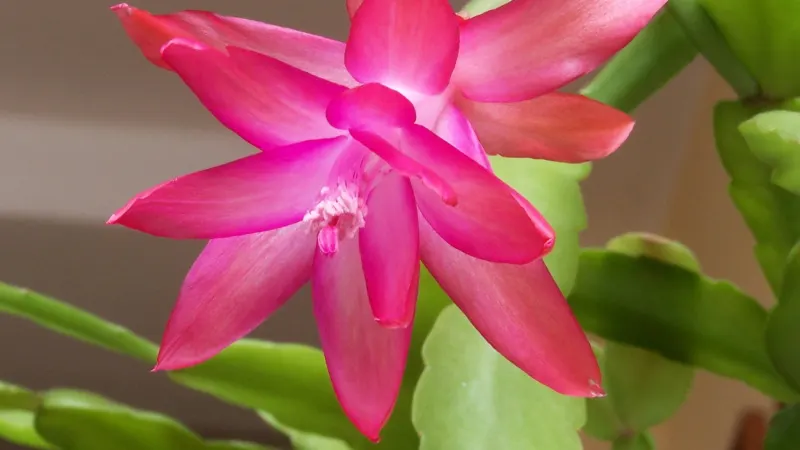

- Light
- Bright, indirect light; a little gentle morning sun is fine, but hot direct sun bleaches and reddens the segments
- Water
- Water when the top 2–3cm of soil is dry — more like a leafy houseplant than a cactus; never let it go bone dry, and never leave it sitting in water
- Humidity
- Prefers 50%+; a forest plant that appreciates a pebble tray in dry winter rooms
- Temperature
- 18–24°C in growth; cool 13–15°C nights in autumn help trigger buds
- Pets & toxicity
- Non-toxic to cats and dogs — genuinely pet-safe, unlike many festive plants
- Difficulty
- Easy to keep alive and long-lived; reblooming on cue takes a little seasonal timing
A Christmas cactus is a cactus the way a tomato is a fruit — technically true, and quietly misleading about how to look after it.
The festive plant people water like the wrong species
The Christmas cactus is one of the most gifted houseplants in the world, and one of the most consistently misunderstood. The word "cactus" sets an expectation — neglect it, water it rarely, leave it in a sunny window — and that expectation is exactly backwards. Schlumbergera is not a desert plant. It comes from the humid, shaded coastal mountains of southeastern Brazil, where it grows as an epiphyte in the crooks of trees and on mossy rock faces, in dappled light and regular rain. Treat it like a barrel cactus and it sulks; treat it like the forest plant it is and it becomes a decades-long companion that flowers every year.
The two questions everyone has about this plant are "why won't it bloom?" and "why are the buds falling off?" — and both have clean, specific answers rooted in the same fact. This guide starts from what the plant really is, gets the watering right, and then treats reblooming as the learnable seasonal routine it is. If houseplants in general are new to you, the ten mistakes every beginner makes is a good companion read, though the watering section here deliberately breaks the usual cactus rule.
Christmas, Thanksgiving, or Easter?
A quick note that clears up a lot of confusion. Most plants sold as "Christmas cactus" are Schlumbergera truncata, the Thanksgiving cactus, which blooms a little earlier and has pointed, claw-like teeth along its segments. The true Christmas cactus, Schlumbergera bridgesii (or buckleyi), has smoother, more scalloped segments and blooms slightly later. There's also an Easter cactus (a different genus, Rhipsalidopsis) that flowers in spring. For everyday care they're close enough to treat identically — the differences matter mostly for knowing exactly when to expect flowers, not for how to keep the plant happy.
Light
In the wild, Schlumbergera lives under the forest canopy, in bright but filtered light rather than direct sun. Indoors, that means a spot with bright, indirect light — near a window, softened by distance or a sheer curtain. Gentle morning sun is fine and even welcome, but a full afternoon in a hot, unshaded window is too much: the flat green segments bleach out, take on a reddish or purplish tint, and can scorch. That reddening is a genuine stress signal worth reading — a plant blushing red at the edges in a bright window is usually asking to move somewhere softer.
Too little light is the quieter problem, and it's the most common reason a healthy-looking plant refuses to flower. In a dim corner the segments stay green and the plant survives, but it can't bank the energy a full flush of blooms costs. If yours has grown lush but never buds, more light — not more feeding or fussing — is usually the first lever to pull.
How to water a Christmas cactus
This is where the name does the most damage, so it's worth being explicit: water a Christmas cactus more like a normal leafy houseplant than like a desert cactus. Let the top 2–3cm of soil dry out, then water thoroughly until it runs from the drainage holes, and tip away anything that collects in the saucer or cover pot. Through spring and summer, in active growth, that lands somewhere around weekly, but read the soil and the season rather than fixing a day — warm bright rooms dry faster than cool dim ones. The general principle is the same one in when to water your houseplants; it's only the "cactus means barely water it" instinct you need to override.
The two failure modes sit on either side of that. Let the plant go bone dry for long stretches and the segments turn limp, soft, and wrinkled from dehydration. Keep the soil constantly soggy — especially in a heavy, water-retaining mix — and the roots rot, which also produces limp, soft segments, this time with a mushy base. Because both extremes look similar from the top, the reliable tell is the soil and the roots: dry mix plus wrinkled segments means give it a proper drink; wet mix plus a soft, discoloured base means you're overwatering. This is exactly the ambiguity a per-specimen model helps resolve — Botanical Legacy keeps a Digital Shadow of each plant, a running estimate of how much moisture is left in the pot, so you water when this plant is genuinely approaching dry rather than on a schedule the name misled you into. After it finishes blooming, ease back on watering for a few weeks to let the plant rest before its next growth push.
Soil and potting
Because it's an epiphyte, a Christmas cactus wants an airy, fast-draining medium, not dense potting soil that stays wet. A good mix is standard houseplant compost cut generously with orchid bark, perlite, or coarse sand — something that holds a little moisture but lets water and air move through freely. A pot with drainage holes is non-negotiable; a decorative cover pot with no escape route for water is the classic slow route to root rot.
These plants also flower better slightly pot-bound, so resist the urge to move yours into a much bigger pot. Repot only every few years, ideally in late winter or spring after blooming, and only go up one modest size when you do. A plant that suddenly stops flowering after a generous repot is often just settling into all that new root space rather than putting energy into blooms.
Humidity and temperature
As a forest plant, a Christmas cactus appreciates more humidity than its desert namesakes — ideally around 50% or above. In a dry, centrally heated winter room, a pebble tray or a nearby humidifier helps keep the segments plump and supports better budding. It's not as fussy about this as a fern, but it's worth knowing the preference, especially in the heating season that coincides with its bloom time.
Comfortable daytime temperatures sit around 18–24°C. The one piece of temperature timing worth learning is the flowering trigger, covered next: cooler autumn nights are part of what tells the plant to bloom. Beyond that, keep it away from cold draughts, heat sources, radiators, and the top of a warm appliance — sudden temperature swings are a leading cause of bud drop, and steady warmth is what it wants the rest of the year.
Making it rebloom
This is the part people most want and most often miss, and it comes down to photoperiod — the plant's response to day length. Schlumbergera is a short-day plant: it sets flower buds in response to long, uninterrupted nights combined with cooler temperatures, both of which naturally arrive in autumn. To trigger a bloom, give the plant around six weeks of roughly 12–14 hours of complete darkness each night, along with cooler temperatures near 13–15°C. In practice that can be as simple as a spare room that isn't lit in the evenings, or a cool windowsill away from lamps and screens, from about mid-autumn.
The word "uninterrupted" is the catch. Even a lamp switched on for a while each evening, or a streetlight through a curtain, can be enough to reset the plant's night-length clock and stop it budding — this is the single most common reason a well-grown Christmas cactus never flowers indoors. Once buds have set, the special treatment is over: move it somewhere you can enjoy it, keep everything steady, and let it open. Skip the routine entirely and a mature, well-lit plant will often still bloom roughly on time from the natural shortening of the days — the deliberate darkness treatment is how you make it reliable rather than hopeful.
Common problems
Buds forming and then dropping off before they open. Almost always a sudden change in conditions — a move to a new room, a shift in light or temperature, a cold draught, or letting the plant dry out or overwatering it during budding. The fix is consistency: once buds appear, keep the plant put and keep its watering and warmth steady until the flowers open.
Limp, soft, wrinkled segments. Check the soil. Bone-dry mix means dehydration — water it properly. Wet, soggy mix with a soft or discoloured base means root rot from overwatering — let it dry out, and repot into airier mix if the roots have suffered.
Segments turning reddish or purple. Usually too much direct sun, sometimes cold stress. Move it out of harsh light into a bright but indirect spot and the green colour generally returns with new growth.
Healthy plant that never blooms. Most often too little light through the year, a missing autumn darkness-and-cool trigger, or a plant recently moved into a much larger pot. Brighten its spot, give it the six-week long-night routine in autumn, and keep it slightly pot-bound.
A mushy, collapsing base. Root or stem rot from sitting wet, especially in a dense mix or a pot without drainage. Take healthy segments as cuttings to save the plant's genetics, and start again in fast-draining mix with a proper drainage hole.
Frequently asked questions
How often should you water a Christmas cactus?
Water when the top 2–3cm of soil has dried out — which is more often than you'd water a desert cactus, because this is really a rainforest plant. In active growth that's roughly weekly, but it varies with warmth, light, and pot size, so check the soil rather than fixing a day. Soak it thoroughly, let it drain completely, and never leave it standing in water. Ease off for a few weeks after it finishes flowering to let it rest.
Why is my Christmas cactus not blooming?
Usually one of three things: not enough light through the year, or a missing autumn trigger, or a recent move into a bigger pot. These plants set buds in response to long, uninterrupted nights — around six weeks of 12–14 hours of darkness — plus cooler temperatures near 13–15°C. A lamp or streetlight breaking up the darkness each evening is a very common culprit. Give it brighter light generally, the dark-and-cool autumn routine, and keep it slightly pot-bound.
Why are the buds falling off my Christmas cactus?
Bud drop is the plant reacting to a sudden change. Moving it to a new spot, a swing in temperature, a cold draught, or letting it dry out or overwatering while it's budding can all cause it to shed buds before they open. Once buds have formed, leave the plant where it is and keep its watering and warmth consistent until the flowers open.
Is a Christmas cactus toxic to cats and dogs?
No — Schlumbergera is considered non-toxic to cats and dogs, which makes it a genuinely pet-safe choice for the festive season, unlike poinsettia, holly, mistletoe, and several other traditional Christmas plants. A pet that chews a lot of any plant might get a mild stomach upset, but there's no toxic compound to worry about here.
Can Botanical Legacy help me get the reblooming routine right?
Yes, in the way it's best suited to. The reminder and check-in loop keeps the watering and feeding rhythm steady, and logging each plant lets you note when you started its autumn darkness treatment so you can compare year to year. The Digital Shadow models soil moisture rather than day length, so it won't automate the darkness cue itself — but keeping the watering consistent and un-stressed through budding is exactly the kind of steadiness that stops buds dropping, and that's where the running per-plant model earns its keep.
Start your sanctuary
Botanical Legacy's free Observer plan covers up to five Specimens, and a Christmas cactus is a lovely one to grow with — long-lived, easy to propagate, and genuinely rewarding to bring back into bloom year after year. Every new account also includes a 14-day trial of Cultivator, the paid plan, which adds the local weather feed and soil sensor support for the rest of your collection.
Water it like the forest plant it is, give it long dark autumn nights, and hold everything steady while it buds — and it flowers on cue.
START YOUR SANCTUARY — FIVE FREE SPECIMENS, NO PAYMENT REQUIRED →
The trick with a Christmas cactus is to forget the second word. It's a jungle plant with a festive schedule, and once you water it like one, it keeps its side of the bargain.