Species care guide
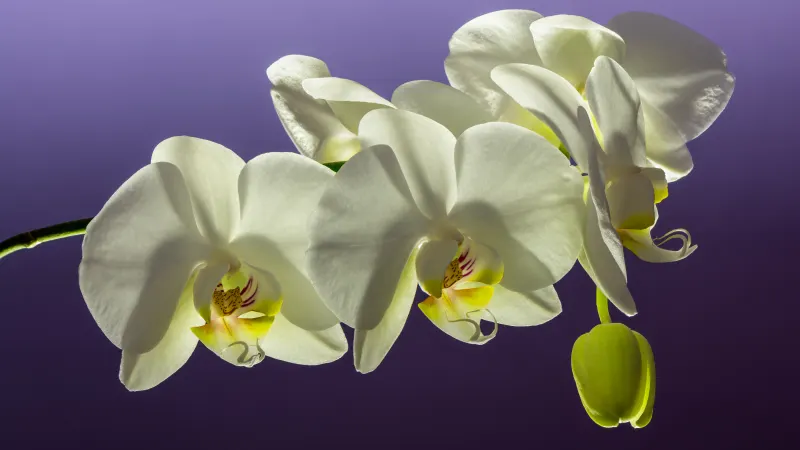
Moth orchid
Phalaenopsis
A Phalaenopsis care guide built on triggers, not timers — how to water a moth orchid without rotting it, the light it needs, and how to make it rebloom instead of binning it.

- Light
- Bright, indirect light; an east-facing window is close to ideal, never harsh direct sun
- Water
- Soak the bark or moss when it has nearly dried, then drain completely — roughly weekly, but read the roots, not the calendar
- Humidity
- Prefers 50–70%; copes with ordinary household air but appreciates a pebble tray in dry winters
- Temperature
- 18–27°C by day; a 5–8°C nighttime drop in autumn helps trigger a new flower spike
- Pets & toxicity
- Non-toxic to cats and dogs — one of the safest flowering plants for pet homes
- Difficulty
- Easy to keep alive once you stop over-watering; reblooming takes a little timing
The orchid in the supermarket trolley isn't a bouquet with a short shelf life — it's a houseplant that flowers for months and comes back for years.
The plant most people throw away too soon
The moth orchid is the best-selling houseplant in much of the world, and also the most quietly wasted. Millions are bought in flower, kept on a windowsill until the last bloom drops, and then binned — because the assumption is that an orchid, like cut flowers, is finished once it stops flowering. It isn't. A Phalaenopsis in good health flowers for two to four months at a stretch, rests, and flowers again, and a well-kept plant lives and reblooms for many years.
Two beliefs do most of the damage. The first is that orchids are difficult and exotic — they're not; a moth orchid is among the easiest flowering houseplants once you understand it isn't grown in soil. The second is the infamous "ice cube" method and its cousins, all of which encourage watering on a fixed schedule, which is exactly how orchids get over-watered and rot. This guide treats the moth orchid as what it is: a tough, long-lived epiphyte whose roots happen to be visible, which means it tells you almost everything you need to know if you'll read them. If houseplants in general are new to you, the ten mistakes every beginner makes sets the foundation — the orchid punishes the watering ones in particular.
Light
Phalaenopsis grow as epiphytes in the shaded canopy of tropical Asian forests, clinging to tree trunks and branches in bright, dappled light rather than full sun. That's the light to recreate: bright but indirect. An east-facing window, with gentle morning sun and bright light the rest of the day, is close to perfect. A north window can work; a south or west window needs a sheer curtain, because direct afternoon sun through glass will scorch the leaves.
The plant carries its own light meter in its leaves, and reading it is the easiest diagnostic in orchid care. Healthy Phalaenopsis leaves are a bright, fresh grass-green. Very dark green, glossy leaves are a sign of too little light — the plant looks lush but won't flower, because it can't bank the energy a flower spike costs. Leaves tinged red or yellow, or with bleached patches, are getting too much direct sun. Aim for that mid grass-green, and adjust the position until the newest leaves come in that colour. Insufficient light is the single most common reason a healthy orchid refuses to rebloom.
How to water a moth orchid
Forget intervals, ice cubes, and "three cubes on Sunday" entirely. A moth orchid isn't potted in soil — it's in chunky bark or loose moss whose only job is to hold the roots and a little moisture — so watering is about soaking and draining, not topping up. And because the roots are usually visible through a clear pot, the plant shows you exactly when it's ready.
Water when the medium has nearly dried out and the roots have turned from green to silvery-grey. A well-hydrated Phalaenopsis root is plump and green; a thirsty one is silvery, slightly shrivelled — that colour change is your trigger. When it's time, take the plant to the sink and water thoroughly, letting water run through the bark for a minute or soak the pot in water for ten, then let every drop drain away before the plant goes back. In an average home that lands near weekly, but bark dries faster than moss, a warm bright room faster than a cool dim one, and a small pot faster than a large one — so read the roots and the weight of the pot, not the day of the week. The principle is the same one in when to water your houseplants, just made visible.
The non-negotiable rule: never let an orchid stand in water. The decorative cover pots they're sold in trap drainage at the base, and roots left sitting in that water rot within weeks — this is the way most "easy" orchids die. After watering and draining, always tip out anything that has collected in the cover pot. When in doubt, wait a day: a moth orchid recovers from being slightly too dry far more easily than from wet, suffocating roots. This is exactly the gap a per-specimen model closes — Botanical Legacy keeps a Digital Shadow of each Specimen in your Sanctuary, a running estimate of how much moisture is left, so you water when this orchid is genuinely approaching dry rather than on a schedule that ignores it. (More owners confuse over- and under-watering on orchids than on any other plant, because limp leaves can mean either.)
Potting medium and roots
A moth orchid is not grown in potting soil and will rot if you put it in any. Its roots are adapted to cling to bark in open air, drawing moisture from rain and humidity and photosynthesising through their green tips — which is why they need light and air, not burial. The standard medium is chunky orchid bark, sometimes sphagnum moss, in a pot with generous drainage. A clear plastic inner pot is worth seeking out: it lets light reach the roots, which they like, and lets you watch both the root colour and the moisture in the medium, which turns watering from guesswork into observation.
Don't be alarmed by orchid roots behaving strangely. Thick aerial roots wandering up and out of the pot into the air are entirely normal — that's what epiphyte roots do, and you should leave them; don't force them into the pot. Repot every one to two years, ideally just after flowering, when the bark has broken down into a dense, water-holding sludge that no longer drains — broken-down medium that stays wet is a slow route to rot. Trim away any soft, brown, hollow roots, keep the firm pale-and-green ones, and settle the plant into fresh bark in a pot only just big enough to hold the roots.
Humidity and temperature
As tropical forest plants, moth orchids prefer 50–70% humidity, but they tolerate ordinary household air reasonably well, especially once established. A pebble tray or a humidifier helps in a dry, heated winter; misting does little and can encourage rot if water settles in the crown — the central point where the leaves meet — so keep that crown dry. Good airflow matters more than heavy misting.
Temperature is comfortable across 18–27°C by day, and the plant is forgiving within that band. The one piece of temperature timing worth knowing is about flowering: Phalaenopsis are triggered to set a new spike by a drop in nighttime temperature in autumn. A few weeks of cooler nights — around 5–8°C below the daytime temperature, easily achieved near a window as the season turns — is what tells the plant to bloom. An orchid kept at a constant warm temperature year-round, healthy in every other respect, may simply never get the signal to flower. Keep it above about 15°C overall and away from cold draughts and heat sources.
Feeding and reblooming
Orchids are light feeders, and the rule of thumb is "weakly, weekly": a dilute orchid fertiliser at quarter to half strength every week or two during active growth, with a plain-water flush once a month to wash out accumulated salts. Feed less in winter while the plant rests. Over-feeding burns the sensitive root tips and does nothing to encourage flowers.
Reblooming is where most owners give up too early, and it comes down to two things. First, light: a plant in too little light won't have the energy to flower, however well you treat it otherwise, so a brighter spot is usually the real fix. Second, the cool-night trigger described above. And when the current flowers fade, don't reach for the secateurs by reflex. If the flower spike is still green, you can cut it back to just above one of the lower nodes (the small bumps along the stem) and it will often rebranch and flower again from there. Only cut a spike right off when it has turned brown and dry. A green spike thrown away is a rebloom thrown away.
Common problems
Most orchid problems are root or water problems wearing a leaf disguise — check the roots before anything else.
Limp, wrinkled leaves. Counter-intuitively, the most common cause is root rot from over-watering, not thirst: dead roots can't take up water, so the leaves dehydrate even in a wet pot. Slide the plant out and look. Firm green-and-silver roots plus dry bark means it's genuinely thirsty — water it. Mushy brown roots in damp bark means rot — trim the dead roots, repot into fresh bark, and water far less.
Yellow leaves. A single oldest (lowest) leaf yellowing and dropping while the rest looks healthy is normal aging. Several leaves yellowing at once points to over-watering, rot, or a cold or sunburnt shock — check the roots and the position.
No flowers. Almost always too little light, sometimes a missing cool-night trigger, occasionally a plant simply between bloom cycles. Move it brighter first; give it cooler autumn nights second; be patient third.
Black or soft crown. Water sitting in the central crown where the leaves meet causes crown rot, which can kill the plant outright. Always keep the crown dry, water at the roots rather than over the top, and tip the plant briefly to drain any water that lands there.
Sticky spots or a white cottony residue. Sap-sucking pests — scale or mealybugs — favour orchids and hide along the stems, under leaves, and in the crevices. Wipe them off with a cotton bud dipped in dilute isopropyl alcohol and check again weekly.
Frequently asked questions
How often should you water a moth orchid?
Don't water by the calendar — water when the bark or moss has nearly dried and the visible roots have turned from green to silvery-grey. Then soak it thoroughly at the sink and let every drop drain away before it goes back in its cover pot. That works out near weekly in an average home, but it varies with the medium, the pot, and the season, so read the roots and the weight of the pot instead of fixing a day. When unsure, wait — wet roots kill far more orchids than thirsty ones.
Should I cut the flower spike after my orchid finishes blooming?
It depends on the spike's colour. If it's still green, cut it back to just above one of the lower nodes — it can rebranch and flower again from there within a couple of months. If it has turned brown and dry, cut it off at the base; that spike is finished, but cooler autumn nights will often prompt the plant to send up a fresh one. Don't bin a green spike — that's a rebloom you're throwing away.
Why won't my orchid rebloom?
Usually too little light — a moth orchid can be perfectly healthy, with lush dark-green leaves, and still lack the energy to flower because its spot is too dim; move it somewhere bright and indirect. The second cause is a missing temperature cue: Phalaenopsis set a new spike after a few weeks of cooler nights in autumn, so a plant kept at a constant warm temperature may never get the signal. Brighter light plus a natural autumn night-time drop fixes most reluctant rebloomers.
Is a moth orchid toxic to cats and dogs?
No. Phalaenopsis orchids are non-toxic to cats and dogs, which makes them one of the safest flowering plants for a home with pets. A pet that chews a lot of any plant may get a mild stomach upset, but there's no toxic compound to worry about — unlike the peace lily or anthurium it often sits beside on the shelf.
Will Botanical Legacy catch pests on my orchid from a photo?
Not reliably. The check-in photo analysis reads what a photo can show — leaf colour, wrinkling, overall vigour, flower condition — and folds it into the plant's running model, which is useful for catching slow declines week to week. But scale and mealybugs hide along the stems, under the leaves, and in the crown crevices, exactly where a photo rarely looks. Checking those spots yourself stays part of the job.
Start your sanctuary
Botanical Legacy's free Observer plan covers up to five Specimens, each with its own continuously running Digital Shadow — and a moth orchid, long-lived and genuinely pet-safe, is a rewarding one to carry from one bloom cycle to the next instead of binning it. Every new account also includes a 14-day trial of Cultivator, the paid plan, which adds the local weather feed and soil sensor support.
Read the roots, keep the crown dry, give it light and a cool autumn — and the supermarket orchid becomes a plant that flowers for you year after year.
START YOUR SANCTUARY — FIVE FREE SPECIMENS, NO PAYMENT REQUIRED →
An orchid isn't disposable — it's a houseplant in disguise, and the disguise is just the flowers you bought it in.