Species care guide
Kalanchoe
Kalanchoe blossfeldiana
A Kalanchoe care guide for the succulent sold in full bloom and usually binned after — how to water it like the succulent it is, deadhead it, and force a rebloom with long nights, plus why it's one to keep away from pets.

- Light
- Bright light with a few hours of direct sun; essential for compact growth and flowering
- Water
- Soak-and-dry like a succulent — let the soil dry out almost completely, then water thoroughly; overwatering is the main killer
- Humidity
- Ordinary, dry household air is fine; it dislikes damp, humid conditions
- Temperature
- 15–27°C; no frost, and protect it below about 10°C
- Pets & toxicity
- Toxic to cats and dogs — contains cardiac glycosides; keep well out of reach
- Difficulty
- Easy to keep alive as a succulent; getting it to rebloom needs a deliberate long-night routine
A kalanchoe is sold as a bunch of flowers with roots. It's a tough little succulent that will flower again — if you stop watering it like a bouquet.
The succulent disguised as a gift bouquet
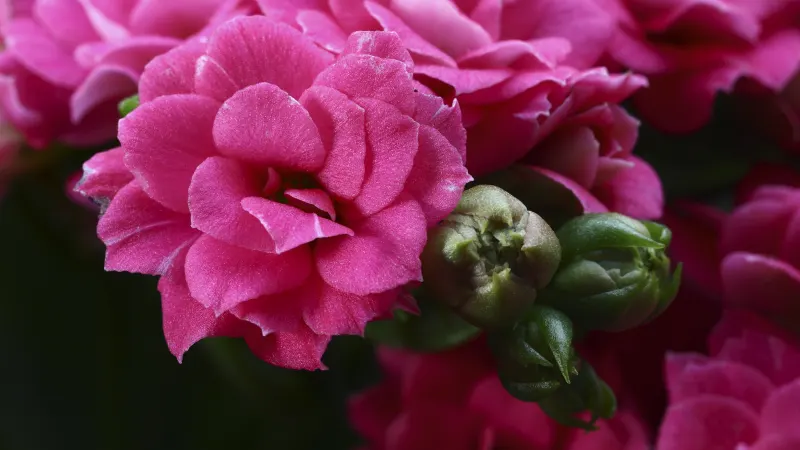
Kalanchoe is everywhere in supermarkets and garden centres, sold in a dense dome of tiny, brightly coloured flowers — hot pink, orange, red, yellow, white — that last for weeks. And like the supermarket orchid it often sits beside, it's usually treated as disposable: kept while it's in flower, then thrown out when the blooms fade, on the assumption that the show is over. It isn't. Underneath the flowers is Kalanchoe blossfeldiana, a hardy succulent from Madagascar that lives for years and can be coaxed to bloom again and again.
The mistake that kills most of them isn't neglect — it's kindness in the form of a watering can. People water the flowering gift generously, the way you'd top up cut flowers, and the succulent roots rot. Get two things right — water it like the drought-adapted plant it is, and give it long nights to rebloom — and a cheap impulse buy becomes a long-term resident. One important caveat runs through this whole guide, so it's worth stating up front: unlike the pet-safe moth orchid, kalanchoe is genuinely toxic to cats and dogs, and that shapes where it should live.
Light
Kalanchoe is a sun-lover, and light is the difference between a compact plant covered in flowers and a pale, stretched one that never blooms. Give it your brightest spot — a windowsill with several hours of direct sun a day is ideal, and it handles more direct light than most flowering houseplants happily. Good light keeps the rosette tight, the leaves a healthy deep green, and the flowering vigorous.
In too little light, the plant tells you quickly: the stems stretch and lean toward the window (a habit called etiolation), the spaces between leaves lengthen, the colour fades, and blooming stops altogether. If your kalanchoe has gone leggy and refuses to flower, insufficient light is almost always the reason, and the fix is simply a brighter position. It's one of the more forgiving plants to move into strong light, so don't be shy about it.
How to water a kalanchoe
This is the single most important section, because overwatering is what kills these plants. Kalanchoe stores water in its thick, fleshy leaves, which means it's built to ride out dry spells and to resent constantly damp soil. Water it on a soak-and-dry rhythm: let the soil dry out almost completely, then water thoroughly until it runs from the drainage holes, and tip away anything that collects underneath. Then wait, and don't water again until the soil is dry once more.
In practice that's noticeably less often than a leafy houseplant — perhaps every week or two in warm bright conditions, and considerably less in winter when growth slows right down. The reliable test is your finger, not the calendar: push it a couple of centimetres into the soil, and only water if it's dry. When you're unsure, wait — a kalanchoe shrugs off being a little too dry far more easily than it survives sitting wet. More of these plants die from over- than under-watering, which is exactly the confusion covered in overwatering versus underwatering; with a succulent, the bias should always lean dry. The general habit of reading the plant rather than a schedule is the same one in when to water your houseplants.
A per-plant model helps here precisely because succulents punish the "everything gets watered on Sunday" reflex. Botanical Legacy keeps a Digital Shadow of each Specimen — a running estimate of how much moisture is left in the pot — so a thirsty fern and a drought-happy kalanchoe on the same windowsill get watered on their own schedules instead of a single shared one.
Soil and potting
Give a kalanchoe the fast-draining home a succulent needs: a cactus and succulent compost, or ordinary potting mix cut heavily with perlite or coarse sand so water passes through quickly. A pot with drainage holes is essential — the decorative foil-wrapped or hole-free pots these are often sold in trap water at the roots and cause rot within weeks, so unwrap the foil or repot into something that drains as soon as you get it home.
These plants don't need frequent repotting and are happy slightly snug. Move up a pot size only every couple of years, or when roots are clearly filling the container, and do it in spring as growth picks up. Take the chance to check the roots are firm and pale rather than soft and brown.
Humidity and temperature
Unusually for a houseplant, kalanchoe actively prefers ordinary dry household air and dislikes high humidity, which encourages fungal problems and rot on its fleshy leaves. So there's no pebble tray or humidifier to worry about here — a normal, well-ventilated room is exactly right, which makes it an easy plant to site.
On temperature, it's comfortable across roughly 15–27°C. It has no frost tolerance and should be protected from anything below about 10°C, so keep it off cold windowsills in winter and away from draughts. Warmth and bright light are its two favourite things, and given both it grows and flowers with very little fuss.
Deadheading and reblooming
Two habits turn a one-off flowering gift into a plant that blooms repeatedly. The first is deadheading: as the flowers fade, pinch or snip off the spent heads along with their thin stalks. This keeps the plant looking tidy, stops it spending energy on dying blooms, and encourages fresh growth. After a full flush finishes, cutting the plant back a little also helps it bush out rather than grow leggy.
The second is the rebloom trigger, and like the Christmas cactus, kalanchoe is a short-day plant: it sets flower buds in response to long, uninterrupted nights. To force a rebloom, give it around six weeks of roughly 14 hours of complete darkness every night — a cupboard, an unused room, or a box placed over it each evening — with bright light during the day and reduced watering through the period. The "uninterrupted" part matters: even a lamp switched on for a while, or light leaking under a door, can reset the plant's internal clock and prevent budding. Once buds form, return it to a bright spot and resume normal care, and it'll flower again. Without this deliberate routine, an indoor kalanchoe often stays green and healthy but simply never reblooms, which is why so many are assumed to be spent and thrown away.
Common problems
Leggy, stretched, pale growth. Too little light. The stems elongate and lean toward the window, and flowering stops. Move it to your brightest spot with some direct sun, and cut it back to encourage bushier regrowth.
Soft, mushy, or yellowing leaves at the base. Overwatering and root rot — the classic kalanchoe killer. Let the soil dry out fully, check the roots are still firm, and repot into gritty, fast-draining mix if they've started to rot. Water much less going forward.
Wrinkled, shrivelled leaves. The opposite, and less common — genuine underwatering. The fleshy leaves lose their plumpness when the plant has been dry too long. Give it a thorough soak and it should recover quickly.
Never reblooms despite looking healthy. It needs the long-night treatment. Around six weeks of 14 hours of uninterrupted darkness each night, with bright days, is what triggers bud set. A plant kept in normal evening room light indefinitely rarely flowers again on its own.
Leaves dropping. Often a sign of stress from cold, a draught, or overwatering. Check it's warm enough, out of cold air, and not sitting in damp soil.
Frequently asked questions
How often should you water a kalanchoe?
Less often than you think. Treat it as the succulent it is: let the soil dry out almost completely, then water thoroughly and let it drain. In warm, bright conditions that might be every week or two; in winter it's much less. Always test the soil with your finger first and water only if it's dry a couple of centimetres down. When in doubt, wait — overwatering and root rot kill far more kalanchoes than drought does.
How do I get my kalanchoe to flower again?
Give it long nights. Kalanchoe is a short-day plant that sets buds after about six weeks of roughly 14 hours of complete, uninterrupted darkness each night, paired with bright light during the day and reduced watering. A cupboard overnight or a box placed over it each evening works — but any light breaking the darkness, even briefly, can stop it budding. Once buds appear, return it to a bright spot and care for it normally. Deadheading spent blooms and a light trim also help it rebloom.
Is kalanchoe toxic to cats and dogs?
Yes. All parts of a kalanchoe are toxic to cats and dogs — it contains cardiac glycosides (bufadienolides) that can cause drooling, vomiting, and diarrhoea, and in larger amounts can affect heart rhythm. It's one of the more genuinely toxic common houseplants for pets, so keep it well out of reach on a high shelf or in a room your animals don't access, and contact a vet if you suspect a pet has eaten any. If you want colour in a pet-friendly home, a moth orchid or an African violet is a far safer flowering choice.
Why is my kalanchoe leggy and not blooming?
Almost certainly not enough light. In dim conditions the stems stretch and lean, the colour fades, and the plant won't flower. Move it to your brightest window with a few hours of direct sun, cut back the leggy growth to encourage a bushier shape, and then give it the long-night treatment when you want it to rebloom.
Can Botanical Legacy help me not overwater it?
That's exactly the kind of thing it's built for. Because a kalanchoe wants to dry out between drinks while your leafy plants don't, a single watering schedule for the whole shelf overwaters the succulent. Botanical Legacy keeps a Digital Shadow of each Specimen and reminds you to water this plant on its own drought-friendly rhythm — and if you add a soil sensor on the paid plan, the model anchors to the real moisture in the pot rather than an estimate.
Start your sanctuary
Botanical Legacy's free Observer plan covers up to five Specimens, and a kalanchoe is a satisfying one to keep — cheap to start with, tough once you stop overwatering it, and genuinely rewarding to bring back into flower. Every new account also includes a 14-day trial of Cultivator, the paid plan, which adds the local weather feed and soil sensor support that make succulent watering almost foolproof.
Water it dry, give it sun, dark nights on cue, and a shelf your pets can't reach — and the gift-shop succulent flowers for you for years.
START YOUR SANCTUARY — FIVE FREE SPECIMENS, NO PAYMENT REQUIRED →
A kalanchoe doesn't ask for much: strong light, a dry-then-drenched rhythm, and long nights when you want more flowers. Give it those and it outlives every bouquet it was mistaken for.