Species care guide
Ponytail palm
Beaucarnea recurvata
A ponytail palm care guide that starts from the fact that it isn't a palm at all — it's a drought-loving succulent that stores water in its swollen 'foot', so overwatering, not neglect, is what kills it.

- Light
- Bright light, the more the better; it happily takes several hours of direct sun and only sulks in genuinely dim spots
- Water
- Soak thoroughly, then let the soil dry out completely before watering again — roughly every 2–3 weeks in growth, monthly or less in winter; the swollen base stores its own reserve
- Humidity
- Low to average; a desert plant that's entirely unbothered by dry air
- Temperature
- 18–27°C in growth; tolerates brief dips to around 10°C but no frost
- Pets & toxicity
- Non-toxic to cats and dogs — genuinely pet-safe
- Difficulty
- Very easy; it thrives on neglect and the only real way to fail is to overwater it
A ponytail palm is a cactus wearing a wig. Water it like a palm and you'll rot it; water it like the desert succulent it is and it'll outlive your furniture.
The plant with a false name and a secret water tank
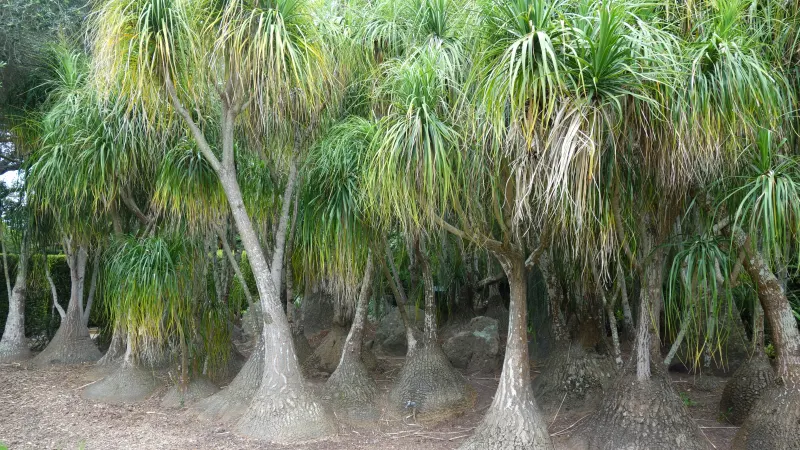
The ponytail palm gets almost everyone with its name. It has a fountain of long, arching, strappy leaves that spill out of the top like a green ponytail, sitting on a fat, woody, bulbous base — and "palm" feels like the obvious label. It's wrong twice over. Beaucarnea recurvata is not a palm; it's a succulent in the asparagus family, more closely related to agaves than to any palm tree. And that swollen base, which earns it the other common name "elephant's foot", isn't just for looks — it's a water-storage organ, a built-in reservoir the plant draws on through long dry spells.
Those two facts hand you the entire care manual. Because it's a desert succulent with its own water tank, the way to kill a ponytail palm is to be kind to it — to water it often, keep the soil moist, and rot the base you were trying to nurture. The way to keep it happy is closer to benign neglect: lots of light, a deep drink now and then, and long stretches of dry in between. It's one of the most forgiving houseplants you can own, provided you resist the urge to fuss. If you tend to overwater, the overwatering-versus-underwatering guide is worth reading alongside this — with a ponytail palm, erring dry is almost always the safer mistake.
Light
Ponytail palms come from the hot, bright, semi-arid regions of eastern Mexico, and they carry that sun-loving nature indoors. Give one the brightest spot you have. Unlike many houseplants that scorch in direct light, a ponytail palm is happy with several hours of it — a south- or west-facing window is ideal, and outdoors in summer it will bask in full sun once acclimatised. More light means stronger, more upright growth and a healthier plant overall.
It will tolerate medium light and survive further from a window, which is why it turns up in offices and living-room corners, but tolerance shades into decline over time: in genuinely low light the growth slows to nothing and the plant loses its lushness. If yours looks limp or isn't growing, the fix is almost always more light rather than more water. This is the rare houseplant where you can comfortably put it in the sunniest spot in the house and expect it to thank you.
How to water a ponytail palm
Here's where the name does its damage, so be deliberate about ignoring it. Water a ponytail palm like a succulent, not like a leafy tropical: soak it thoroughly, then let it dry out completely, then wait a while longer. When you water, do it properly — drench the soil until it runs from the drainage holes, which fully hydrates the roots and, through them, tops up the reservoir in the base. Then leave it alone. The soil should dry out entirely, all the way to the bottom of the pot, before the next drink. In warm, bright, growing conditions that might be every two to three weeks; in the cool and low light of winter it can stretch to a month or more.
The reason to be so patient is that the swollen base is doing exactly what it evolved to do — carrying the plant through drought. A ponytail palm that looks fine after three weeks without water isn't suffering; it's living off its tank. Overwatering, by contrast, is the number one cause of death: kept constantly moist, the roots and then the base rot, and a soft, spongy, discoloured trunk is very hard to save. The base should feel firm and hard, like a swollen woody bulb. If it starts to feel soft or squishy, you're overwatering, and the answer is to stop and let everything dry out. When you genuinely can't decide whether to water, the correct move with this plant is almost always to wait — which is exactly the kind of "is it dry yet?" judgement a per-specimen Digital Shadow is built to help with, since it models the reserve draining down rather than nagging you on a fixed weekly schedule this plant would hate.
Soil and potting
Fast drainage is non-negotiable. Pot a ponytail palm in a gritty, open mix — a bagged cactus and succulent compost is perfect, or ordinary potting soil bulked up with plenty of perlite, coarse sand, or fine grit. The goal is a medium that lets water rush through and air reach the roots, never one that stays soggy. A pot with real drainage holes is essential, and terracotta earns its place here by breathing and pulling excess moisture out of the soil.
Resist the temptation to over-pot. Ponytail palms are slow growers that are perfectly content slightly root-bound, and a container that's too large holds a reservoir of wet soil the roots can't use quickly, which is just overwatering by another route. Repot only every few years, when the plant is clearly crowded or top-heavy, and step up by a single modest size. Handle the base gently when you do — it's woody and tough, but the surface roots are not.
Humidity and temperature
If you've been fighting to keep a fern or calathea happy, a ponytail palm is a holiday. It doesn't care about humidity. Dry indoor air, the kind that browns the tips of tropical plants, is close to its native climate, so there's no misting, no pebble tray, nothing to manage. Average household humidity — or less — is completely fine.
Temperature is almost as easy. It's happiest in ordinary warm room conditions of roughly 18–27°C. It can tolerate a brief dip to around 10°C without harm, but it has no frost tolerance, so if you summer it outdoors, bring it back inside well before the first cold nights. Keep it away from freezing windowsills in winter and it will be content.
Growth, pups, and the long game
Patience is the theme. Indoors, a ponytail palm grows slowly, but over many years it can become a substantial specimen with a broad, characterful base and a full head of leaves — plants like this are genuinely handed down, which suits a plant sold as a symbol of long life. The leaves grow from the top, so the plant gradually gains height while the base thickens.
Mature, happy plants sometimes produce offsets — small "pups" that sprout from the base. You can leave them to form a fuller, multi-headed clump, or once they're a decent size, cut them away cleanly and pot them up in the same gritty mix to root as new plants. Beyond the occasional tidy-up of dry lower leaves, there's very little routine maintenance; this is a plant that rewards being left largely alone.
Common problems
A soft, squishy, or discoloured base. The serious one: rot from overwatering. A firm, hard base is healthy; a soft one means water has been sitting too long. Stop watering immediately, let everything dry out thoroughly, and if the rot is advanced you may need to cut back to firm tissue and let it callus. Prevention — dry soil between deep drinks — is far easier than the cure.
Brown, crispy leaf tips. Usually cosmetic and common. It can come from underwatering, from a build-up of minerals, or simply from the natural drying of leaf ends. You can trim the brown tips at an angle to keep the plant looking neat; as long as the base is firm and the plant is growing, it's nothing to worry about.
Yellowing leaves. Often a sign of overwatering when widespread, especially paired with a softening base. A few older lower leaves yellowing and drying is normal ageing. Check the base and the soil moisture to tell the difference.
Limp, pale, or non-growing plant. Typically too little light. Move it to the brightest spot you have and expect a slow recovery — this plant wants sun.
Leaves with a curled, wrinkled, or shrivelled base. Sometimes a sign it's been dry for a very long time and has drawn down its reserve. A thorough soak will usually plump it back up; then return to the normal soak-and-dry rhythm.
Frequently asked questions
How often should you water a ponytail palm?
Water only when the soil has dried out completely, all the way through the pot — often every two to three weeks in warm, bright growing conditions, and as little as once a month in winter. When you do water, soak it thoroughly and let it drain, then wait for full dryness again. The swollen base stores water, so the plant tolerates long dry spells easily; it's constant moisture it can't survive.
Why is my ponytail palm getting brown tips?
Brown, crispy leaf tips are very common and usually cosmetic. They can come from letting it get too dry for too long, from mineral build-up in the soil or water, or just from the natural ageing of the long leaf ends. You can trim the tips at an angle for looks. As long as the base stays firm and the plant is otherwise healthy, brown tips aren't a cause for concern.
Why is the base of my ponytail palm going soft?
A soft, squishy base is a warning sign of rot, almost always from overwatering. The base should feel firm and hard — it's a water-storage organ, not a sponge that should feel wet. Stop watering, let the soil and plant dry out completely, and improve the drainage. If the softness is spreading, you may need to cut away the rotted tissue back to firm, healthy material.
Is a ponytail palm toxic to cats and dogs?
No — the ponytail palm (Beaucarnea recurvata) is considered non-toxic to cats and dogs, which makes it a genuinely pet-safe choice. The strappy leaves can be tempting for a cat to chew, and a lot of any plant material might cause a mild stomach upset, but there's no toxic compound here to worry about.
Can Botanical Legacy help me avoid overwatering it?
Yes — this is exactly the plant that benefits. Overwatering is the main way ponytail palms die, and the hard part is judging when the pot has truly dried out. The Digital Shadow models each plant's soil moisture draining down over time, so instead of watering on a habit or a calendar, you water when this pot is genuinely dry. For a succulent that would rather be forgotten than fussed over, that patient, evidence-based timing is precisely the right kind of help.
Start your sanctuary
Botanical Legacy's free Observer plan covers up to five Specimens, and a ponytail palm is one of the most rewarding low-effort plants to grow with — slow, sculptural, pet-safe, and almost impossible to kill once you stop overwatering it. Every new account also includes a 14-day trial of Cultivator, the paid plan, which adds a local weather feed and soil sensor support for the rest of your collection.
Give it sun, soak it now and then, and otherwise leave it be — and this false palm with its hidden water tank will keep growing quietly for decades.
START YOUR SANCTUARY — FIVE FREE SPECIMENS, NO PAYMENT REQUIRED →
The whole trick is in the base. It's a water tank, not a sponge — keep it firm and dry between drinks, and the rest takes care of itself.