Species care guide
Sago palm
Cycas revoluta
A sago palm care guide built on the facts that matter most: it's an ancient cycad rather than a palm, overwatering rots its water-storing caudex and is the commonest way to kill one, and every part of it is severely — often fatally — toxic.

- Light
- Bright light with a few hours of direct sun; rotate it regularly so the ring of fronds grows even and symmetrical.
- Water
- Let the soil dry out substantially between waterings — the sago stores water in its caudex and overwatering, which rots that base, is the single most common way to kill one.
- Humidity
- Average room humidity is fine; it is not fussy about moisture in the air.
- Temperature
- 18–24°C indoors; it has some cold tolerance but protect it from frost and cold draughts.
- Pets & toxicity
- Severely toxic to cats, dogs, and people — every part contains cycasin and the seeds are the most poisonous of all; ingestion causes liver failure and is frequently fatal even with prompt veterinary care, so never keep it where pets or children can reach it.
- Difficulty
- Easy to keep alive and hard to kill by neglect — the only real dangers are overwatering and its toxicity, not fussiness.
A sago palm isn't a palm at all — it's a cycad, a living fossil from the age of the dinosaurs. Water it like a thirsty tropical and you'll rot it from the base up; and unlike almost anything else on your shelf, every part of it is genuinely poisonous.
The living fossil that only looks like a palm
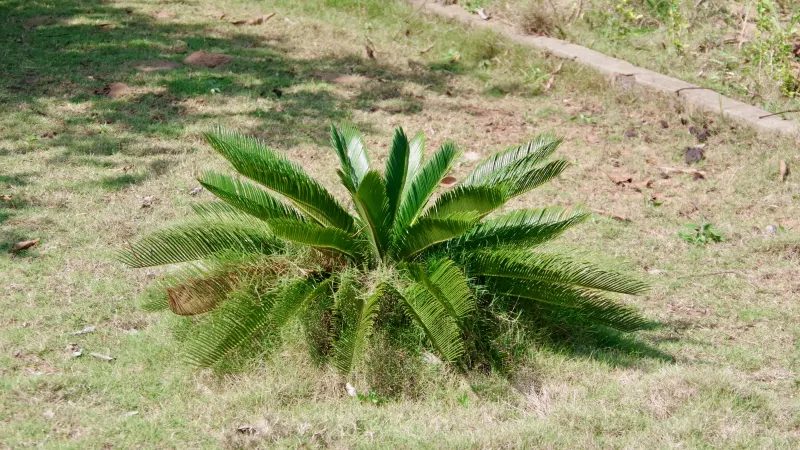
The sago palm fooled whoever named it. Those stiff, glossy fronds radiating from a squat woody trunk do a convincing impression of a small palm, but Cycas revoluta isn't a palm and isn't even close. It's a cycad — an ancient gymnosperm more akin to conifers and ginkgos than to any palm, from a lineage that flourished alongside the dinosaurs and has barely changed since. It grows wild on the warm, dry hillsides of southern Japan, and its slowness, toughness, and drought tolerance trace to that ancestry — not to the rainforest a true palm like the parlor palm calls home.
Reframing it as a cycad rewrites the care. This isn't a thirsty plant to keep evenly moist; it's a slow, armoured survivor that stores its own water and resents being pampered. Two facts define everything. First, it hates wet feet — overwatering is the single most common way to kill one. Second, it's genuinely dangerous: severely, sometimes fatally toxic to pets and people, which earns its own section below. New to houseplants? The beginner's guide to plant care pairs well — the sago rewards restraint, not attention.
Light
Give a sago palm plenty of light. It wants your brightest spot — a window where it catches a few hours of direct sun is ideal — and good light keeps the fronds short, stiff, and deep glossy green while powering its slow growth.
It tolerates medium light, but at a cost: in a dim corner the new fronds come in longer, softer, and paler, losing the sculptural symmetry that makes the plant handsome. Because it grows as a rosette — a ring of fronds around a central crown — rotate the pot a quarter-turn every week or two so all sides get equal light, or the ring grows lopsided and leans toward the window.
Water: the one thing that kills sago palms
If you remember nothing else: sago palms die from overwatering far more often than from anything else. The plant stores water in a swollen, woody stem called the caudex — the fat trunk at its base, often partly below the soil line — that carries it through long dry spells. Kept constantly wet, that same caudex rots, and caudex rot is usually a death sentence.
So water it like the drought-adapted plant it is. Soak until water runs from the drainage holes, then let the soil dry out substantially — well down through the pot, not just the surface — before watering again: every week or two in warm growth, a month or more in winter. When unsure, wait — a sago that's gone a fortnight dry isn't suffering, it's living off its tank. It's the same erring-dry discipline that keeps a ponytail palm or a ZZ plant alive, and the overwatering-versus-underwatering guide is worth reading too.
The sago has one advantage over a water-grown plant: it's soil-grown, so "how dry is it,?" has a real answer to measure. That's exactly what a per-specimen Digital Shadow models — soil moisture draining down over days — so you water when this pot is genuinely ready, not on a habit the plant would hate.
The annual flush of new fronds
Sago palms grow in a way that surprises people used to steady, leaf-by-leaf houseplants. Rather than trickling out growth all year, a healthy sago usually produces a single flush of new fronds once a year — typically in spring or summer — then does little visible growing for months.
A ring of new leaves emerges all at once from the centre of the crown — soft, pale, and coiled, unfurling like a circle of ferns — and over a few weeks stiffens, darkens, and settles into the firm, glossy ring you expect. While they're soft, leave them completely alone: don't handle them, don't move or sharply rotate the plant, don't change its light, because fronds that harden in the wrong position stay bent for life. Keep light and watering steady and let the ring firm up on its own.
Above all, don't mistake the sago's slowness for a problem: a plant that flushes once a year and then sits still isn't sick — it's doing exactly what a cycad does.
Feeding and potting
The sago's slow metabolism means it needs very little feeding. A diluted balanced houseplant fertiliser, or a palm or cycad feed, about once a month through spring and summer is plenty; stop entirely in autumn and winter. Cycads are prone to magnesium and manganese shortfalls, so choose a feed with trace elements, and err towards too little — overfeeding does more harm than a lean diet.
Potting follows from the watering. Sharp drainage is non-negotiable: a gritty, open mix — cactus or palm compost, or potting soil cut generously with perlite, coarse sand, or grit — in a pot with drainage holes, never standing in a saucer of water. Sagos are slow growers content slightly pot-bound, so repot rarely — every three to four years at most — and step up just one modest size, since a large pot of wet soil is caudex rot by another route.
A serious note on toxicity
This deserves plain, unhurried words, because the sago palm is the most dangerous plant in this catalogue. Every part of it is toxic, and the seeds — the round, orange-red "nuts" a mature female plant produces — are the most poisonous of all. The primary toxin is cycasin, which the body converts to methylazoxymethanol, a compound severely damaging to the liver.
The ASPCA lists Cycas revoluta as toxic to dogs, cats, and horses, and dogs are by far the commonest victims — the seeds and even the bark are appealing to chew, and it takes very little. Ingestion typically causes vomiting, dark or bloody stool (melena), lethargy, and, within a day or two, acute liver failure. Even with aggressive, immediate veterinary treatment the fatality rate is high — commonly cited at around 50% or more. If you suspect a pet or a child has chewed any part of a sago, treat it as an emergency at once.
So the rule is simple and firm: never keep a sago palm where a pet or a small child can reach it — and if you can't guarantee that, reconsider owning it at all.
Humidity and temperature
The sago's remaining needs are undemanding. It doesn't care about humidity — average household air suits it fine, with no misting or pebble trays, and dry indoor air that would brown a fern's tips barely registers.
Temperature is nearly as easy. Ordinary warm room conditions of roughly 18–24°C are ideal. The sago is hardier than most houseplants and shrugs off cooler spells, but indoors it's happiest kept comfortable and away from hard frost, freezing windowsills, and cold draughts, which can damage or brown the fronds.
Common problems
Yellowing fronds. The commonest complaint, with two main causes. Usually it's overwatering — soggy soil rots the roots and caudex, which shows first as yellowing leaves, so check the soil and the firmness of the base first. Less often it's a nutrient deficiency, as cycads are prone to magnesium and manganese shortfalls — fixed with a trace-element feed. A lowest frond or two yellowing one at a time is just normal ageing.
A soft or mushy base. The serious one. The caudex should feel hard and firm, like a woody bulb; soft, spongy, or discoloured means caudex rot from overwatering, and it is frequently fatal. Stop watering, let everything dry out, and cut back to firm tissue if the rot is localised — but prevention beats any cure.
No new growth. Usually no problem: sagos grow slowly and flush only once a year, so long still stretches are normal. If the plant is otherwise firm and green, be patient.
Browning frond tips. Usually cosmetic — dry air, mineral build-up, underwatering, or cold draughts. Trim them at an angle if you like, and keep watering and warmth steady.
Frequently asked questions
How often should you water a sago palm?
Water only when the soil has dried out substantially — well down through the pot, not just the surface. In warm, bright conditions that's often every one to two weeks; in winter, a month or more. Always soak thoroughly and never leave the pot standing in water. The caudex stores water, so when unsure, wait — constant moisture is what kills it.
Why is my sago palm turning yellow?
Most often, overwatering: soggy soil rots the roots and caudex, and yellowing fronds are the first sign, so check the soil moisture and press the base to feel whether it's still firm. The other common cause is a nutrient deficiency: cycads are prone to magnesium and manganese shortfalls, fixed by a trace-element feed. A single old, lowest frond yellowing now and then is just normal ageing.
Is a sago palm toxic to dogs?
Yes — severely; it's one of the most dangerous plants you can keep around a dog. Every part is toxic, the seeds most of all, and the primary toxin, cycasin, causes vomiting, bloody stool, lethargy, and acute liver failure. Dogs are the commonest victims because the seeds and bark are tempting to chew, and even a little can be lethal, with a high fatality rate even under prompt veterinary care. Treat any suspected ingestion as an emergency, and keep a sago out of a dog's reach entirely.
Why isn't my sago palm growing?
Probably because it's a sago palm — that's what they do. Cycads are famously slow, and a healthy one produces just one flush of fronds a year before going quiet again, so long motionless stretches are completely normal. If the fronds are firm and green and the base is hard, be patient; a whole season with no flush at all suggests too little light or too cold a spot.
Can Botanical Legacy help me look after a sago palm?
Yes — it suits this plant especially well. Because a sago is soil-grown and dies chiefly from overwatering, the Digital Shadow's core question — how dry is the soil,? — is exactly the right one here. It models each Specimen's soil moisture draining down over time, so you water when this pot is genuinely ready rather than on a schedule that would rot the caudex. Pair it with the overwatering-versus-underwatering guide and you've covered the sago's biggest risk.
Start your sanctuary
Botanical Legacy's free Observer plan covers up to five Specimens, and a sago palm makes a striking, near-permanent one — slow, sculptural, and tough, as long as you keep it dry between drinks and safely out of reach. Every new account also includes a 14-day trial of Cultivator, the paid plan, which adds a local weather feed and soil sensor support to sharpen the watering judgement this plant depends on.
Give it bright light, water it rarely, respect its toxicity, and let it grow at its own ancient pace — and this dinosaur-age cycad will outlast almost everything else you own.
START YOUR SANCTUARY — FIVE FREE SPECIMENS, NO PAYMENT REQUIRED →
It isn't a palm and it isn't in a hurry. Keep it dry, keep it bright, and keep it where nothing can chew it — and this living fossil will quietly outlast its keepers.