Plant care · 12 min read
Why are my plant's leaves turning yellow? Read where it starts, then check the soil
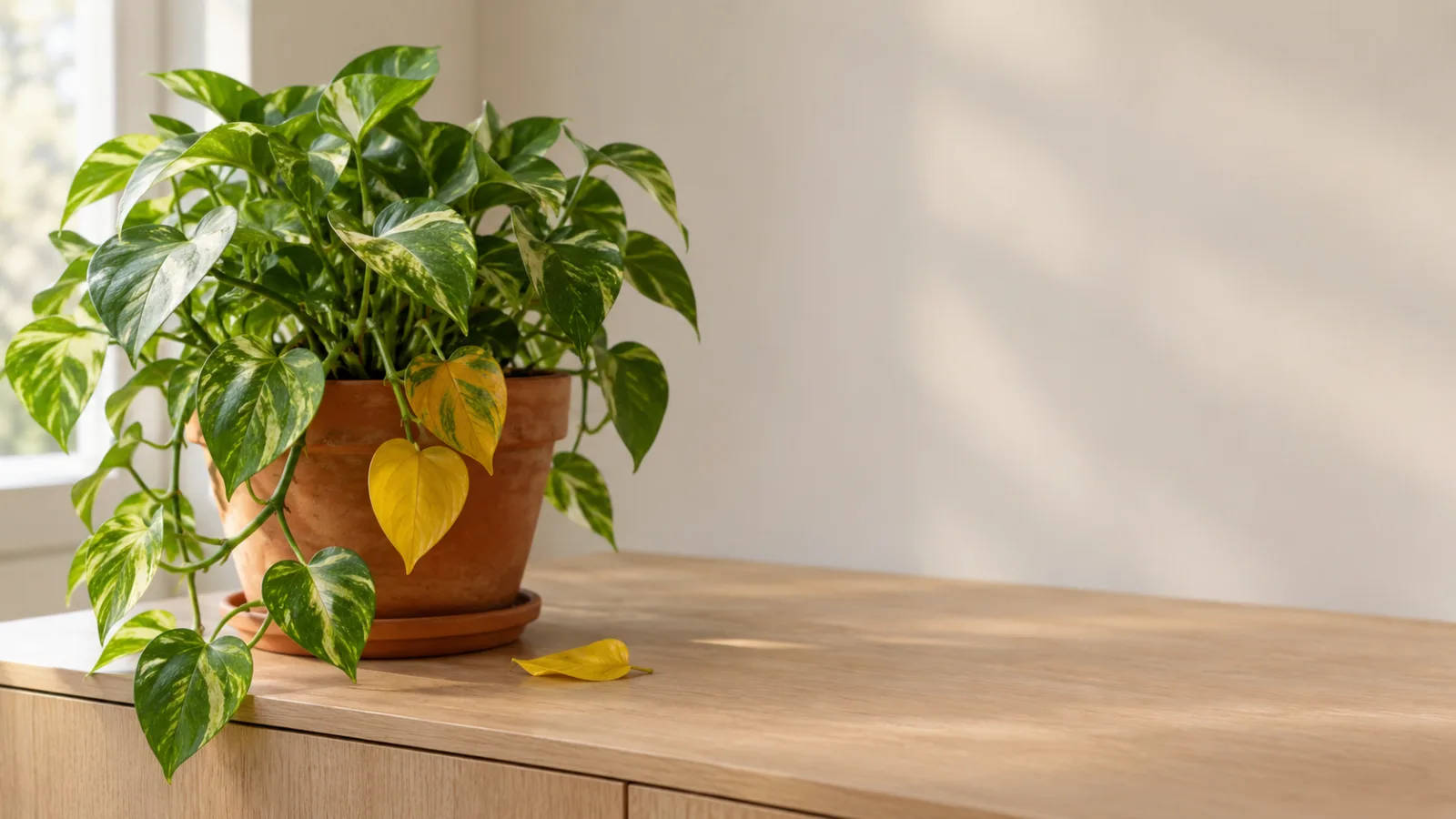
Yellow leaves have half a dozen causes, and the fix for one makes another worse. Where the yellow starts, the pattern on the leaf and the state of the soil narrow it down before you water, feed or move anything.
Botanical Legacy · Field notes ·
A yellow leaf tells you where to look. It doesn't tell you what went wrong.
Yellow is a symptom, not a diagnosis
A leaf is green because it is full of chlorophyll. When a leaf turns yellow, the plant has stopped making or keeping that chlorophyll, and there are many reasons it might: the roots can't take up water or nutrients, a nutrient has run short, the leaf no longer earns its keep in the light it gets, something is feeding on it, or it is simply old. The colour is the same in every case. That is why "my plant's leaves are turning yellow" is one of the most searched houseplant questions, and why most quick answers to it are wrong half the time.
The popular answers come in two flavours. One says yellow means thirsty, so water it. The other says yellow means hungry, so feed it. Both treat the colour as the diagnosis, and both can make things worse. Overwatering is the cause extension services name most often, and a plant yellowing in waterlogged compost gets neither water nor food from either fix: wet, airless compost reduces how much the roots can take up in the first place, and fertiliser added to a pot that isn't draining builds up salts the roots then have to sit in.
The better question is not "why is it yellow" but "which leaves, what pattern, and what does the soil say". Those three readings come from a single piece of plant physiology.
Some nutrients move and some don't. Nitrogen, phosphorus, potassium and magnesium are mobile inside a plant: when supply runs short, the plant pulls them out of its older leaves and sends them to new growth. So a shortage of a mobile nutrient shows first on the lower, older leaves. Iron, calcium, sulphur and boron are immobile: once built into a leaf they stay there, so a shortage of those shows first on the newest leaves at the top. The same logic explains ordinary ageing. As a leaf reaches the end of its life, the plant draws its nitrogen back out for newer growth, and the leaf yellows and drops. An occasional old leaf at the base going yellow on a plant that is otherwise growing well is not a problem at all.
So the position of the yellow is the first clue. The pattern on the leaf is the second: a general, even yellowing reads differently from yellow between green veins (interveinal chlorosis), which reads differently again from fine pale speckling. The soil is the third, and it is the one that most often settles the question, because the most common cause, water, can yellow old and new leaves alike. For the watering side in depth, the overwatering vs. underwatering guide walks through the order those symptoms arrive in.
What to do
Check the soil before anything else. Push a finger into the compost a few centimetres down and lift the pot. A pot that is heavy, with compost that stays wet days after watering, points at overwatering or poor drainage, whichever leaves are yellow. The RHS describes old and new leaves yellowing and dropping at the same time as the overwatering pattern. A light pot with compost dried right through, and older leaves at the base yellowing and falling, points the other way. Until you know which, don't water or feed. When to water houseplants covers reading the soil in more detail.
Note where the yellow started. Lower, older leaves first, spreading upwards slowly, is the shape of a mobile-nutrient shortage (most often nitrogen), of underwatering, of a plant that has outgrown its light, or of ordinary ageing. Newest leaves first points at an immobile nutrient such as iron, at a pH problem that stops the roots taking iron up, or again at overwatering. All over at once points at the roots, the temperature or a sudden change.
Look closely at the pattern. An even, pale yellow on older leaves is the classic nitrogen picture. Yellow between veins that stay green is interveinal chlorosis: on older leaves it suggests magnesium, on the youngest leaves iron. Fine pale speckling on the upper surface, sometimes with webbing, is the mark of spider mites; turn the leaf over and look for them underneath. The signs of these and other pests are in the guide to common houseplant pests.
Think back two weeks. A move to a new room, a cold draught from a window or a door, a radiator switched on, a repot or a new watering routine can all show up as yellow leaves. Cold draughts cause yellowing and dry leaf edges, and a sudden change of light or temperature can set off leaf drop that lasts a few weeks while the plant adjusts. If the plant was moved or the heating came on, the cause may already be behind you.
Fix the roots before you feed. If the compost is waterlogged, let it dry further than usual before the next drink, empty any saucer or cachepot the pot stands in, and check that water can leave the pot at all. If the stem is soft at the soil line or the compost smells sour, ease the plant out and look at the roots: firm and pale is healthy, brown and mushy is rot. Feeding a plant whose roots are failing adds salts to a pot that is already in trouble.
Feed only for a real shortage, and only in season. A plant that has sat in the same compost for a year or two, is growing slowly and is paling from the bottom up may simply be hungry. Feed it during the growing season, roughly March to October; in winter, light levels are too low for much growth, and the RHS limits feeding then to about once a month. If white crust is building up on the compost or the pot rim, that is salt from fertiliser or hard water: water through thoroughly to wash it out rather than adding more.
Take off fully yellow leaves, and judge the fix by new growth. Remove leaves that have turned completely yellow with clean scissors at the base, and keep any that are still mostly green, because they are still feeding the plant. Then watch what grows next. New leaves coming in green and the yellowing no longer spreading are the signs the cause has been dealt with.
Three ways this plays out
The pothos in the decorative pot
A pothos on a bookshelf starts yellowing in October: two old leaves at the base, then a new leaf near the tip, then a third. It sits in a glazed pot with no hole, inside which the plastic nursery pot stands in a centimetre of water. The owner has been watering every Sunday, as in summer. The yellow is on old and new leaves at once, the pot is heavy, and the compost is cold and wet a few centimetres down. Feeding would have added salts to a waterlogged pot. Instead, the nursery pot is lifted out, drained, left to dry until the top few centimetres are dry, and watered on the soil's say-so from then on. The yellow leaves come off and new growth comes in green. The lesson: yellow on old and new leaves together, on a heavy pot, is a water problem until proven otherwise.
The weeping fig that was moved
A weeping fig is moved a metre back from a bright window to make room for a sofa. Within a fortnight it is dropping yellow leaves from all over the plant, and the owner, alarmed, waters it more and buys a fertiliser. The soil had been fine. Weeping figs are well known for shedding leaves when they are moved, and a plant that has less light than it is used to sheds the leaves it built for brighter conditions, then grows new ones suited to the room. The fix is to choose a bright spot, leave it there, and keep watering to what the soil says, not to the alarm. The lesson: when the yellowing follows a change, the change is the cause, and more water or food only adds a second problem.
The spider plant three years in one pot
A spider plant has been in the same pot and the same compost for three years. It is growing slowly, the lower leaves have faded to a pale, even yellow, and the paleness is creeping upwards over months. The soil dries normally between waterings, there is no speckling under the leaves, and nothing in the room has changed. This is the shape of a nitrogen shortage: a mobile nutrient being pulled from old leaves to keep the new ones going. A balanced liquid feed through spring and summer, and a move into fresh compost in spring, bring the new growth back to full colour. The lesson: a slow, bottom-up fade with healthy roots and no change in routine is the one case where feeding is the answer.
What Botanical Legacy does about it
The app can't look at a leaf for you every morning, but it can take the guesswork out of the readings this post keeps sending you back to: the soil, the light and the last two weeks.
Watering follows the pot, not a calendar. Every Specimen has a Digital Shadow, a model of how wet its compost is. The estimate falls from the last logged watering at a rate set by the species, the pot size and the light where the plant lives, and on the paid plan, local weather for outdoor plants. The watering reminder comes when the modelled moisture reaches the dry threshold. The Sunday-in-October habit from the pothos story is the thing it replaces.
Your finger test corrects it. On the paid plan, the Specimen's Shadow tab lets you log a soil check: bone dry, dry, damp, moist or wet. A recent check moves today's estimate straight away, and three checks between waterings teach the model how fast this particular pot dries. A soil-moisture sensor connected through Home Assistant does the same continuously, and a fresh reading overrides the estimate.
It flags light that doesn't fit the plant. When the place a Specimen lives in has a light level or a window direction set, its page compares that with what the species needs. If the place is too dim or too bright, it says so, names what the plant requires, and where another of your places fits better, names that place. This is the check for the lower-leaves-on-a-stretched-plant case.
The Doctor reads the leaves. A photo to the Doctor, powered by Botanical Vision v5, comes back with a health verdict, the symptoms it sees and their likely cause, a named disease or pest with its treatment where there is one, and a verdict on whether the light is adequate. It reads the past week's sensor or weather readings for that Specimen, if it has any, and flags conditions outside the species' range as a possible cause. If there is an earlier photo, it compares the two and says whether the plant is improving or declining. The diagnosis is saved to the Specimen's timeline. Each one uses one photo read from the monthly allowance that identification also draws on: 3 a month on the free plan, 120 on Cultivator.
Feeding has its own reminder. Each Specimen's fertilising reminder runs on the interval since its last logged feed. Turn on seasonal care in your preferences and, for species with a dormant season, feeding reminders hold through it. With a conductivity sensor through Home Assistant, the app also tracks salt build-up in the compost and raises an alert before it reaches a harmful level.
What the model can't see
It can't see a pot that isn't draining. The Digital Shadow models when the compost will be dry; it has no "too wet" state and no waterlogging alert, so a plastic pot standing in a centimetre of water in a cachepot looks like any other pot to it. Lifting the pot and emptying the saucer stay with you. A soil check logged as "wet" days after a watering is how that reaches the model.
It also can't see the roots, the underside of every leaf, or the draught from the door you started opening in October. The Doctor reads one photo at a time, so a speckle on the underside or a soft stem at the soil line only counts if the picture shows it. And it doesn't know what changed in your room last week unless you moved the Specimen to a new place in the app. The order of events that this post keeps asking about, what yellowed first and what happened just before, is still something only you can tell it.
Frequently asked questions
Why are the bottom leaves of my plant turning yellow?
Lower, older leaves yellowing first usually means one of four things. An occasional single old leaf is normal ageing. A slow, even fade spreading upwards suggests a shortage of a mobile nutrient, most often nitrogen. Lower leaves yellowing and dropping on a plant whose compost dries right out suggests underwatering. Lower leaves yellowing on a stretched, spindly plant far from the window suggests too little light. Check the soil first: a heavy, wet pot points at overwatering instead.
Why are the new leaves on my plant turning yellow?
Yellow on the newest leaves first points at something the plant cannot move from older leaves, such as iron, or at a pH problem that stops the roots taking iron up, which is more likely with hard tap water. Overwatering can also yellow new leaves. If the yellow sits between veins that stay green on the youngest leaves, iron is the likely shortage.
Do yellow leaves mean overwatering?
Often, but not always. Overwatering is the most common cause, and it can yellow old and new leaves at the same time. The test is the soil: compost that is still wet days after watering and a heavy pot point at overwatering. A dry, light pot means the cause lies elsewhere.
Should I cut off yellow leaves?
Yes, once they have turned completely yellow. Cut them at the base with clean scissors. Leave partly yellow leaves that are still mostly green, because they are still making food for the plant.
Should I fertilise a plant with yellow leaves?
Only once you have ruled out water, light, cold and pests, and only in the growing season. Fertiliser fixes a nutrient shortage, and that is one cause out of several. Fed to a plant with waterlogged or damaged roots, it adds salts to a pot that is already struggling.
Can Botanical Legacy tell me why my plant's leaves are yellow?
Partly. A photo to the Doctor, powered by Botanical Vision v5, returns a health verdict, the likely cause of what it sees, and what to do, and compares the photo with an earlier one to say whether the plant is improving. It costs one photo read, from the same monthly allowance as identification. The app can't feel the soil or see the roots, so check those yourself: most yellow leaves are a watering problem, and the soil settles that faster than any photo.
Start your sanctuary
Botanical Legacy's free plan covers up to five Specimens, indoors or out, with continuous Digital Shadow modelling included. Every new account also gets a 14-day trial of the paid plan, which adds soil checks that teach each Specimen's drying rate, local weather, and sensor support via Home Assistant - the layer that learns how your pots dry so you don't have to guess.
Start your sanctuary - five free specimens, no payment required →
The leaf shows you where. The soil, the light and the last two weeks tell you why.
Sources
The plant-care facts on this page were checked against these references.
- UC IPM Houseplant Problems: ipm.ucanr.edu/PMG/PESTNOTES/pn74172.html
- Clemson HGIC: hgic.clemson.edu/factsheet/houseplant-diseases-disorders
- RHS nutrient deficiencies: rhs.org.uk/prevention-protection/nutrient-deficiencies
- Cornell Soil Health: blogs.cornell.edu/soilnow/ph/how-to-diagnose-plant-nutrient-def…
- Havé et al. 2017, J Exp Bot (PubMed): pubmed.ncbi.nlm.nih.gov/27707774
- RHS houseplant problems: rhs.org.uk/plants/types/houseplants/how-to-help-a-poorly-housep…
- RHS houseplants: rhs.org.uk/plants/types/houseplants/growing-guide
- UMD Extension: extension.umd.edu/resource/lighting-indoor-plants
- RHS glasshouse red spider mite: rhs.org.uk/biodiversity/glasshouse-red-spider-mite
- UMD Extension: extension.umd.edu/resource/watering-indoor-plants
- Clemson HGIC weeping ficus: hgic.clemson.edu/factsheet/weeping-ficus
- University of Missouri IPM: ipm.missouri.edu/MEG/2016/11/Houseplant_Acclimatization