Species care guide
Weeping fig
Ficus benjamina
A weeping fig care guide built on triggers, not timers — why Ficus benjamina drops leaves after every move, the light and consistency it actually needs, and when leaf drop is a real emergency instead of an adjustment.

- Light
- Bright, indirect light; tolerates a little direct morning sun, but avoid deep shade
- Water
- When the top 2–3 cm of soil are dry to a finger — steady consistency matters more than the exact interval
- Humidity
- Comfortable at ordinary household humidity (40%+); higher humidity reduces leaf-tip browning
- Temperature
- 16–24°C; keep it away from cold draughts and heating vents — sudden swings are the main leaf-drop trigger
- Pets & toxicity
- Mildly toxic to cats and dogs; the milky latex sap irritates human skin and is a known allergen
- Difficulty
- Easy once settled in one spot; the acclimation period after a move is what tests people's patience
A weeping fig doesn't drop leaves because it's dying. It drops leaves because something changed — and it's telling you exactly that.
The tree that sulks when you move it
No common houseplant has a more consistent, more misread reflex than Ficus benjamina. Buy one, bring it home, and within a week or two a genuinely alarming number of leaves fall — sometimes a third of the canopy, scattered across the floor like the plant is actively dying. Almost every time, it isn't. The weeping fig has one of the most sensitive stress responses of any common houseplant: any meaningful change to its light, temperature, or location triggers leaf drop, and moving house, a shop, or a delivery van counts as exactly that kind of change.
The plant almost always recovers, growing a fresh flush of leaves suited to its new spot within a few weeks to a couple of months, provided that spot stays consistent afterward. The entire skill of keeping a weeping fig healthy long-term is less about any single care variable and more about consistency — pick a good location once, water on a steady rhythm, and then leave it alone. If you're newer to houseplants and this reflex is your first real scare, the ten mistakes every beginner makes covers the broader instincts worth unlearning early.
Light: bright, indirect, and constant
A weeping fig wants bright, indirect light — close to an east- or west-facing window, or a few steps back from a south-facing one. A little direct morning sun is tolerated well and tends to produce denser, glossier growth; hot, direct afternoon sun through unfiltered glass can scorch the leaves. Too little light produces sparse, leggy growth reaching toward the nearest bright source, and new leaves noticeably smaller than the ones already on the plant.
What matters more than the exact light level is that it stays the same. A weeping fig acclimates its leaves to a specific light exposure over weeks, and a leaf grown for a bright window is genuinely less efficient in a dimmer spot — which is part of why rotating the pot occasionally is fine, but relocating the whole plant to a meaningfully different light level triggers a fresh round of leaf drop while it grows leaves suited to the new conditions.
How often to water a Ficus benjamina
Water on the same trigger that works for most common houseplants: push a finger 2–3 cm into the soil, and water thoroughly when it comes out dry, letting the excess drain away completely afterward. A weeping fig tolerates a normal range of watering intervals reasonably well — what it doesn't tolerate is inconsistency. A stretch of drought followed by a flood, or a switch from "water every few days" to "forgotten for three weeks," reads as instability and shows up as yellowing and leaf drop on top of whatever the light or temperature is doing.
Overwatering is the more damaging direction of the two. Soil that stays wet for days suffocates the roots, and the yellowing that follows is often mistaken for underwatering, prompting even more water and accelerating the rot. Both symptoms — yellow leaves and dropped leaves — can mean nearly opposite problems, and the soil, not the leaf, is what tells them apart. For the general logic, see when to water your houseplants; for the pattern of what dries out too fast versus what's staying too wet, overwatering versus underwatering walks through the tells side by side.
Because so much of a weeping fig's visible trouble is about change rather than any one wrong number, a model that tracks the specific plant over time is more useful here than almost anywhere else. Botanical Legacy's Digital Shadow keeps a running estimate of the moisture in that exact pot night over night, so a genuine drift toward too wet or too dry shows up as a trend, not a single ambiguous reading.
Why the leaves drop
It's worth naming the specific triggers, because "stress" is too vague to act on. A weeping fig sheds leaves in response to: relocation to a different room or a different light level; a cold draught from a door or an under-insulated window; hot, dry air from a heating vent blasting the canopy directly; a big swing in watering habit; and, less dramatically, the ordinary seasonal light drop of autumn and winter, which can trigger a partial thinning even with no other change at all.
The reassuring part is what doesn't usually mean trouble: moderate, one-time leaf drop after a move, with the rest of the plant looking structurally sound — firm stems, no soft or blackened patches — is very likely acclimation, and new leaves suited to the new spot typically appear within a few weeks to two months. What does warrant real concern is leaf drop paired with soft, mushy stems, a sour smell from the soil, or drop that continues indefinitely with no new growth replacing it — those point to root rot or a location problem that hasn't stabilised, not simple adjustment.
The practical response either way is the same: once you've picked a spot, stop moving the plant to "fix" the drop. Constantly relocating it to chase a better reaction just resets the acclimation clock and produces more leaf loss, not less.
Humidity and temperature
Ordinary household humidity — 40% and up — is enough for a weeping fig to stay healthy, which sets it apart from a genuinely humidity-demanding plant. Drier air mostly shows up as browning leaf tips rather than the widescale drop that temperature and relocation cause; grouping plants or running a humidifier nearby helps if tip browning becomes a persistent cosmetic issue, but it isn't the make-or-break factor here.
Temperature is where the real risk sits. The comfortable band is 16–24°C, and the plant is considerably more sensitive to a sudden swing than to a merely cool or merely warm room held steady. A draught from a door opened to winter air, a spot pressed against single-glazed glass overnight, or direct exposure to a heating vent's hot, dry stream are the classic triggers — and unlike most of this plant's stress responses, cold-draught leaf drop can be genuinely damaging if it repeats often enough that the plant never gets to finish recovering from the last round.
Pruning, shaping, and the braided trunk
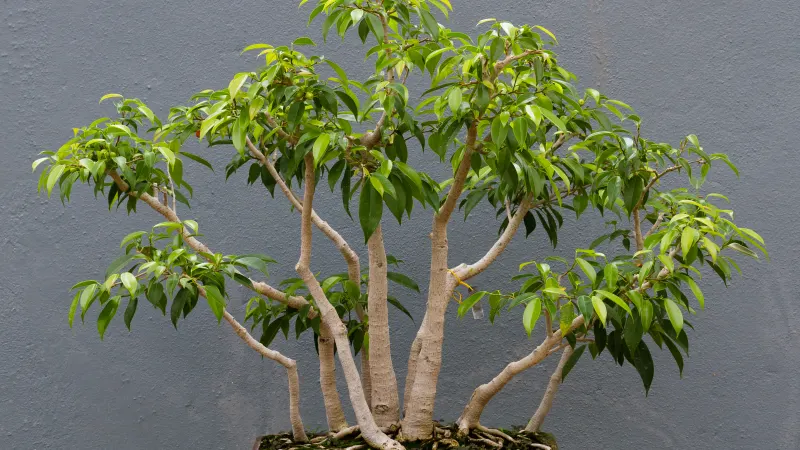
Once established in a stable spot, a weeping fig takes pruning well — better than many houseplants of a similar size. Cutting back leggy or crossing branches just above a leaf node in spring, as new growth resumes, encourages a fuller, bushier shape rather than a single reaching stem. This tolerance for pruning is exactly what makes the braided or twisted multi-trunk forms sold in garden centres possible: growers train several young, still-flexible stems around each other over a couple of years until the trunks fuse and lignify into the braid, then let the canopy grow out normally on top. The braid itself needs no special care beyond the same light and watering routine — it's a structural decision made years earlier, not an ongoing technique.
Feeding and propagation
Feed modestly and only in the growing season: every 4–6 weeks from spring through summer, at half the label strength, tapering to nothing as growth slows in autumn. Like most Ficus, a weeping fig is more often damaged by over-feeding — salt buildup browning leaf edges — than by too little.
Propagation is from stem cuttings rather than a single leaf. Take a 10–15 cm tip cutting below a node, and expect the cut to weep the same milky latex sap the parent plant does — let it callus for about an hour before potting or placing in water. Rooting is noticeably slower than a pothos or philodendron cutting, often several weeks before roots are established enough to pot on with confidence.
Common problems
Sudden leaf drop after a move. The signature Ficus benjamina reaction. If the rest of the plant looks structurally healthy, this is very likely acclimation — keep the new spot consistent, keep watering steady, and expect a fresh flush of leaves within a few weeks to two months.
Leaf drop with soft or blackened stems. Not acclimation — this is rot, usually from soil that's stayed wet too long. Check the roots; if they're brown and mushy rather than firm and pale, trim back to healthy tissue, repot into fresh, fast-draining mix, and water considerably less.
Yellow leaves scattered across the plant. Most often overwatering. An older leaf yellowing alone while the rest of the plant is thriving is usually just natural leaf turnover and not a symptom of anything.
Brown, crispy leaf tips. Typically dry air or a build-up of fertiliser salts. Raise the ambient humidity first; if it persists, flush the pot thoroughly with plain water to clear accumulated salts from the soil.
Small brown bumps on stems or leaf undersides, or sticky residue on nearby surfaces. Scale insects, which favour the dry, stable air of a heated home. Wipe them off with a cloth dipped in isopropyl alcohol and monitor closely for a return, since a light infestation is far easier to manage than an established one.
Frequently asked questions
Why is my ficus dropping leaves?
Almost always a reaction to change — a move to a new room, a cold draught, hot air from a heating vent, or a big swing in watering habit. If the stems stay firm and no rot smell is present, this is normal acclimation and new leaves typically return within a few weeks to two months once the plant settles into a stable spot. Leaf drop paired with soft, blackened stems or a sour soil smell is a different problem: root rot, not adjustment.
How long does it take a weeping fig to recover from leaf drop?
Usually a few weeks to two months, provided the plant is left in a stable spot with consistent light and watering during that time. Moving it again to try to "fix" the drop generally resets the clock, because the plant reacts to the new relocation as its own fresh stressor.
How often should I water a Ficus benjamina?
There's no fixed number — water when the top 2–3 cm of soil are dry to a finger, then water thoroughly and let it drain. What matters most is consistency: a steady rhythm suits this plant far better than an exact interval, and erratic swings between drought and flood are more damaging than either extreme held steady.
Is Ficus benjamina toxic to cats and dogs?
Mildly toxic. Ingesting the leaves or stems can cause vomiting, drooling, and mouth irritation in pets, from both the fig's natural compounds and the milky latex sap. The sap is also a recognised human allergen for people with a latex sensitivity and can irritate skin on contact — wash your hands after pruning or taking cuttings.
Why does my ficus need the same spot all the time?
Because it acclimates its leaves to a specific light level over several weeks, and a meaningful change in light or temperature triggers a fresh round of leaf drop while it adjusts. Rotating the pot in place for even growth is fine; moving the whole plant to a different room or window resets that adjustment and costs you another round of dropped leaves.
Will Botanical Legacy tell me if my ficus's leaf drop is normal or a real problem?
Partially, and it's worth being precise about what it can and can't see. The Digital Shadow tracks moisture trends over time, so a genuine drift toward overwatering — the kind that causes the dangerous version of leaf drop — shows up as a pattern rather than a single confusing reading. Photo check-ins add a visual record you can compare week to week. What it can't do is feel a stem for the softness that signals rot; that physical check is still worth doing yourself when leaf drop continues past the normal acclimation window.
Start your sanctuary
Botanical Legacy's free Observer plan covers up to five Specimens, each with its own continuously running Digital Shadow — a genuinely useful witness for a plant whose biggest tell, leaf drop, is so easy to misread in the moment. Every new account also includes a 14-day trial of Cultivator, the paid plan, which adds the local weather feed and soil sensor support.
Pick the spot once, then let the model — and the tree — settle in.
START YOUR SANCTUARY — FIVE FREE SPECIMENS, NO PAYMENT REQUIRED →
A weeping fig's leaf drop is a reaction, not a verdict. Give it one stable spot and a steady rhythm, and it stops reacting.