Species care guide
Chinese evergreen
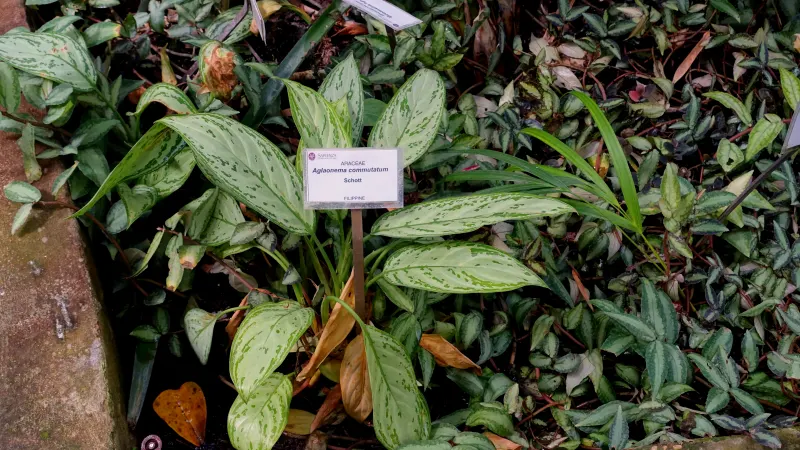
Aglaonema commutatum
An Aglaonema care guide built on triggers, not timers — how often to water, how much light the coloured varieties really need, and what drooping leaves are telling you.

- Light
- Medium to bright indirect light; green types tolerate low light, but pink and red varieties need more to hold their colour
- Water
- When the top 2–5 cm of soil are dry to a finger; less often in winter, when the plant rests
- Humidity
- Prefers moderate to high humidity but copes with ordinary household air; very dry air can brown the leaf edges
- Temperature
- 20–27°C; keep it above 15°C — it is genuinely cold-sensitive and chills easily
- Pets & toxicity
- Toxic to cats and dogs — insoluble calcium oxalates irritate the mouth and throat
- Difficulty
- Among the most forgiving houseplants; the main risks are cold and overwatering
"Tolerates low light" is true of a green Aglaonema and only half true of a pink one.
The most forgiving plant with one quiet condition
The Chinese evergreen has a deserved reputation as one of the easiest houseplants you can own. It drinks moderately, shrugs off the dim corners that kill fussier plants, and asks for very little active attention. It is the plant people give to friends who "can't keep anything alive" — and most of the time it proves them wrong.
There are two ways it does get killed, and both come from believing the easy reputation a little too completely. The first is cold: Aglaonema looks tropical and is, and it is notably sensitive to chilling. The second is the gap between the green varieties and the coloured ones. "Tolerates low light" is its reputation, and it's honest for a plain green plant — but the pink, red and heavily variegated cultivars that people buy for their colour need more light to keep it, and slowly fade toward green in the corner the label seemed to promise. This guide is about reading the plant in front of you. If houseplants in general are new to you, start with the ten mistakes every beginner makes — the Aglaonema forgives most of them, which is exactly why they go unnoticed.
Light, and the price of colour
Aglaonema is an understorey plant from the tropical forests of Southeast Asia, where it grows in deep shade beneath the canopy. That heritage is why the green forms genuinely tolerate low light indoors — they evolved for it. They will hold their own in a north-facing room or well back from a window, growing slowly but steadily, and that tolerance is real, not marketing.
The coloured cultivars complicate the story. The reds and pinks are bred for leaf colour, and that colour comes from anthocyanin, a pigment the leaf makes in response to light; the redder the leaf, the more anthocyanin it carries relative to its chlorophyll. Give them too little light and the leaf colour fades, variegated plants can revert toward green, and growth is poor. Too much is no better: in very strong light the colour washes out.
For all of them, "indirect" is the operative word. Aglaonema scorches in direct sun — harsh light bleaches pale, papery patches into the leaves — so the target is bright but filtered: near a window with a sheer curtain, or a metre or so back from a bright one. Green types are happy a good deal dimmer than that; coloured types want the brighter end. Be suspicious of your own eyes, too: light falls off quickly with distance from the glass, and a corner that looks bright enough to you is often where a pink Aglaonema quietly loses its colour.
How often to water a Chinese evergreen
There's no fixed number, and any guide that gives one is describing an average plant in an average week. Your Aglaonema drinks faster in a warm, bright summer than in a cool, dim winter; faster in porous terracotta than glazed ceramic; faster root-bound than freshly potted. A schedule is right for a few weeks a year and wrong the rest.
Use a trigger instead: water when the top 2–5 cm of soil are dry to a finger, and not before. Push a finger in past the first knuckle. Dry — water. Cold and damp — wait and check again in a few days. When you water, do it thoroughly until it runs from the drainage holes, then drain the pot and empty the saucer. Evenly moist, never soggy, and never dried right out. In practice that means watering less often in winter, while the plant rests - but the soil decides, not the date. The longer version of the method is in when to water your houseplants.
The trigger matters because the Aglaonema's tolerance runs one way. It tolerates drought far better than it tolerates a pot kept wet. Soggy soil, especially when the plant is cold and barely growing, rots the roots — and the difference between overwatering and underwatering is easy to misread on this plant, because both can show as drooping and yellow leaves. This is the gap a per-specimen model closes: Botanical Legacy keeps a Digital Shadow of each Specimen in your Sanctuary, a running estimate of how much moisture is left in that particular pot, drawn down on the temperature and light it's living in. It tells you when this one is approaching dry — the only version of "how often" that was ever real.
Soil and potting
Aglaonema wants a mix that holds a little moisture but drains freely. A standard houseplant potting mix rich in organic matter, with a little perlite for drainage, is ideal — enough structure to keep some water around the roots, enough air that the pot dries down properly between drinks. A dense, water-logged compost is the fast route to rot, particularly in winter.
The pot matters too. Porous terracotta breathes and dries faster, which suits a careful over-waterer; glazed ceramic and plastic hold moisture longer. Whichever you choose, it must have a drainage hole — no watering discipline survives a sealed pot. Repot sparingly: every two to three years, only when roots have filled the pot, and only into a slightly larger one. An oversized pot stays wet for longer around a small root ball, which invites the rot you're trying to avoid.
Humidity and temperature
Coming from humid forests, Aglaonema prefers moderate to high humidity, but it copes with ordinary household air far better than its tropical looks suggest. You don't need a humidifier. If a dry winter with the heating running starts crisping the leaf edges brown, grouping plants together or running a humidifier helps more than misting or a pebble tray: misting evaporates within minutes, and the water from a tray diffuses into the whole room.
Temperature is where this plant is genuinely particular. The comfortable band is 20–27°C, and it is one of the more cold-sensitive houseplants you'll keep: sustained exposure below about 15°C does real damage, and a cold draught or a chilly windowsill can mark, blacken and collapse leaves within days. Keep it well away from draughty doors and single-glazed winter windows. Grey spots that turn dark and greasy-looking are the classic cold-damage signature — move the plant somewhere warmer before reaching for any other explanation.
Feeding
Aglaonema is a modest feeder, and the mistake that hurts it is generosity. Fertiliser is salt: more than the plant can use builds up in the soil and burns the leaf tips and edges brown — damage easy to mistake for dry air, so the cause gets misread and the feeding continues.
The cadence that works is sparing. Through the growing season, while the plant is putting out new leaves, feed once a month with a dilute balanced liquid houseplant fertiliser. From autumn, cut back to little or nothing while the plant rests; it can't use what you give it, and the surplus just accumulates as salt.
Common problems
Most Aglaonema problems are one visible symptom with more than one possible cause, and the skill is separating them before acting.
Yellow leaves. Overwatering is a common cause: soil still wet days after watering, a heavy pot, yellowing scattered across the plant. But cold does it too — a chilled Aglaonema yellows and droops — and so does a single oldest leaf retiring naturally while the rest thrives. Feel the soil and check the room temperature before deciding; the fixes are opposites.
Drooping. A droop in dry, light soil is thirst and recovers after a drink. A droop in wet, heavy soil is the opposite problem — roots starting to fail — and another drink makes it worse. The weight of the pot tells you which.
Faded colour on pink or red varieties. Usually too little light, though very strong light washes colour out too. Move it to bright, filtered light out of direct sun, and judge the result on the new growth.
Brown, crispy tips and edges. Dry winter air, irregular watering, or salt buildup from over-feeding. If you fertilise often, suspect salt and flush the pot; if the heating has run for months, suspect the air.
Grey spots that turn dark and greasy. The signature of cold damage. Move the plant somewhere consistently warm and away from draughts, and remove badly damaged leaves.
Frequently asked questions
How often should you water a Chinese evergreen?
There's no fixed interval — the same plant drinks faster in a warm, bright week than a cool, dim one. Water when the top 2–5 cm of soil are dry to a finger, then water thoroughly until it drains and empty the saucer. Expect to water less often in winter, while the plant rests. When unsure, wait - it tolerates drought far better than a constantly wet pot, especially in cold weather.
Can a Chinese evergreen really live in low light?
A plain green one, yes — it comes from heavily shaded tropical forest, and it tolerates dim corners genuinely well. The coloured cultivars are a different story: the pinks, reds and heavily variegated types need brighter indirect light to hold their colour, and slowly fade toward plain green in low light. Match the variety to the spot, not just the species name.
Why is my pink Aglaonema turning green?
Usually too little light. The pink comes from anthocyanin, a pigment the leaf makes in response to light, and in a dim spot the leaf colour fades and variegated plants can revert toward green. Move it to bright, indirect light out of direct sun, and judge the result on the new growth.
Is Chinese evergreen toxic to cats and dogs?
Yes. All parts of the plant contain insoluble calcium oxalate crystals, which cause oral irritation, pain and swelling of the mouth, tongue and lips, heavy drooling, vomiting and difficulty swallowing if chewed. If a pet has chewed it, call your vet or a pet poison line. Keep it out of reach.
Will Botanical Legacy catch pests on my Aglaonema from a photo?
Not reliably. The check-in photo analysis reads what a photo can show — yellowing, leaf damage, overall vigour — and folds it into the plant's running model, which is useful for catching slow declines you'd miss week to week. But spider mites and mealybugs start on the undersides of leaves and in stem joints, exactly where a photo rarely looks. Turning the leaves over yourself stays part of the job.
Start your sanctuary
Botanical Legacy's free Observer plan covers up to five Specimens, each with its own continuously running Digital Shadow — and a Chinese evergreen, forgiving and durable, is an ideal first one to learn the rhythm on. Every new account also includes a 14-day trial of Cultivator, the paid plan, which adds the local weather feed and soil sensor support.
Keep it warm, match the light to the colour, and the Aglaonema will quietly outlast plants twice as fussy.
START YOUR SANCTUARY — FIVE FREE SPECIMENS, NO PAYMENT REQUIRED →
The easiest plant on the shelf, with one line of fine print: it hates being cold.
Sources
The plant-care facts on this page were checked against these references.
- Missouri Botanical Garden: missouribotanicalgarden.org/PlantFinder/PlantFinderDetails.aspx
- NC State Extension: plants.ces.ncsu.edu/plants/aglaonema
- Clemson HGIC: hgic.clemson.edu/factsheet/chinese-evergreen
- UF/IFAS: edis.ifas.ufl.edu/publication/EP103
- RHS: rhs.org.uk/plants/707/aglaonema-modestum/details
- UF/IFAS: edis.ifas.ufl.edu/publication/EP160
- RHS houseplant problems: rhs.org.uk/plants/types/houseplants/how-to-help-a-poorly-housep…
- UMD Extension: extension.umd.edu/resource/lighting-indoor-plants
- Zhu et al. 2025, Genes: doi.org/10.3390/genes16040375
- Hui 2026, Scientific Reports: doi.org/10.1038/s41598-026-36250-6
- Clemson HGIC: hgic.clemson.edu/factsheet/indoor-plants-watering
- UMD Extension: extension.umd.edu/resource/watering-indoor-plants
- Penn State Extension: extension.psu.edu/repotting-houseplants
- Penn State Extension: extension.psu.edu/humidity-and-houseplants
- Ohio State Extension: u.osu.edu/knoxcountyag/2018/12/19/why-you-should-clean-the-leav…
- Clemson HGIC: hgic.clemson.edu/factsheet/common-houseplant-insects-related-pe…
- ASPCA: aspca.org/pet-care/aspca-poison-control/toxic-and-non-toxic-pla…