Species care guide
Hoya
Hoya carnosa
A Hoya care guide built on triggers, not timers — how often to water the wax plant, the light it needs to flower, and why you should never cut off a spent peduncle.

- Light
- Bright, indirect light with some gentle direct sun; the brighter the spot, the more likely it is to flower
- Water
- When the soil is dry most of the way down — roughly every 1–2 weeks in summer, every 2–3 weeks in winter
- Humidity
- Prefers 50%+ but the thick, waxy leaves cope well with ordinary household air
- Temperature
- 18–29°C; keep it above 10°C and away from cold draughts
- Pets & toxicity
- Generally considered non-toxic to cats and dogs — a rare pet-safe flowering plant
- Difficulty
- Easy to keep alive, slower to coax into bloom; patience and light do most of the work
The fastest way to stop a Hoya flowering is to tidy it up — that bare stalk is next year's bouquet.
The plant that rewards a light touch
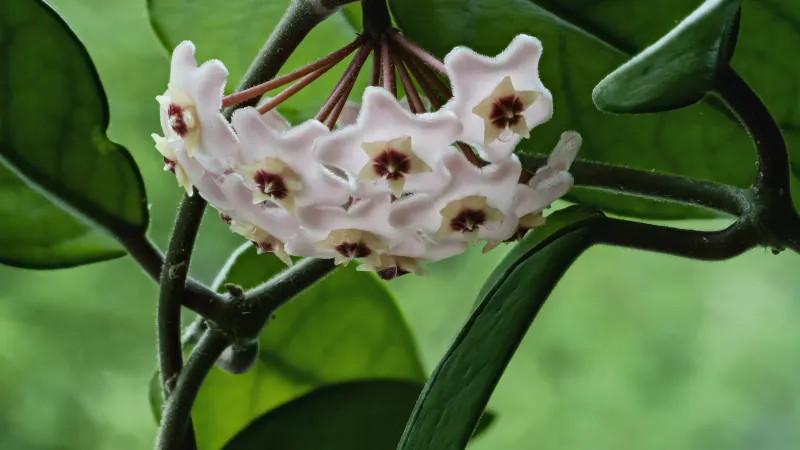
The Hoya — the wax plant — is two plants in one. As a foliage plant it is almost aggressively easy: thick, glossy, succulent-ish leaves on long twining vines, happy to be forgotten for a fortnight, slow to complain about anything. As a flowering plant it is something else entirely — clusters of star-shaped, often fragrant blooms that look porcelain-cast and drip nectar — but those flowers come on the plant's own schedule, not yours, and most of what people do trying to force them delays them.
Nearly all Hoya frustration comes from treating it like a fussy tropical that needs constant attention, when it's closer to a succulent that happens to climb. It wants bright light, it wants to dry out hard between drinks, it wants to be left pot-bound and undisturbed — and then, often after a year or two of apparent indifference, it flowers. This guide is about reading what it wants instead of fussing it. If houseplants in general are new to you, the ten mistakes every beginner makes sets the foundation; the Hoya quietly forgives most of them.
Light, and what flowering really needs
Hoya carnosa is an epiphyte from the forests of East Asia and Australia, growing on tree trunks and branches up in the bright, dappled canopy rather than down in the shade. That's the light it remembers. Indoors, it stays alive in medium light but it only flowers in bright light — and that distinction is the whole game for anyone wondering why their healthy Hoya never blooms.
Give it the brightest indirect light you can find: right by an east or west window, or a metre back from a south-facing one, where it gets bright ambient light plus a little gentle direct sun morning or evening. Hoyas tolerate more direct sun than most foliage plants — the waxy leaves are built for it — but harsh, unfiltered midday summer sun through glass can still scorch them, so build up to any direct exposure gradually. The brighter the spot, within reason, the more energy the plant banks and the more likely it is to set flower spurs. A Hoya in a dim corner will trail along happily for years and never bloom, and the dimness, not the plant, is the reason.
How often to water a Hoya
There's no fixed number, and any guide that gives one is averaging across seasons that don't behave the same. Your Hoya drinks faster in a warm, bright summer than a cool, dim winter; faster in a small terracotta pot than a large glazed one; faster the more root-bound it is. A schedule is right for a few weeks a year and wrong the rest.
Use a trigger instead, and on this plant the trigger is generous: water only when the soil is dry most of the way down the pot. The thick, waxy leaves are water-storage organs — a Hoya is built to ride out drought, and it wants a real dry-down before its next drink, much more than a typical leafy houseplant does. Push a finger deep into the soil; if it's dry well down, water thoroughly until it runs from the drainage holes, then drain and empty the saucer. If there's still cool dampness, wait. In practice that lands most indoor Hoyas near every 1–2 weeks in summer and every 2–3 weeks in winter — but the soil decides, not the date. The longer method is in when to water your houseplants.
The trigger matters because the Hoya's tolerance runs one way, like a succulent's. It shrugs off a missed watering; it does not shrug off a constantly wet pot. Soggy soil rots the roots, the leaves go soft and yellow, and recovery is hard. When in doubt, wait — a Hoya recovers from dry far more readily than from wet. This is the gap a per-specimen model closes: Botanical Legacy keeps a Digital Shadow of each Specimen in your Sanctuary, a running estimate of how much moisture is left in that particular pot, so you water when this Hoya is genuinely approaching dry rather than on a guess.
Soil and potting
A Hoya wants the airy, fast-draining mix you'd give an epiphyte, not a dense compost. A standard houseplant mix loosened with plenty of orchid bark and perlite is ideal — some growers go further toward a chunky aroid or orchid blend. The point is air around the roots and water that drains fast, because the one thing this plant won't tolerate is roots sitting wet.
The most counter-intuitive part of Hoya care is the pot, and it's the part that unlocks the flowers: leave it tight. Hoyas bloom better when slightly pot-bound, so the constant repotting that benefits a fast-growing foliage plant actively works against this one. Resist the urge. Leave a Hoya snug in its pot for several years, repotting only when it's genuinely root-bound — roots circling and escaping the drainage holes, water rushing straight through — and then only one size up. A Hoya freshly moved to a roomy pot will often spend a season or two growing roots and leaves instead of flowers.
Humidity and temperature
Coming from humid forests, a Hoya is happiest above 50% humidity, but the waxy, water-holding leaves cope with ordinary household air far better than thinner-leaved tropicals. You don't need a humidifier for most Hoyas. A little extra humidity can encourage growth, but flowering is driven far more by light than by moisture in the air, so a humidifier is no substitute for a brighter window.
Temperature is undemanding within a band. The comfortable range is 18–29°C, and the plant minds cold more than heat: keep it above 10°C and away from cold draughts and chilly winter windowsills. Some growers find a modest natural temperature dip in autumn helps trigger flowering the following year, which is one more reason not to over-manage the plant's environment — a slightly cooler, drier winter rest does it good.
Feeding and the secret to blooms
A Hoya is a light feeder, and over-feeding builds up salts that burn the leaf edges, but a little feeding through the growing season supports both growth and flowering. From spring to late summer, feed every 3–4 weeks with a balanced houseplant fertiliser at half strength. A higher-phosphorus "bloom" feed in late spring, as the plant gears up, can nudge it toward flowering. Stop feeding in autumn and winter, when the plant is resting.
The single most important thing to know about Hoya flowers has nothing to do with feeding, though, and everything to do with restraint. Hoyas flower from spurs called peduncles — short, bare stalks that emerge from the stem. After the blooms fade, do not cut the peduncle off. It looks like a dead twig, but it reblooms from the very same spot, season after season, often producing larger flower clusters over time. Cutting it forces the plant to grow a whole new spur before it can flower again, setting it back a year or more. Tidying away spent peduncles is the most common reason an otherwise happy Hoya stops blooming — leave them be.
Common problems
Most Hoya problems are one symptom with a couple of possible causes; feel the soil and check the light before acting.
No flowers. The commonest complaint, and rarely a sign of ill health. The usual causes are too little light, too much repotting (a plant that isn't pot-bound), youth (many Hoyas won't bloom until a few years old), or a cut-off peduncle. Give it the brightest indirect light you can, leave it snug in its pot, never remove spent flower spurs, and be patient — Hoyas bloom on their own clock.
Yellow, soft leaves. Usually overwatering: soil staying wet, a heavy pot. The leaves go soft and translucent rather than crisp. Let it dry out hard, check the roots if it's severe, and water far less going forward.
Shrivelled, wrinkled leaves. The opposite — under-watering, or in rare cases roots damaged by rot so they can't take up water. If the soil is bone-dry and the pot light, a good soak plumps the leaves back up within a day or two. If the soil is wet and the leaves are still shrivelling, suspect root rot.
Sticky leaves or sooty residue. Hoyas naturally drip nectar from their flowers, which is harmless and a good sign. But sticky residue without flowers points to sap-sucking pests — check for mealybugs in the leaf joints and on the undersides, which Hoyas are prone to.
Leggy, leafless vines. Long bare stretches reaching toward the light mean the spot is too dim. Move it brighter; you can let the vines climb a trellis or trail, but the cure for bare growth is more light, not pruning.
Frequently asked questions
How often should you water a Hoya?
There's no fixed interval — treat it more like a succulent than a leafy houseplant. Water only when the soil is dry most of the way down the pot, then water thoroughly and drain completely. In practice most indoor Hoyas land near every 1–2 weeks in summer and every 2–3 weeks in winter. The thick, waxy leaves store water, so when unsure, wait — a Hoya recovers from dry far more easily than from a constantly wet pot.
How do I get my Hoya to bloom?
Four things, in order of importance: give it the brightest indirect light you can manage (the biggest factor by far), leave it slightly pot-bound rather than repotting often, never cut off the bare flower spurs after blooming because they rebloom from the same spot, and be patient — many Hoyas won't flower until they're a few years old. A little high-phosphorus feed in late spring and a cooler, drier winter rest can help nudge a mature plant along.
Should I cut off the spent flowers on my Hoya?
You can gently remove the faded petals if they bother you, but never cut the peduncle — the short bare stalk the flowers grew from. It reblooms from the identical spot year after year, often with bigger clusters over time. Cutting it off is the single most common reason a healthy Hoya stops flowering, because the plant then has to grow an entirely new spur before it can bloom again.
Is a Hoya toxic to cats and dogs?
Hoya carnosa is generally considered non-toxic to cats and dogs, making it a rare pet-safe flowering houseplant. As with any plant, a pet that eats a lot of it may get a mild stomach upset, so it's still worth discouraging determined chewers — but you don't have the calcium-oxalate concern that comes with pothos, philodendron, or peace lily.
Will Botanical Legacy catch pests on my Hoya from a photo?
Not reliably. The check-in photo analysis reads what a photo can show — leaf colour, shrivelling, overall vigour — and folds it into the plant's running model, which is useful for catching slow declines week to week. But Hoyas are prone to mealybugs, which hide in the leaf joints and on the undersides where a photo rarely looks. Checking those spots yourself stays part of the job.
Start your sanctuary
Botanical Legacy's free Observer plan covers up to five Specimens, each with its own continuously running Digital Shadow — and a Hoya, easy to keep and pet-safe, is a satisfying one to grow toward its first bloom. Every new account also includes a 14-day trial of Cultivator, the paid plan, which adds the local weather feed and soil sensor support.
Give it light, leave it snug, and never tidy away the flower spurs — the Hoya does the rest in its own time.
START YOUR SANCTUARY — FIVE FREE SPECIMENS, NO PAYMENT REQUIRED →
A wax plant blooms for the gardener who can leave it alone — bright light, a tight pot, and patience.