Species care guide
Inch plant
Tradescantia zebrina
A Tradescantia zebrina care guide for the fastest, easiest trailing houseplant there is — how much light the purple stripes need, why you pinch and propagate to keep it full, and why to handle it carefully around pets.

- Light
- Bright, indirect light with a little direct sun; the more light, the deeper the purple and silver stripes
- Water
- Keep lightly moist in growth — let the top 2–3cm dry, then water well; not a succulent, but dislikes soggy soil
- Humidity
- Average household humidity is fine; higher humidity grows it lusher
- Temperature
- 15–27°C; not frost-hardy, keep above about 10°C
- Pets & toxicity
- Toxic to cats and dogs, and the sap can irritate skin — handle with care and keep out of reach
- Difficulty
- One of the easiest, fastest houseplants — the only real skill is pinching and propagating to keep it full
Most houseplants you keep alive. An inch plant you keep young — by turning its cuttings back into itself, over and over.
The fastest, most forgiving trailing plant there is
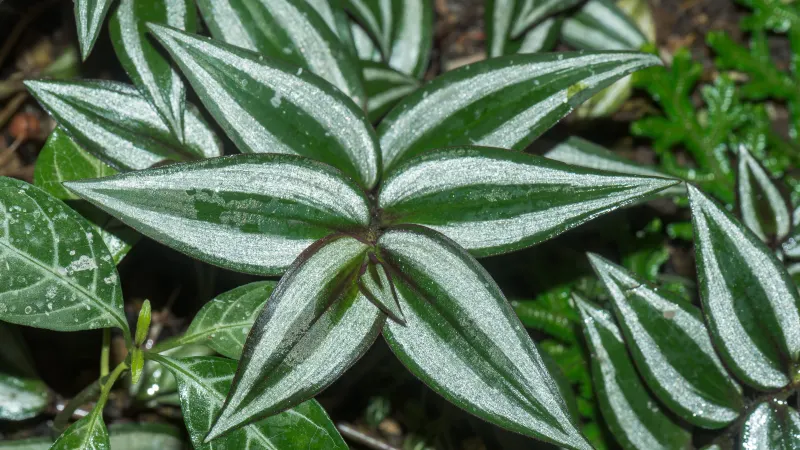
If you want a houseplant that grows fast enough to feel like progress, roots so easily it's almost comical, and rewards good light with genuinely striking colour, the inch plant is hard to beat. Tradescantia zebrina — its leaves striped in silver and deep purple, with vivid purple undersides — is one of the easiest and fastest-growing trailing plants you can own. It cascades from a shelf or hanging basket, fills out quickly, and asks for almost nothing beyond light, water, and the occasional trim.
The one thing it does that catches people out isn't a difficulty so much as a different mindset. An inch plant naturally grows long and, over time, goes bare and leggy at the base — that's just what trailing stems do. You don't fight this by babying the plant; you manage it by pinching the tips to keep it bushy and propagating the cuttings back into the pot to keep it full. Once you see the plant as something you continually refresh rather than a fixed specimen you preserve, it becomes almost impossible to fail with. This guide covers the fast, easy care and the pinch-and-propagate loop that keeps it looking its best. If you're new to propagation generally, how to propagate your plants pairs well with it — the inch plant is the ideal plant to learn on.
A quick note on names: you may see this plant called "wandering jew," an old common name now widely retired for being a slur; "wandering dude," "inch plant," "spiderwort," or simply "tradescantia" are the names used today.
Light: the colour dial
More than almost any common houseplant, an inch plant's appearance is set by how much light it gets — light is essentially a dial for its colour. In bright, indirect light with a little gentle direct sun, the leaves develop their full, saturated silver-and-purple striping and rich purple undersides, and the plant grows compact and vigorous. It handles more direct sun than many houseplants, especially gentler morning light, though intense hot afternoon sun through glass can scorch it.
In low light, nothing dramatic goes wrong — but the plant loses the very thing you grow it for. The stripes fade toward plain green, the stems stretch and space their leaves further apart reaching for the window, and growth turns sparse and leggy. If your inch plant has gone green and straggly, it isn't sick; it's under-lit. Move it somewhere brighter and the new growth comes back in colour. This is the clearest example on the site of a plant where "enough light to survive" and "enough light to look good" are very different thresholds.
How to water an inch plant
Inch plants like to be kept lightly and evenly moist through their active growth, without ever sitting soggy. Water thoroughly when the top 2–3cm of soil has dried out, let it drain freely, and empty the saucer or cover pot. Because it grows fast and drinks steadily in warm, bright conditions, that can be fairly frequent in spring and summer — but always let that top layer dry first rather than keeping the soil permanently wet.
It's worth being clear about what an inch plant is and isn't. The stems are slightly fleshy, which leads some people to treat it as a succulent and underwater it into crispy, curling leaves; but it isn't a succulent, and prolonged drought leaves it papery and shedding lower leaves. Equally, it isn't a bog plant — left constantly wet, the stems turn soft and mushy and rot at the base. The comfortable middle is "lightly moist, allowed to dry a little on top between waterings." Read the soil rather than the calendar, exactly as in when to water your houseplants; in winter, when growth slows, let it dry a bit more between drinks. A per-plant model keeps that balance easy across a mixed shelf — Botanical Legacy holds a Digital Shadow of each Specimen, so a thirsty fast-grower like this and a drought-happy succulent nearby each get watered on their own rhythm rather than a single schedule that would misjudge both.
Pinching, and why you propagate
Here's the habit that defines keeping an inch plant well, and it's genuinely enjoyable rather than a chore. Trailing stems naturally extend and, as they do, the oldest growth at the base ages and drops its leaves, leaving bare stems up top and a cascade of foliage only at the ends. The way you keep the plant lush and full is to pinch it regularly: snip or pinch off the growing tips, cutting just above a leaf node (the little joint where a leaf meets the stem). Each cut prompts the stem to branch into two below it, so frequent pinching makes the whole plant bushier and denser instead of long and thin.
And every tip you remove is a ready-made new plant, because Tradescantia roots absurdly easily. Sit the cuttings in a glass of water and they'll grow roots within days, or push them straight into moist soil and they'll root in place. The trick that keeps an inch plant looking good indefinitely is to take those cuttings and tuck them right back into the top of the same pot, filling in the bare patches the old growth left behind. Do this every so often and the plant renews itself continuously — the same living plant, always young and full. When an inch plant does eventually get too straggly to rescue by pinching alone, you simply start a fresh, dense pot entirely from its own cuttings. This is why it's the plant every houseplant guide recommends learning propagation on — covered more fully in how to propagate your plants — and it's the single most useful habit for keeping one beautiful.
Humidity, temperature, and feeding
Inch plants aren't fussy about humidity — ordinary household air suits them fine — though like most tropical foliage they grow a little lusher and softer in higher humidity, so a spot in a brighter bathroom or kitchen, or a pebble tray in a dry room, is a bonus rather than a requirement. On temperature they're comfortable across roughly 15–27°C, with no frost tolerance; keep them above about 10°C and away from cold draughts and chilly winter windowsills.
Feeding is straightforward: because it grows so quickly, an inch plant appreciates a regular light feed through the growing season — a balanced houseplant fertiliser at about half strength every few weeks in spring and summer keeps the growth strong and the colour rich. Cut back to little or no feeding in autumn and winter, when the plant naturally slows down and doesn't need it.
Common problems
Leggy, bare stems with leaves only at the tips. Partly natural to a trailing plant, and partly a sign of too little light. Move it brighter, and pinch the tips regularly to force branching — then propagate the cuttings back into the pot to refill the bare base.
Faded, plain-green leaves losing their purple and silver. Not enough light. The striping and purple undersides only develop fully in bright, indirect light with a little sun. A brighter position brings the colour back in new growth.
Crispy, curling, papery leaves. Underwatering, sometimes worsened by very dry air or harsh direct sun. It isn't a succulent — keep the soil lightly moist and water when the top few centimetres dry, rather than leaving it to go bone dry.
Soft, mushy stems, especially at the base. Overwatering and stem rot from soggy soil. Let it dry out more between waterings, ensure the pot drains well, and take healthy tip cuttings to start fresh if the base has rotted.
Skin irritation after pruning. Tradescantia sap can irritate sensitive skin, causing redness or itching for some people. Wash your hands after handling, pruning, or propagating, and consider light gloves if you're prone to reactions.
Frequently asked questions
How often should you water an inch plant?
Keep it lightly and evenly moist during active growth: water thoroughly when the top 2–3cm of soil has dried, let it drain, and don't leave it standing in water. Because it grows fast, that can be fairly often in warm, bright spring and summer conditions, and less in winter. Don't treat it as a succulent — it isn't one — but don't keep it soggy either; the sweet spot is lightly moist, allowed to dry a little on top between drinks.
Why is my inch plant leggy and losing its colour?
Two linked causes: it's a naturally trailing plant that goes bare at the base over time, and it's not getting enough light to stay compact and colourful. Move it to bright, indirect light with a little direct sun to restore the purple-and-silver striping, and pinch the growing tips regularly to force the stems to branch and bush out. Propagate the cuttings you pinch and tuck them back into the pot to refill the sparse base.
How do you propagate a Tradescantia?
Extremely easily — it's the classic beginner's propagation plant. Snip a stem tip just below a leaf node, then either stand it in a glass of water, where it roots within days, or push it straight into moist soil to root in place. Rooted cuttings can go into a new pot or back into the parent pot to keep it full. No rooting hormone or special setup is needed; this plant practically propagates itself.
Is an inch plant toxic to cats and dogs?
Yes — Tradescantia is considered toxic to cats and dogs, and chewing it can cause mouth and stomach irritation, while the sap can also cause skin irritation or dermatitis in pets (and some people) on contact. Keep it out of reach of curious animals — a hanging basket or high shelf suits both its trailing habit and pet safety — and wash your hands after handling it.
Can Botanical Legacy keep up with such a fast grower?
It's well suited to one. The check-in photo loop makes an inch plant especially satisfying to track, because it changes visibly week to week — you can watch the effect of a brighter spot or a round of pinching in the trend. The reminder side keeps its steady, moderate watering on track without tipping into the soggy soil it dislikes, and its running Digital Shadow means this thirsty grower and any slower plants nearby stay on separate, appropriate watering rhythms.
Start your sanctuary
Botanical Legacy's free Observer plan covers up to five Specimens, and an inch plant is one of the most rewarding to start with — fast, colourful, forgiving, and endlessly renewable from its own cuttings. Every new account also includes a 14-day trial of Cultivator, the paid plan, which adds the local weather feed and soil sensor support for the rest of your growing collection.
Give it light for colour, pinch it for shape, and propagate it for good — and one inch plant keeps you in inch plants indefinitely.
START YOUR SANCTUARY — FIVE FREE SPECIMENS, NO PAYMENT REQUIRED →
An inch plant isn't a plant you keep so much as one you keep remaking — every cutting is next season's fullness, rooted in a week.