Species care guide
Norfolk Island pine
Araucaria heterophylla
A Norfolk Island pine care guide built around the fact that decides everything — its branches don't grow back once they brown and drop — so humidity, even light, and steady moisture are prevention, not fussiness.

- Light
- Bright light with several hours near a window; rotate it regularly, because it leans toward light and grows lopsided otherwise
- Water
- Keep the soil evenly, lightly moist — water when the top 2–3cm is dry; both soggy roots and bone-dry soil brown the branches permanently
- Humidity
- High humidity is the make-or-break factor indoors; dry heated air browns the needles, and browned growth never comes back
- Temperature
- 15–24°C; a tropical conifer with no frost tolerance despite the pine-tree looks
- Pets & toxicity
- Mildly toxic to cats and dogs — chewing can cause vomiting; the sap may also irritate skin
- Difficulty
- Moderate; easy in principle, but unforgiving because damage is permanent and dry indoor winters work against it
A Norfolk Island pine doesn't forgive. Every branch it browns and drops is gone for good — so its whole care is really about not letting that happen.
The Christmas tree that's a tropical houseplant
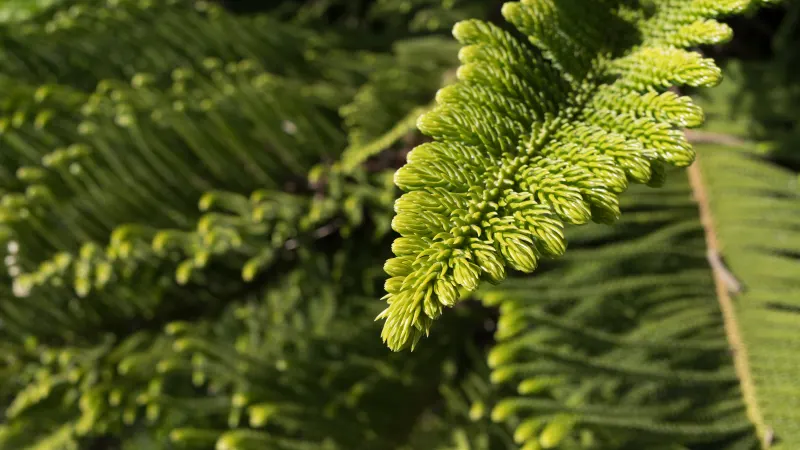
Every December, garden centres fill with small, perfectly conical Norfolk Island pines dressed up as tabletop Christmas trees, and every January a lot of them start quietly turning brown. The trouble is a mismatch of expectations. It looks like a pine — soft, symmetrical whorls of needled branches climbing a straight trunk — so people treat it like a hardy evergreen that can shrug off a cold porch and dry indoor air. It's nothing of the sort. Araucaria heterophylla is not a true pine; it's an ancient tropical conifer native to Norfolk Island in the South Pacific, a mild, humid, frost-free speck of land. Indoors, it's a tender houseplant that happens to be shaped like a Christmas tree.
One fact governs everything else about keeping it: its branches do not grow back. Most houseplants recover from a rough patch — drop some leaves, then flush new ones when conditions improve. A Norfolk Island pine grows almost entirely from its top, so a branch that browns and dies from dryness, cold, or neglect leaves a permanent bare gap on the trunk that never fills in. That's why its care reads as a list of things to prevent rather than problems to fix. Keep it humid, evenly watered, warm, and evenly lit, and it stays lush and green for years. Let it dry out in a hot living room for a fortnight and you're left with a thinning, browning trunk you can't undo. If you're new to houseplants, the beginner's guide is a good foundation — just apply it here with the knowledge that this plant is less forgiving than most.
Light
A Norfolk Island pine wants bright light — several hours of it near a window, with a little gentle direct sun being welcome rather than harmful. In too little light it grows sparse and weak, the branches drooping and spacing out, and the whole plant loses the dense, tiered look that makes it attractive. A bright spot keeps the growth compact and the branches held out firmly.
There's a second, easily missed part of getting light right: rotation. This plant is a determined phototropic grower, leaning steadily toward its light source, and because it grows slowly and permanently, a plant that always faces the same window will develop a lasting lean and an uneven, lopsided crown. Give the pot a quarter turn every week or two so all sides get their share of light and the tree grows straight and symmetrical. It's a small habit that makes the difference between an elegant, even specimen and a crooked one you can't correct after the fact.
Watering
Watering a Norfolk Island pine is about consistency more than volume. The aim is soil that stays evenly, lightly moist — never waterlogged, never allowed to dry out completely. Water when the top 2–3cm of the soil feels dry, giving it a thorough drink until water runs from the drainage holes, then let it drain fully and empty the saucer so the roots aren't left standing in water. The general timing sense from when to water your houseplants applies, but this plant leaves less room at both extremes than most.
That narrow window matters because both mistakes cause the same irreversible damage. Let the soil go bone dry and the branches brown and crisp, starting at the tips and lower down, and those branches are lost permanently. Keep the soil soggy and the roots rot, which also browns and drops branches. Because the plant can't grow the lost branches back, there's no recovering the shape — you just get a sparser tree. This is precisely the situation where a per-specimen Digital Shadow earns its place: it models how much moisture is left in the pot and prompts you before the soil swings to either damaging extreme, which for a plant this unforgiving is worth a great deal. Ease back only slightly in winter — it doesn't go properly dormant and shouldn't be allowed to dry out even in the cold months.
Humidity: the part that decides it
If there's a single reason Norfolk Island pines fail indoors, it's humidity. These are subtropical trees adapted to moist Pacific air, and the dry atmosphere of a centrally heated home in winter — often as low as 20–30% relative humidity — is genuinely hostile to them. Low humidity dries and browns the needles, and once again, that browning is permanent. It's a cruel irony that the plant is sold as a Christmas tree for exactly the season when indoor air is at its driest and the heating is running hardest.
So treat humidity as a priority, not a nicety. The most effective tool is a humidifier running near the plant. Failing that, stand the pot on a wide tray of pebbles kept topped up with water so evaporation raises the local humidity, and group it with other plants so they share a more humid microclimate. Above all, keep it away from the direct dry heat of radiators, wood stoves, and forced-air heating vents, which are the fastest route to a crispy, browning tree. A well-humidified Norfolk Island pine holds its deep green; a parched one browns branch by branch through the winter.
Temperature and feeding
For all its wintry associations, a Norfolk Island pine has no cold hardiness. It's happiest in ordinary comfortable room temperatures of roughly 15–24°C and must be protected from frost, cold draughts, and freezing windowsills — a chill that a real pine would ignore can seriously damage this tropical tree. If you've kept it outdoors over summer, bring it inside well before the first cold nights. Cool-to-average warmth, steady and draught-free, is what it wants year-round.
Feeding is modest. Through the spring and summer growing season, give it a balanced liquid houseplant fertiliser at about half strength every few weeks, and stop feeding in autumn and winter when growth naturally slows. It's a slow grower indoors, so it doesn't need much — just enough regular nutrition in the growing months to keep the new top growth coming in strong and green. It doesn't need pruning either; in fact you shouldn't prune it, since cutting won't produce the bushy regrowth it does on other plants and can permanently spoil the shape.
Common problems
Lower branches turning brown and dropping. The defining problem, and usually caused by low humidity, letting the soil dry out, or a cold draught. The hard truth is that browned branches don't grow back, so this is about prevention: raise humidity, keep the soil evenly moist, and keep it warm. Address the cause quickly to protect the branches that are still green.
Overall yellowing or browning and thinning. Often a watering imbalance — either chronically too dry or chronically too wet (rotting roots) — or a combination of dry air and poor light. Check that the soil is staying lightly moist but draining freely, humidity is up, and the plant is bright and warm.
Drooping, sparse, weak branches. Typically too little light, sometimes underwatering. Move it to a brighter spot and keep moisture and humidity steady; new growth should come in stronger, though it won't refill the parts that have already thinned.
A lopsided, leaning tree. It's been growing toward one light source without being turned. Start rotating the pot a quarter turn every week or two so it grows evenly from now on — you can't straighten the existing lean, but you can stop it worsening.
A damaged or dead central tip. Because the tree grows from its leading tip, damage there ends the neat conical shape permanently and the plant may grow oddly afterward. Protect the top from knocks, pets, and being crammed against a ceiling or shelf.
Frequently asked questions
Why is my Norfolk Island pine turning brown?
Browning is usually caused by low humidity, letting the soil dry out too much, or exposure to cold or dry heat from a radiator — and the important thing to know is that browned branches don't grow back. Raise the humidity with a humidifier or pebble tray, keep the soil evenly moist rather than swinging between wet and bone dry, keep the plant warm and away from draughts and heat sources, and give it good light. Acting quickly protects the branches that are still green, even though the brown ones are lost.
Do Norfolk Island pine branches grow back after they turn brown or fall off?
No. The tree grows almost entirely from its top, so branches that brown and drop leave a permanent bare gap on the trunk that won't refill. This is the single most important fact about the plant's care and the reason humidity, steady watering, and warmth are framed as prevention. Keep the conditions right and you protect the branches you have; there's no recovering the shape once branches are lost.
How much humidity does a Norfolk Island pine need?
A lot — humidity is the make-or-break factor indoors. As a subtropical plant it's used to moist air, and the dry heated air of a home in winter (often 20–30%) browns its needles. Aim for noticeably higher humidity using a humidifier, a wide pebble tray, or a cluster of plants, and keep it away from radiators and heating vents. This is especially critical in winter, precisely when it's most often bought as a Christmas tree and indoor air is driest.
Is a Norfolk Island pine toxic to cats and dogs?
It's considered mildly toxic. The ASPCA lists Araucaria heterophylla as toxic to cats and dogs, with chewing capable of causing vomiting and general stomach upset, and the sap can irritate skin. It's not among the most dangerous houseplants, but it's best kept out of reach of pets that like to chew, and worth washing your hands after handling cut sap.
Can Botanical Legacy help me keep one alive through winter?
Yes, and winter is exactly when it needs the help. The Digital Shadow tracks each plant's soil moisture and prompts you before it swings too dry or too wet — vital for a plant whose branches brown permanently at both extremes. Logging it as a Specimen also keeps you on a steady watering rhythm through the dry heating season, when a couple of forgotten weeks can cost branches you can never grow back. It can't raise the humidity for you, but it can keep the watering side reliably right.
Start your sanctuary
Botanical Legacy's free Observer plan covers up to five Specimens, and a Norfolk Island pine is a beautiful, slightly demanding one to grow with — a living Christmas tree that, kept humid and evenly watered, stays green all year instead of browning by February. Every new account also includes a 14-day trial of Cultivator, the paid plan, which adds a local weather feed and soil sensor support for the rest of your collection.
Keep it humid, keep it evenly moist, keep it warm and turned — and this tropical conifer holds its shape for years, long after the tinsel comes off.
START YOUR SANCTUARY — FIVE FREE SPECIMENS, NO PAYMENT REQUIRED →
Treat it like a hardy pine and it browns away branch by branch. Treat it like the tender tropical tree it is — humid, warm, evenly watered — and it stays a Christmas tree all year round.