Species care guide
String of hearts
Ceropegia woodii
A string of hearts care guide built on the facts that make it easy: it's a trailing semi-succulent you water like a cactus, and the amount of light you give it decides whether the hearts sit tight and colourful or stretch into long bare gaps.

- Light
- Bright, indirect light with a few hours of gentle direct sun — plenty of light keeps the leaves close together with vivid marbling and pink tones, while too little stretches the strands into long, bare gaps.
- Water
- Water like a succulent: soak the soil thoroughly, then let it dry out completely before the next drink — the leaves and tuber store water, so overwatering is the main danger.
- Humidity
- Average room humidity is fine — it needs no misting.
- Temperature
- 18–26°C; keep it above about 10°C and away from cold draughts.
- Pets & toxicity
- Non-toxic to cats and dogs — pet-safe, though a long trailing strand may still tempt a playful cat to bat at it.
- Difficulty
- Easy — one of the more forgiving trailing plants, provided you resist the urge to overwater.
A string of hearts hangs like a bead curtain of tiny silver hearts — but it drinks like a succulent, forgives like few trailing plants do, and grows exactly as full or as bare as the light you give it.
A chain of tiny hearts that's tougher than it looks
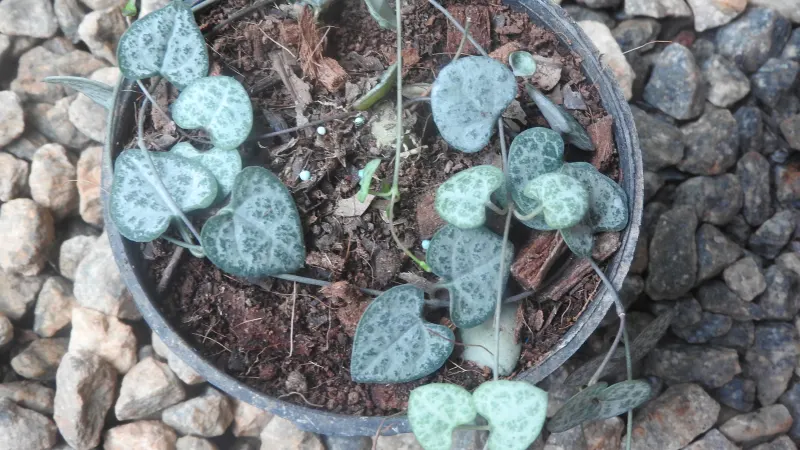
String of hearts looks far more delicate than it is. Thread-thin, purple-tinged stems spill from the pot in long trailing strands, carrying matched pairs of small, fleshy, heart-shaped leaves — dark green marbled with silver on top, flushed deep purple-pink underneath. Left to grow, they tumble a metre or more down a shelf or hanging pot, which is why it also answers to rosary vine and chain of hearts.
And it is genuinely easy. String of hearts is a semi-succulent — it banks water in its thick little leaves and in a swollen underground tuber — so it wants the relaxed, drought-tolerant rhythm of any succulent. If you've read up on its famous cousin the string of pearls and come away nervous, relax: this is the tougher, more forgiving of the two. It has no fragile crown to rot at the first splash, roots almost anywhere a strand meets soil, and shrugs off a missed watering. Get two things right — enough light and a soak-then-dry watering habit — and it trails happily for years. New to houseplants? The beginner's guide to plant care pairs well with this page.
Light: it sets the spacing of the hearts
More than anything, light decides whether your string of hearts looks lush or straggly — because it literally sets the distance between the leaves. Give it plenty and the plant grows the way you want: pairs of hearts packed tightly along the stem, the silver marbling bright, a rosy pink-purple blush across leaves and stems. Starve it of light and it stretches — the gaps between each pair of leaves lengthen, the strands go bare and stringy, the marbling fades to a flat dull green, and you're left with long whips carrying only the occasional heart. That is the "leggy" look people most often write in about.
So give it the brightest spot that stays out of harsh midday glare: bright, indirect light with a few hours of gentle direct sun — an east-facing sill, or a little back from a south- or west-facing window. It genuinely enjoys some direct sun, far more than a shade-tolerant trailer like pothos, and won't colour up or stay compact without it. If it's still stretching and pale, that's a light problem, not a watering one — no amount of water closes the gaps, but a grow light above the strands keeps them dense through a dark winter.
Water: soak it, then let it dry right out
String of hearts drinks like the succulent it half is. Those plump hearts are water stores, and beneath the soil a swollen tuber banks still more, so the plant carries its own reserve and expects to run dry between drinks. Soak the soil thoroughly, let the surplus drain, then leave it alone until the mix has dried right through — every week or two in summer, as little as once a month in winter. Feel the soil rather than counting days.
Overwatering is the one mistake that threatens this plant: kept constantly damp, the roots and tuber rot, and rot is far harder to reverse than thirst. The reassuring part — and the real difference from the string of pearls, which can collapse from one soggy spell at its vulnerable crown — is that string of hearts is markedly more forgiving. With no crown to lose and plenty in reserve, a thirsty plant with soft, wrinkled leaves plumps back within a day or two of a good soak, while a rotted one rarely returns. When in doubt, wait — and when you do water, give it a proper soak, in the same soak-and-dry manner as a semi-succulent hoya.
Knowing when the soil has genuinely dried through is the whole game — the core question of when to water houseplants, and more on how the app answers it below.
Propagation: the easy part
If watering is where people worry, propagation is where string of hearts delights — it is almost comically easy to multiply, and the plant hands you the tools. Run your fingers along an older strand and you'll find little greyish beads where the leaves meet the stem. These aerial tubers — the "rosary" beads the name refers to — are each a ready-made baby plant waiting for a scrap of soil.
The tidiest method uses them directly. Lay a length of strand across a pot of moist, gritty mix, rest the tubers on the surface, and pin it down with a bent paperclip or hairpin so the beads stay in contact with the soil — the "butterfly" method. Keep the mix lightly moist and, within a few weeks, roots grow down and fresh strands lift up. Leave the strand attached to the parent while it roots for near-guaranteed success, then snip it free once it has taken.
You can also just take cuttings — lay trimmed strands on soil, or stand the cut ends in water until roots appear, then pot them up. Because it roots so readily, the leggy strands you trim off to tidy the plant are never waste; they're next season's fuller pot. For the principles behind it all, see how to propagate plants.
Soil, potting, and feeding
Since the whole point is to let the roots dry between waterings, drainage matters more than richness. Use a gritty, sharp-draining mix — a cactus or succulent compost, or ordinary potting soil cut with plenty of perlite, grit, or coarse sand — in a pot with a drainage hole. A terracotta pot helps further by wicking moisture out through its walls, buying room for error if you water generously. Never let it stand in a full saucer.
String of hearts likes to be snug. It flowers and trails best a little pot-bound, and an oversized pot only holds damp soil around the tuber that invites rot — so pot up just every couple of years, and only by a size. Set it high on a hanging pot, shelf edge, or plant stand so the strands can cascade.
Feed sparingly, and only while it's actively growing through spring and summer: a dilute succulent or houseplant fertiliser at half strength, once a month, is ample, with none at all in autumn and winter. As with watering, the danger is generosity — overfeeding pushes soft, weak growth that does more harm than a lean diet.
Humidity and temperature
This is the low-maintenance corner of string-of-hearts care. As a semi-succulent, it's perfectly content in ordinary room humidity and wants no misting, no pebble tray, and certainly not the steamy bathroom that suits a fern — damp, stagnant air around a succulent does more harm than good.
Warmth is equally undramatic: normal room temperatures of roughly 18–26°C suit it all year. It isn't frost-hardy, so keep it above about 10°C and away from cold winter windowsills and draughts, and give it more light and much less water through the darker months when it naturally slows. If you summer it outdoors, bring it back inside well before the first cold nights.
Common problems
Long, bare gaps between the leaves. The classic complaint, and almost always light. Strands stretching out with wide spaces and only the occasional heart are reaching for a window they can't find. Move the plant somewhere brighter, with a little direct sun, and new growth comes in tight and richly marbled. The bare stretches won't refill, so trim them back and propagate the pieces to thicken the pot.
Mushy, yellowing leaves or a soft, rotting base. Overwatering. The soil has stayed wet too long and the roots or tuber are rotting. Stop watering, let the mix dry right out, and if the base feels soft, unpot to check the tuber — cut away anything black or mushy and re-root the firmest, healthiest strands.
Shrivelled, wrinkled leaves. Thirst — the plant is drawing on its stored water because the soil has been dry too long. A thorough soak revives it and the hearts plump back within a day or two. (If the soil is already wet, suspect rot rather than thirst.)
Tangled, matted strands. Long trailing plants knot themselves over time. Comb them apart gently with your fingers, trim any leggy or bare lengths, and retrain or re-pin them — the trimmings root easily, so nothing is lost.
Frequently asked questions
How often should you water a string of hearts?
Only when the soil has dried out completely — in practice every one to two weeks in warm, bright summer conditions, and as little as once a month through a cool, dim winter. Feel the soil rather than following a fixed calendar, since the right interval depends on your light, warmth, pot, and season. The leaves and tuber store water, so when in doubt, wait longer: it tolerates drought far better than a soggy pot.
Why is my string of hearts leggy or sparse?
Too little light. When it can't get enough, the stems stretch, the gaps between each pair of leaves widen, the marbling fades, and you're left with long bare strands carrying only the occasional heart. The fix is brighter light, not more water: move it to your sunniest spot with a few hours of gentle direct sun, or add a grow light. New growth comes in compact and colourful, and you can trim the bare strands and propagate them to fill the pot back out.
How do you propagate string of hearts?
Very easily — one of the simplest houseplants to multiply. Look for the small greyish beads (aerial tubers) along the older strands: lay a strand on moist, gritty soil, pin it down so the tubers touch the surface, keep it lightly moist, and roots form within a few weeks. You can also lay plain cuttings on soil or root their cut ends in water. Leaving the strand attached to the parent while it roots gives near-certain success. See how to propagate plants for the fundamentals.
Is string of hearts toxic to cats and dogs?
No — string of hearts is non-toxic and considered pet-safe. It doesn't appear on the ASPCA's list of plants toxic to cats or dogs, which makes it a reassuring choice for homes with animals. The only real caveat isn't chemical but physical: a long strand dangling within reach is an irresistible target for a playful cat, so hang it high enough that batting paws can't drag the pot down.
Can Botanical Legacy help me look after a string of hearts?
Yes — this is a plant it suits perfectly. Because string of hearts grows in soil and lives by a strict soak-then-dry rhythm, its whole care hinges on one question: how dry is the soil, really? That's exactly what the Digital Shadow is built to answer — a running per-Specimen model that tracks the drying against the real light, warmth, and season your plant lives through, and holds its reminder until the soil has genuinely dried out. It heads off the single mistake that threatens this plant — overwatering — and on the Cultivator plan an optional soil sensor makes the reading exact rather than estimated.
Start your sanctuary
Botanical Legacy's free Observer plan covers up to five Specimens, and a string of hearts — forgiving, hard to kill, and threatened by little except an over-eager watering can — is a lovely one to learn on. Every new account also includes a 14-day trial of Cultivator, the paid plan, which adds a local weather feed and soil sensor support, so the one reading that matters most for this plant can be measured rather than guessed.
Give it a bright spot, let it dry out between drinks, and let the strands fall — and this little curtain of silver hearts will trail further and fuller with every passing season.
START YOUR SANCTUARY — FIVE FREE SPECIMENS, NO PAYMENT REQUIRED →
Bright light, a proper soak, then a long dry wait — get that trio right and a string of hearts asks for almost nothing else.