Species care guide
Bromeliad
Guzmania lingulata
A bromeliad care guide built around its one genuinely different mechanic — watering the central cup instead of the soil — plus why the colourful part isn't a flower, why the parent dies after blooming, and how to grow the pups.

- Light
- Bright, indirect light; keeps the colour vivid — never harsh direct sun, which bleaches the leaves
- Water
- Keep the central cup topped up with clean water, flush it weekly, and keep the potting mix only lightly moist
- Humidity
- Loves it humid, ideally 50%+; a tropical plant that appreciates misting and pebble trays
- Temperature
- 18–27°C; no cold draughts and no frost
- Pets & toxicity
- Non-toxic to cats and dogs — a genuinely pet-safe tropical
- Difficulty
- Easy once you water the cup, not the soil; the parent naturally dies after blooming, which surprises people
Everything you know about watering houseplants — check the soil, water the roots — a bromeliad quietly ignores. You water its cup instead.
The houseplant that breaks the watering rule
Almost every houseplant guide, including most of the ones on this site, comes down to the same core instruction: check the soil, and water the roots when it's dry. A bromeliad is the plant that politely refuses to play along. In the wild, most colourful houseplant bromeliads — including the common Guzmania — grow as epiphytes, perched on tree branches rather than rooted in soil, and they've evolved a rosette of leaves that forms a watertight central cup. Rain collects there, and the plant drinks primarily from that reservoir. Its roots exist as much to grip the branch as to feed.
That single adaptation changes the whole care routine, and it's the thing people most often get wrong: they water the soil generously, ignore the cup, and slowly rot the roots of a plant that wanted its drink somewhere else entirely. Get the cup-watering right and a bromeliad is genuinely easy — a striking, long-lasting, pet-safe splash of colour that asks very little. The other thing worth knowing up front, because it alarms new owners, is that a bromeliad blooms only once and then slowly dies, leaving offspring behind. Both of those facts, once you know them, turn confusion into confidence. If houseplants in general are new to you, the ten mistakes every beginner makes still helps — just read the watering advice here as the deliberate exception.
The colourful part isn't the flower
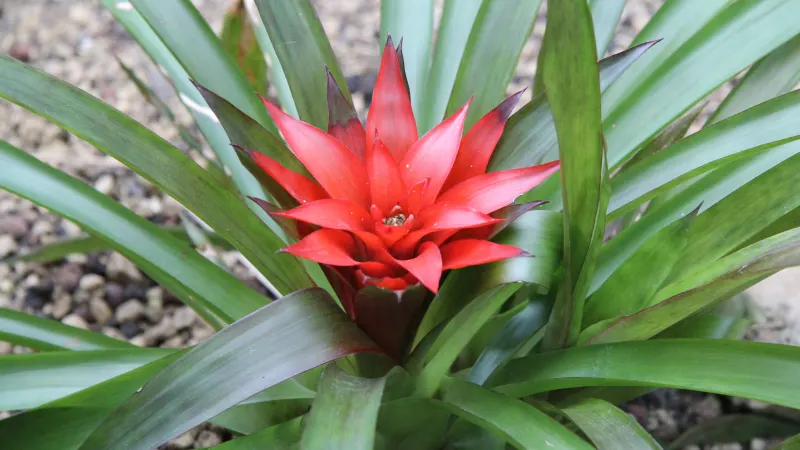
It's worth clearing this up early, because it explains a lot of "why is my bromeliad dying?" worry. The vivid red, orange, pink, or yellow structure you bought the plant for — the star or torch rising from the centre of a Guzmania — is not a flower. It's a modified, brightly coloured leaf structure called a bract, or inflorescence. The actual flowers are small and often inconspicuous, tucked among or emerging from the bract, and they're short-lived. The bract itself, though, is remarkably long-lasting, holding its colour for many weeks or even months, which is exactly why bromeliads are sold as such good value indoor colour.
Knowing this matters because when the bract eventually fades, browns, and dies, it can look like the plant is failing when it's simply reaching the end of its bloom. That fading is the cue to start looking for pups (more on those below), not the cue to panic or throw the plant out.
Light
Bromeliads want bright, indirect light. In their native tropical forests they sit in the dappled brightness of the canopy, not in full exposed sun, and that's the balance to recreate indoors: a spot near a window with plenty of light softened by a sheer curtain or by distance from the glass. Good light keeps the bract's colour vivid and the leaves firm and healthy.
Both extremes cause trouble. Harsh direct sun — a bare south or west window in summer — scorches the leaves, leaving bleached or brown patches. Too little light, at the other end, dulls the leaf colour, weakens the plant, and, crucially, means any pups it produces are unlikely ever to develop and bloom themselves. If your bromeliad's colour looks washed out, light — too much or too little — is the first thing to check.
How to water a bromeliad: the central cup
Here's the section that defines the plant. A bromeliad has two watering needs, and the cup comes first. Keep the central cup — the well formed where the leaves meet in the middle — topped up about a quarter to halfway with water. This is the plant's main hydration, and it should rarely be allowed to run completely dry. The potting mix, meanwhile, wants to stay only lightly moist: water it modestly when the top has dried, but never keep it soggy, because the roots of an epiphyte sitting in constantly wet soil rot easily. If you find yourself unsure which to prioritise, prioritise the cup and keep the soil on the dry side.
The critical maintenance step is flushing the cup. Water that sits in the rosette for weeks goes stagnant, breeds bacteria, and can rot the tender centre of the plant — a common and avoidable way bromeliads decline. So about once a week, tip the old water out, rinse the cup, and refill it with fresh. Water quality matters more here than for most plants: bromeliads are sensitive to the salts and minerals in hard tap water, which accumulate in the cup and can brown the leaf tips, so rainwater or distilled water is ideal if your tap water is hard. In cooler or dimmer conditions, where the plant is less active, keep the cup slightly emptier to reduce the rot risk. The broad habit of watching the plant rather than the calendar still applies — it's covered in when to water your houseplants — but the what you're watching is the cup, not the soil.
Because a bromeliad's watering is so different from everything around it, a per-plant model earns its place. Botanical Legacy keeps a Digital Shadow of each Specimen, so a bromeliad you're logging cup-refills for and a soil-grown plant beside it stay on their own separate rhythms rather than a single shared schedule that would over-soak the bromeliad's soil.
Humidity and temperature
Tropical origins mean tropical preferences: bromeliads like it warm and humid. Aim for temperatures around 18–27°C, and keep the plant away from cold draughts, single-glazed winter windowsills, and any risk of frost. On humidity they're happiest at around 50% or above, and in a dry, centrally heated room they appreciate a helping hand — misting the leaves, standing the pot on a tray of damp pebbles, or grouping it with other plants all raise the moisture in the air around it.
Their preference for warmth and humidity makes bromeliads natural companions for a bright bathroom or kitchen, where ambient moisture is higher, provided the light is good. Combined with keeping the cup fresh, that humid warmth is most of what keeps the foliage lush and the tips from browning.
Blooming, pups, and the plant's life cycle
This is the part that surprises almost everyone, so it's worth understanding as a feature rather than a fault. A bromeliad is monocarpic: it grows, it blooms once, and then that individual plant gradually dies. After the colourful bract has held for its weeks or months and finally begins to fade and brown, the mother plant slowly declines over the following months. Nothing you did caused it, and nothing you can do will make that same rosette bloom again — it's simply how the plant is built.
What it leaves behind is the point. As the parent fades, it produces offsets known as pups — small new plantlets emerging around its base. Leave these attached and growing while the parent slowly gives its remaining energy to them. Once a pup has reached roughly a third to a half the size of the parent and developed a few roots of its own, you can gently cut or twist it away and pot it up in fresh, free-draining mix, then care for it exactly as you did the parent. Grown in good light and warmth, a pup matures over a year or two and eventually produces its own colourful bract. That's the natural rhythm of bromeliad keeping: not one plant kept alive indefinitely, but a slow relay from one generation to the next. (Getting a mature pup to bloom on cue is notoriously patient work; the classic trick is to enclose the plant in a clear bag with a ripe apple for a week or two, as the ethylene the apple releases can nudge it into flower.)
Common problems
Browning, rotting centre. Stagnant water left too long in the cup, especially in cool or dim conditions. Flush and refill the cup weekly with fresh water, keep it slightly emptier when the plant is less active, and make sure the rosette isn't sitting sodden and cold.
Brown, crispy leaf tips. Usually low humidity or a buildup of salts and minerals from hard tap water in the cup. Raise the humidity, and switch to rainwater or distilled water for the cup if your tap water is hard.
Faded, bleached, or scorched leaves. Too much direct sun. Move the plant to bright but indirect light, and the colour of new growth should recover.
Dull colour and a floppy, weak plant. Often too little light. Bromeliads need genuinely bright (indirect) light to keep their colour and vigour, and dim conditions leave them limp and pale — and stop pups ever blooming.
The whole plant slowly dying after flowering. This is normal and expected — a bromeliad blooms once and then fades. Look around its base for pups, grow those on, and let the parent go. It isn't a care failure.
Frequently asked questions
How do you water a bromeliad?
Primarily through its central cup — the well where the leaves meet in the middle. Keep that cup topped up about a quarter to halfway with clean water, and keep the potting mix only lightly moist rather than soggy. Once a week, tip out the old cup water, rinse it, and refill with fresh — ideally rainwater or distilled if your tap water is hard — to stop the water going stagnant and rotting the plant's centre. Watering the cup, not the soil, is the whole secret to bromeliad care.
Why is my bromeliad turning brown and dying after it flowered?
Because that's its natural life cycle. Bromeliads bloom only once, and after the colourful bract fades, the parent plant slowly dies over the following months — no care mistake causes it and nothing prevents it. The important thing is to look for pups (offsets) forming around the base as the parent declines. Grow those on, and you'll have new plants that bloom in their turn.
Is Guzmania care different from other bromeliads?
Not in the essentials. Guzmania is the bromeliad most often sold as a houseplant, and it is the one this guide is written around — cup watering, bright indirect light, weekly flushing, pups after flowering. Two small differences are worth knowing. Its leaves are soft and spineless, unlike the toothed edges of an Aechmea, so it is the easier one to keep somewhere you brush past. And it comes from shadier forest levels than most, so it tolerates a slightly dimmer spot than a Neoregelia would while still needing genuinely bright indirect light to hold its colour. Everything else on this page — the central cup, the hard-water sensitivity, the single bloom and the relay to pups — applies to a Guzmania exactly as written.
Is a bromeliad toxic to cats and dogs?
No. Common houseplant bromeliads, including Guzmania, are considered non-toxic to cats and dogs, making them a genuinely pet-safe way to bring bold, long-lasting colour into a home with animals — much safer than flowering options like the kalanchoe or peace lily.
Why won't my bromeliad pup flower?
Patience and light. A pup needs to reach maturity — often a year or two of growth in good, bright indirect light and warmth — before it can bloom, and dim conditions can prevent it flowering at all. If a mature, healthy pup still won't bloom, the traditional nudge is to seal it in a clear plastic bag with a ripe apple for a week or two; the ethylene gas the apple gives off can trigger flowering.
Can Botanical Legacy handle a plant watered through its cup?
Yes, with the same honest caveat as for an air plant. The reminder and check-in loop works well — you can log each weekly cup flush as a watering action and track the plant's colour and condition through photos over time. What's less directly modelled is the soil-moisture side of the Digital Shadow, since a bromeliad drinks mainly from its cup rather than its pot; the simulation leans more on your logged cup-refill rhythm and photos than on soil physics for this particular plant.
Start your sanctuary
Botanical Legacy's free Observer plan covers up to five Specimens, and a bromeliad is a rewarding one to keep — vivid, pet-safe, and a gentle lesson in a completely different way to water. Every new account also includes a 14-day trial of Cultivator, the paid plan, which adds the local weather feed and soil sensor support for the soil-grown plants in your collection.
Water the cup, keep it fresh, give it warmth and bright light — and when the parent fades, the pups carry the colour forward.
START YOUR SANCTUARY — FIVE FREE SPECIMENS, NO PAYMENT REQUIRED →
A bromeliad rewrites the first rule of houseplant care: don't check the soil, check the cup. Learn that one substitution and the rest of it is easy.