Species care guide
Purple shamrock
Oxalis triangularis
A purple shamrock care guide built on the one fact that saves it — the collapse that looks like death every few months is dormancy, not the end — plus the moving purple leaves that open by day and fold shut at night.
_Oxalis_triangularis_-_Leaves.jpg)
- Light
- Bright, indirect light with a little gentle direct sun — the deep purple stays richest in strong light and the leaves flatten toward green and grow leggy in a dim spot.
- Water
- Keep the soil lightly and evenly moist during active growth, letting the top 2–3cm dry between waterings; cut back sharply once it enters dormancy.
- Humidity
- Average room humidity is fine — no misting needed.
- Temperature
- 15–24°C; it prefers the cooler side and often goes dormant in summer heat.
- Pets & toxicity
- Toxic to cats and dogs — it contains soluble calcium oxalates, so a nibble usually causes drooling and stomach upset and larger amounts are more serious; keep it away from pets that graze.
- Difficulty
- Easy, with one catch — you have to recognise its natural dormancy as rest, not death.
A purple shamrock will, every few months, flop over, brown off, and appear to die completely. It hasn't. Stop watering, cut it back, let it rest — and it rises again from the little bulbs under the soil.
The plant that comes back from the dead
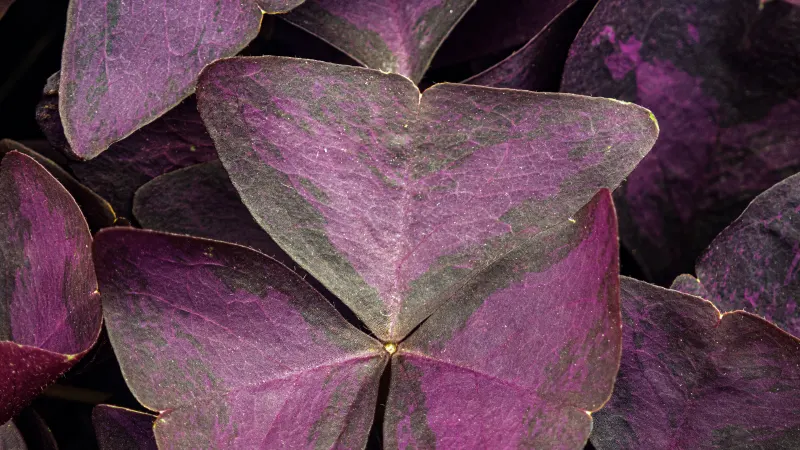
Purple shamrock is two surprises in one pot. The first you'll notice within a day of bringing it home: the deep-purple, butterfly-shaped leaves move. They open flat and wide in daylight, then fold down and closed at dusk like a flock of little umbrellas settling for the night, opening again the next morning — a low mound of violet triangles that rearranges itself with the light.
The second surprise arrives a few months later, and it's the one that catches people out — the whole plant flops, browns, and collapses into what looks unmistakably like a corpse. That collapse is not death. Oxalis triangularis grows from small underground bulbs (technically rhizomes), and every so often — often triggered by summer heat, sometimes just by its own internal clock — it sheds its tired foliage and takes a rest, exactly as a daffodil does after it flowers. Left alone for a few weeks and then watered again, it pushes up a fresh flush of leaves from those bulbs as if nothing happened. The single most common way people lose this plant isn't a pest or a disease; it's throwing a perfectly healthy dormant plant in the bin, or drowning it in water trying to revive it. Understand the rest cycle and the purple shamrock is genuinely easy — one of the most forgiving flowering houseplants you can grow. Miss it, and you'll mourn a plant that was only sleeping.
Light
Give purple shamrock bright, indirect light with a little gentle direct sun and it rewards you by staying a rich, saturated purple. Light is what feeds that colour: in a bright spot the triangular leaves hold their deep burgundy-violet, and a few hours of soft morning sun deepen it further. Move the same plant to a dim corner and it tells on itself — the purple washes out toward a muddy green, the leaf stalks stretch long and thin reaching for the window, and the whole plant grows floppy and sparse.
An east-facing windowsill is close to ideal; a bright south- or west-facing window works well if you soften the harshest midday sun, which can scorch the delicate leaves. If your shamrock is leggy and greenish rather than compact and purple, more light is almost always the fix — not more water and not more fertiliser.
Water
During active growth, purple shamrock likes its soil kept lightly and evenly moist — not soggy, never bone-dry. Water thoroughly when the top two to three centimetres of soil have dried, let the excess drain away, and empty the saucer so the bulbs never sit in standing water. The bulbs are the plant's weak point: they rot readily if kept wet, and rotten bulbs are one of the few ways to genuinely kill an otherwise tough plant. A pot with drainage holes and a free-draining potting mix does most of the work of preventing that.
The rhythm changes completely when the plant heads into dormancy — and learning to read that shift is the whole art of watering this species. As the foliage tires and starts to flop and brown, the plant is winding down and drinking far less; keep watering on the old schedule and you'll waterlog dormant bulbs that simply aren't taking up moisture. That's the moment to cut right back, covered in full below. This is a plant where over-watering during the rest period does far more harm than any amount of under-watering, so when in doubt during a collapse, keep the pot on the dry side.
Unlike a Venus flytrap or an air plant, purple shamrock is grown in ordinary soil, so a soil-moisture model maps onto it perfectly — the usual "how dry is the pot, and when will it need water?" question is exactly the right one here. A tracked watering schedule keeps you clear of the two mistakes that matter: letting it dry out hard in growth, and drowning it in rest. If houseplants are new to you, the beginner's guide to plant care covers the moisture basics this plant rewards.
Dormancy: when it looks dead but isn't
This is the section that matters most, because misreading it is how most purple shamrocks die. Every few months — commonly in the heat of summer, sometimes on no obvious trigger at all — the plant enters a natural dormancy. It's the same behaviour a daffodil shows after it flowers: the leaves yellow, flop, brown, and die back until the pot looks like a tangle of dead stems over bare soil. Every instinct screams that you've killed it. You almost certainly haven't. Down in the soil the little bulbs are alive and well, simply resting, waiting for the cue to grow again.
What you do at this point decides everything. The right response is to stop. Cut the spent, browned foliage back to soil level, move the pot somewhere cool and dim, and stop watering almost entirely — a tiny sip every couple of weeks to keep the bulbs from shrivelling, no more. Let it sit like that for two to four weeks, or however long it takes. The wrong responses are the tempting ones: watering more to rescue the dying plant, which rots the dormant bulbs; feeding it, which it can't use; or giving up and throwing the whole pot away while the bulbs are still perfectly viable.
Then you simply bring it back. After the rest, return the pot to bright light, resume normal watering, and within a couple of weeks fresh purple leaves push up from the bulbs — often more of them than before, because dormancy is also how the plant regroups and multiplies underground. Some guardians deliberately induce a rest by withholding water for a while when the plant looks tired and leggy; others just let it happen on its own schedule. Either way, the mindset is the thing: with this plant a collapse is a comma, not a full stop. A purple shamrock that "dies" three or four times a year and comes back each time is not a struggling plant — it's a perfectly normal one, doing exactly what a bulb does. This is the same rest that catches out growers of alocasia, which also dies back to an underground storehouse and regrows when conditions suit it. Learn to see rest for what it is and you'll never lose one of these to panic.
Feeding and dividing
Purple shamrock isn't a heavy feeder. Through the active growing season, a balanced liquid houseplant fertiliser diluted to half strength every three or four weeks is plenty to keep the leaves coming thick and richly coloured. Stop feeding entirely once the plant slows down or enters dormancy — a resting bulb has no use for nutrients, and fertiliser salts building up in dry soil only risk burning it. Resume only when new growth appears after the rest.
The bulbs that make dormancy possible also make propagation almost trivial. Every year or two, while growth is active, you can tip the plant out of its pot and gently tease apart the cluster of small pale bulbs at the root. Pot the divisions up a few centimetres deep in fresh, free-draining mix, water lightly, and each one grows into a new plant. It's the same lift-and-divide logic that propagates the tubers of string of hearts — the plant does the hard work of storing energy underground, and you just separate the parcels. Dividing every couple of years also keeps a congested pot vigorous and is a natural moment to refresh tired soil.
Humidity and temperature
Humidity is a non-issue here. Average room humidity suits purple shamrock perfectly, and it needs no misting, no pebble tray, and no special measures — a rare houseplant that genuinely doesn't fuss about the air.
Temperature is more interesting, because it ties straight back to dormancy. Purple shamrock is happiest in the range of about 15–24°C and prefers the cooler end. It dislikes real heat, and a stretch of hot summer weather is one of the most reliable triggers for the plant to down tools and go dormant — so a shamrock that collapses during a heatwave hasn't been scorched to death, it's simply retreated to wait out the heat. Keep it out of the blast of radiators and away from hot, stuffy windowsills in high summer, give it a cool and airy spot, and it will hold its foliage longer between rests. Those daily opening-and-closing leaves are a live readout of how content it is: a plant that spreads wide each morning and folds each night is thriving, while one that stops moving, or won't open at all, is telling you something is off — usually too little light, or the beginnings of a rest. Learning to read those small signals is exactly the kind of attentiveness the guide to reading plant health signals is about.
Common problems
Leggy, stretched, fading-to-green leaves. Too little light. The purple pales toward green, the stalks grow long and floppy, and the plant leans hard toward the window. Move it somewhere brighter with a little gentle direct sun, and the colour and compactness return with the next flush of growth.
Mushy stems and soft, rotten bulbs. Over-watering — the classic killer of an otherwise tough plant, and especially easy to do during dormancy when the bulbs aren't drinking. Let the soil dry out more between waterings, make sure the pot drains freely and the saucer is never left full, and cut watering right back whenever the plant is resting.
The whole plant suddenly flopping and browning. Almost always dormancy, not death — particularly if it follows a spell of hot weather. Don't panic and don't drown it: cut the spent foliage back, move it somewhere cool and dim, ease off the water, and let it rest before it regrows from the bulbs.
Leaves that won't open, or stop moving. The daily fold-and-unfold is powered by light, so leaves that stay shut through the day usually mean the plant is in too dim a spot — move it brighter. If the movement stops altogether and the foliage is also tired-looking, the plant may simply be sliding into its rest.
Frequently asked questions
Why is my purple shamrock dying or collapsing?
Almost certainly it isn't dying — it's going dormant. Every few months, often triggered by summer heat, Oxalis triangularis naturally sheds its foliage: the leaves flop, brown, and die back until the pot looks dead. This is normal and expected, exactly like a daffodil dying down after flowering, and the bulbs under the soil are alive and simply resting. Don't throw it out and don't water more to save it — soaking dormant bulbs is what rots them. Cut the spent leaves back to soil level, move it somewhere cool and dim, stop watering almost entirely, and after two to four weeks return it to light and normal watering. Fresh purple leaves will push up from the bulbs.
Why do my purple shamrock's leaves close up at night?
Because the plant is doing what it's built to do. Purple shamrock is nyctinastic — its leaves and flowers open flat in daylight and fold down and closed at night or in low light, then reopen the next morning, driven by changes in light levels. It's completely normal and a sign of a healthy, responsive plant. Leaves that stay closed even during the day are usually a signal the plant isn't getting enough light, so treat persistent daytime folding as a cue to move it somewhere brighter.
Is purple shamrock toxic to cats and dogs?
Yes. Oxalis is listed by the ASPCA as toxic to cats, dogs, and horses, because it contains soluble calcium oxalates. In practice a curious pet that nibbles a leaf usually gets away with mouth irritation, drooling, and an upset stomach. The more serious risk comes from larger quantities: soluble oxalates can affect the kidneys, which is mainly a concern for animals that graze — a cat that takes a single bite is in far less danger than a dog or rabbit that works through a whole potful. It isn't a plant to leave within reach of a pet that likes to chew greenery; keep it up high or in a room they don't visit.
How do I get my purple shamrock to grow back after dormancy?
Give it a genuine rest first, then coax it awake. Once it has collapsed, trim the dead foliage off at soil level, set the pot somewhere cool and dim, and keep it nearly dry — just enough water to stop the bulbs shrivelling. After a few weeks of that rest, move it back into bright, indirect light and start watering normally again. The warmth, light, and moisture together are the signal the bulbs are waiting for, and new purple leaves usually appear within a couple of weeks — frequently a fuller, bushier flush than the one it dropped, because resting is also how the plant multiplies.
Can Botanical Legacy help me look after a purple shamrock?
Yes — and better than with some plants, because this one is grown in ordinary soil. Unlike an air plant or a bog carnivore, a purple shamrock dries out and drinks in the normal way, so the Digital Shadow's soil-moisture model works exactly as intended, giving you a steady, reliable watering rhythm that keeps the bulbs neither parched nor waterlogged. Its second job here is quieter but just as valuable: when your shamrock flops and browns, a Specimen's tracked history shows you the collapse is on cycle — the plant resting, not dying — so instead of panicking you rest it deliberately and let the reminders bring you back when it's time to water and restart. Log it as a Specimen and the app carries both the routine and the reassurance.
Start your sanctuary
Botanical Legacy's free Observer plan covers up to five Specimens, and a purple shamrock is a rewarding, characterful one to start with — a plant that moves with the daylight and returns from its own collapse if you let it rest. Every new account also includes a 14-day trial of Cultivator, the paid plan, which adds a local weather feed and soil sensor support for the soil-grown plants in your collection.
Give it bright light, even moisture while it grows, and the confidence to let it sleep when it flops — and this little purple plant will fold its leaves each night and rise again from its bulbs for years.
START YOUR SANCTUARY — FIVE FREE SPECIMENS, NO PAYMENT REQUIRED →
A collapsed purple shamrock is almost never a dead one. Cut it back, let it rest, and wait — the bulbs remember how to begin again.