Species care guide
Cast iron plant
Aspidistra elatior
A cast iron plant care guide for the true low-light survivor — how to water Aspidistra elatior without rotting it, why it grows so slowly, and how to keep the dark hallway or north-facing corner green when nothing else will.
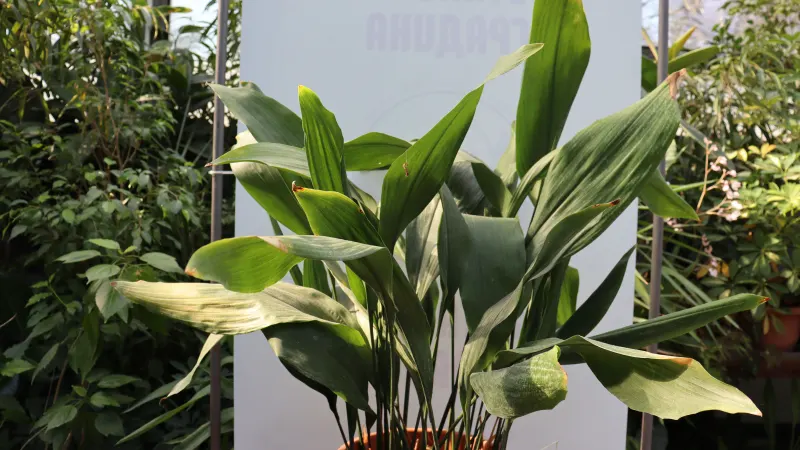
.jpg)
- Light
- Low to moderate indirect light; tolerates deep shade better than almost any houseplant, but never direct sun
- Water
- Let the top few centimetres dry out, then water thoroughly — drought-tolerant and rots if kept soggy
- Humidity
- Undemanding; ordinary household humidity is completely fine
- Temperature
- Very tolerant, roughly 7–29°C; copes with cool hallways and unheated rooms
- Pets & toxicity
- Non-toxic to cats and dogs — safe for pet households
- Difficulty
- Among the easiest houseplants alive; tolerates neglect, shade, and cool — just very slow-growing
Some plants reward attention. The cast iron plant rewards leaving it alone in a dark corner and coming back next year.
The plant that earned its name
The cast iron plant is exactly what it sounds like: a houseplant so tough it became a Victorian legend for surviving conditions that killed everything else. In the gas-lit, coal-smoked, poorly heated parlours of the nineteenth century — dim, draughty, and fumey — Aspidistra elatior kept its glossy dark green leaves when more delicate ferns and palms gave up. That reputation is entirely deserved. If you have a spot in your home where plants go to die — a north-facing room with weak light, a hallway that never warms up, a shaded corner nowhere near a window — this is the plant to put there.
It comes with one honest trade-off, and it's the whole personality of the plant: in exchange for tolerating almost anything, it grows very slowly. A cast iron plant might unfurl only two or three new leaves in a whole year. If you want fast, lush, dramatic growth, look elsewhere; if you want reliable, undemanding greenery in a difficult spot, nothing beats it. This guide is short because the plant's needs are short — and that's the point. If you're new to houseplants generally, the ten mistakes every beginner makes still applies, but a cast iron plant forgives most of them.
Light: the true low-light plant
"Low light" gets thrown around loosely in plant care — a lot of plants sold as low-light really mean "medium light, will slowly decline in a dark corner." The cast iron plant is the real thing. It evolved on the shaded forest floor of Japan and Taiwan, under the canopy, and it genuinely tolerates deep shade that would starve most houseplants. A dim north-facing room, an interior hallway, a corner well away from any window — these are conditions it handles without complaint.
The one hard rule is no direct sun. Direct sunlight through glass scorches its leaves, bleaching them pale and leaving brown, burnt patches, so keep it out of bright south or west windows. Bright indirect light is fine and will grow it a little faster and fuller, but it's genuinely optional. This is the plant you reach for precisely when you don't have good light to offer — and it's one of the very few that means it. For the difference between the survivable and the ideal, reading a plant's health signals is a useful habit even with a plant this stoic.
How to water a cast iron plant
Watering is where even this near-indestructible plant can be undone, and the mistake is always the same: too much. Because it grows slowly and tolerates drought, a cast iron plant uses water slowly and hates sitting in soggy soil. Water it thoroughly only when the top few centimetres of soil have dried out — push a finger in to check — then let it drain completely and empty the saucer or cover pot. In a dim, cool spot it dries out slowly, so this might be every couple of weeks or less; in a brighter, warmer room, a little more often.
The guiding principle is to lean dry. A cast iron plant recovers easily from being forgotten for a while, but root rot from constantly wet soil is the one thing that genuinely kills it. If you're ever unsure, wait — the plant will be fine. This is the same read-the-soil-not-the-calendar logic covered in when to water your houseplants, and it matters even more for a slow, drought-tolerant plant that a per-plant model handles neatly: Botanical Legacy keeps a Digital Shadow of each Specimen, so a thirsty plant and a cast iron plant on the same shelf don't get watered on the same schedule just because they live together.
Soil, feeding, and grooming
Any decent, free-draining houseplant compost suits a cast iron plant — nothing special is required, as long as the pot has drainage holes so water can escape. It's a light feeder that grows too slowly to need much, so feed sparingly: a balanced houseplant fertiliser at half strength once a month through spring and summer is ample, and none at all in autumn and winter. Overfeeding is a common, avoidable cause of brown leaf tips, so if in doubt, feed less.
The one bit of active grooming worth doing is wiping the leaves. Those broad, glossy leaves collect a surprising amount of dust, which both dulls their appearance and blocks the modest light the plant relies on — a gentle wipe with a damp cloth every few weeks keeps them clean and working. If a leaf goes fully brown or tatty, cut it off at the base; the plant won't miss it, and a new one will eventually replace it in its own slow time.
Humidity, temperature, and repotting
Humidity is a non-issue. Ordinary household air suits a cast iron plant completely, so there's no misting or pebble tray to think about. On temperature it's just as easygoing, comfortable across a wide band from around 7°C to 29°C, which means it copes with cool hallways, draughty landings, and unheated spare rooms that would stress most tropical houseplants. Keep it above freezing and away from the blast of a radiator or heater, and it's content.
Repotting is a rare event. Cast iron plants prefer to be a little pot-bound and actively dislike root disturbance — a disturbed plant may sulk and pause even its slow growth for a while. Repot only every few years, when roots are genuinely crowding the pot, and move up just one size when you do. Spring is the best time, and it's also the moment to divide the plant if you want more: separate a clump with several leaves and its own section of root, and pot it up on its own.
Common problems
Brown leaf tips or edges. Usually overfeeding, sometimes a buildup of minerals from tap water, or occasionally underwatering. Cut back on fertiliser first, consider using filtered or rainwater if your tap water is very hard, and check the plant isn't being left bone dry for months at a stretch.
Pale, bleached, or scorched leaves. Too much direct sun. Move it out of any direct sunlight into indirect light or shade, and the new growth will come in its proper deep green.
Yellowing leaves and a soft base. The warning sign of overwatering and root rot — rare for this plant, but the main thing that kills it. Let the soil dry out, check the roots are firm, and repot into fresh, free-draining mix if they've begun to rot. Water much less afterwards.
No visible growth. Almost always normal. Cast iron plants grow genuinely slowly, adding only a few leaves a year, so a long stretch with no new leaves is not a problem in itself. Brighter (indirect) light and a little feeding in the growing season are the only levers that speed it up at all.
Fine webbing or speckled, dull leaves. Occasionally spider mites move in, especially in warm, dry air. Wipe the leaves down, rinse the plant, and treat with insecticidal soap if needed — but it's an uncommon issue for such a robust plant.
Frequently asked questions
How often should you water a cast iron plant?
Only when the top few centimetres of soil have dried out — then water thoroughly and let it drain completely. Because it's slow-growing and drought-tolerant, that's often just every couple of weeks or less, especially in a cool, dim spot. Always lean toward under-watering: a cast iron plant shrugs off being forgotten, but root rot from constantly wet soil is the one thing that reliably kills it.
Can a cast iron plant really grow in a dark room?
Yes — it's one of the very few houseplants that genuinely tolerates deep shade, which is how it earned its name and its Victorian reputation. It will grow slowly in a dim north-facing room, a hallway, or a shaded corner far from a window. The only light rule to respect is no direct sun, which scorches its leaves. Brighter indirect light grows it a bit faster, but it's not required.
Why does my cast iron plant have brown tips?
Most often overfeeding, or a buildup of minerals and fluoride from hard tap water; sometimes prolonged underwatering. Feed only lightly, once a month at half strength during spring and summer and not at all in winter. If your tap water is very hard, try filtered or rainwater. And make sure it isn't being left completely dry for months on end.
Is a cast iron plant toxic to cats and dogs?
No — Aspidistra elatior is considered non-toxic to cats and dogs, which makes it a safe, sturdy choice for a home with pets. Combined with its tolerance of low light and neglect, that pet-safety makes it one of the most genuinely low-worry houseplants you can own.
Is a cast iron plant a good fit for Botanical Legacy?
It's an easy, low-maintenance Specimen to keep — the reminder loop mostly saves you from the one real risk, overwatering, by keeping its drinks well spaced. Because it grows so slowly, the check-in photo trend won't change dramatically week to week, but that steadiness is itself useful: a running Digital Shadow makes any slow decline (say, from a spot that turned out too wet) obvious against an otherwise flat baseline, which is easy to miss by eye on a plant that barely changes.
Start your sanctuary
Botanical Legacy's free Observer plan covers up to five Specimens, and a cast iron plant is a smart anchor for any collection — the reliable green thing in the difficult spot, asking almost nothing of you. Every new account also includes a 14-day trial of Cultivator, the paid plan, which adds the local weather feed and soil sensor support for the thirstier, fussier plants elsewhere in your home.
Put it in the dark corner, water it rarely, and leave it alone — and a cast iron plant quietly outlasts nearly everything.
START YOUR SANCTUARY — FIVE FREE SPECIMENS, NO PAYMENT REQUIRED →
The cast iron plant asks one thing in return for surviving anything: patience. It grows on its own slow schedule, in the corner everyone else gave up on.