Species care guide
Peperomia
Peperomia spp.
An honest Peperomia care guide for a genuinely forgiving plant — why its thick leaves mean it drinks far less than it looks like it should, the pot size that matters more than usual, and the varieties worth knowing.

- Light
- Bright, indirect light; tolerates medium light better than most tropicals, though variegated types fade without enough of it
- Water
- When the soil is dry at least halfway down, often closer to fully dry — thick, water-storing leaves mean it drinks far less than it looks like it should
- Humidity
- Comfortable at ordinary household humidity (40%+); thinner-leaved varieties appreciate a bit more
- Temperature
- 18–24°C; no frost tolerance and dislikes cold draughts
- Pets & toxicity
- Non-toxic to cats, dogs, and humans — a genuinely pet-safe genus
- Difficulty
- Among the most forgiving houseplants; the one real risk is watering it like a thirsty tropical instead of a semi-succulent
A Peperomia's leaves look tropical. Its watering needs are almost pure succulent — and treating one like the other is how it drowns.
The tropical-looking succulent
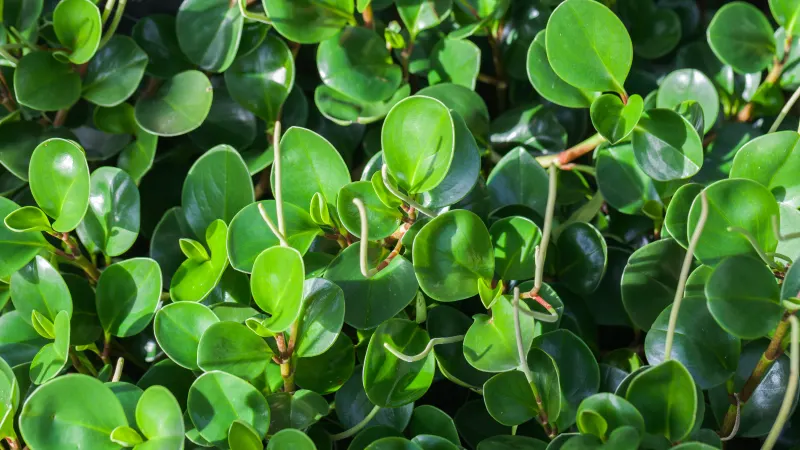
Peperomia sells itself on looks: glossy, often patterned foliage in a compact, tabletop-friendly size, marketed alongside monsteras and philodendrons as an easy tropical houseplant. The looks are honest. The category is the misleading part. Underneath the tropical appearance, a Peperomia's thick, fleshy leaves and stems are functioning as water storage, much closer in mechanism to a succulent than to the thin-leaved aroids it's usually shelved next to — and a plant with that kind of built-in reservoir needs a very different watering rhythm than the "keep it evenly moist" instinct most people bring to a leafy green houseplant.
That single mismatch — tropical looks, succulent-adjacent watering — is behind most of the Peperomia problems people search for, and it's the thread this guide follows. If houseplants in general are new to you, the ten mistakes every beginner makes covers the broader instincts worth unlearning; this guide covers the one instinct that's specifically wrong for this genus.
Light: more forgiving than most, with one caveat
Peperomia is a genuine understory plant in the wild, and indoors that shows up as real tolerance for medium, indirect light — noticeably more than a Monstera or a fiddle-leaf fig would accept before sulking. A spot a few steps back from a bright window, or filtered light through a sheer curtain, is enough for most solid-green varieties to stay compact and healthy.
The caveat is variegation. Patterned or coloured varieties — the silvery marbling on 'Emerald Ripple', the pink edges on some Peperomia obtusifolia forms — need meaningfully brighter light to hold that pattern. In lower light, variegated leaves gradually green out as the plant prioritises chlorophyll production over decoration. If you bought a variety specifically for its markings, give it more light than the genus technically requires to survive.
How often to water a Peperomia
This is the section worth reading slowly, because it runs against the instinct most tropical-plant care creates. Push a finger into the soil — not just the surface, but down toward the middle of the pot. Peperomia wants that depth genuinely dry, or very close to it, before the next watering. A schedule sized for a pothos or a calathea, watering again as soon as the top inch feels dry, keeps a Peperomia's roots sitting in moisture they were never built to handle continuously.
The reason is the water storage. Thick leaves and swollen stems hold a real reserve, so the plant can comfortably go longer between waterings than its tropical appearance suggests — often two to three weeks indoors, longer in a cooler or dimmer spot, sometimes closer to a week in strong light and warmth. There's no single number that applies everywhere; the soil, checked at real depth, is the only honest signal. The general logic of watering by trigger rather than calendar is in when to water your houseplants.
Because the failure mode here is almost always overwatering rather than under, a model that tracks the actual moisture trend in a specific pot is more protective than a fixed reminder ever could be. Botanical Legacy's Digital Shadow estimates how much moisture is left in that exact pot each night, so a Peperomia set on a "water every week" reminder — the kind of interval that suits a thirstier neighbour — doesn't quietly rot while the calendar insists it's due.
Pot size and soil
Peperomia keeps an unusually small, shallow root system relative to how full the plant looks above the soil line, and that mismatch matters more here than for most houseplants. A pot sized generously "for growing room" holds a volume of soil the modest roots can't draw down at any reasonable pace — the surface can look and even feel dry while the lower two-thirds stays wet for days, quietly rotting roots the whole time. Keep the pot snug, sizing up only when you can see roots circling the base or emerging from the drainage holes, and use a fast-draining mix — a standard houseplant compost cut with perlite drains far more safely than a dense, water-retentive one.
Humidity and temperature
Ordinary household humidity suits most Peperomia varieties well; this isn't a genus that demands a humidifier. Thinner-leaved types — 'Emerald Ripple' and its relatives, with a more crinkled, less succulent leaf than obtusifolia — do a little better with slightly elevated humidity and can show crisping edges in very dry winter air, but it's a cosmetic issue rather than a survival one for most homes.
Temperature is a tighter band: 18–24°C is comfortable, and Peperomia has no frost tolerance and dislikes cold draughts. A sudden chill — a spell too close to a winter window, a blast of cold air from a door — can cause rapid, mushy leaf drop that's easy to mistake for overwatering, since both end in soft, collapsing foliage.
Feeding and propagation
Feed lightly and only through the growing season — every 4–6 weeks from spring to late summer, at half the label strength of a balanced houseplant fertiliser. Peperomia is a slow, modest grower by nature, and heavier feeding doesn't speed it up; it mostly accumulates as salts in a small pot's soil.
Propagation is one of this genus's genuine strengths, and it works differently from most other houseplants on this site. Many varieties, including the popular obtusifolia and 'Emerald Ripple' types, root from a single leaf with a short length of stalk attached — pushed into moist soil or set in water, much like propagating a succulent leaf, rather than needing a stem node the way a pothos or philodendron does. Trailing types root faster from a stem-tip cutting instead. Either method typically shows roots within two to four weeks.
Varieties worth knowing
"Peperomia" covers well over a thousand species, but a handful account for nearly everything sold as a houseplant, and they're different enough in looks to be worth naming. Peperomia obtusifolia, the "baby rubber plant," has thick, glossy, rounded leaves and is the most forgiving of the common varieties. Peperomia caperata ('Emerald Ripple', 'Rosso', and colour variants) has a deeply crinkled, textured leaf and a more compact rosette habit. Peperomia argyreia, the "watermelon peperomia," carries a striped pattern that genuinely resembles its namesake fruit. Peperomia polybotrya, the "raindrop peperomia," has smooth, teardrop-shaped leaves on long stems. All of them share the same core care profile in this guide — the differences are mostly leaf shape, growth habit, and how strict the light needs to be to keep any variegation.
Common problems
Wrinkled, slightly softened leaves. Thirst, not disease. The plant has drawn down its stored water reserve; a thorough watering usually plumps the leaves back up within a day or two. This is a genuinely useful, low-stakes warning sign — closer to a succulent's response than a typical houseplant's droop.
Yellow, translucent, or mushy leaves, especially near the base. Overwatering, almost always compounded by a pot that's too large for the root system. Check the roots; if they're brown and soft rather than firm and pale, trim back to healthy tissue, repot into a smaller container with fresh, fast-draining mix, and water considerably less often.
Leggy, stretched growth with widely spaced leaves. Insufficient light. Move the plant closer to a bright window; new growth should come in more compact once the light improves, though existing leggy stems won't shorten retroactively.
Variegation fading to solid green. Also a light issue — the plant is prioritising chlorophyll production over the energy-expensive pigments that create the pattern. Brighter indirect light usually restores variegation in new growth.
Sudden mushy leaf drop. Often a cold shock rather than a watering problem, especially if it follows a draught or a cold windowsill. Move the plant somewhere warmer and steadier; the damaged leaves won't recover, but new growth should be unaffected once conditions stabilise.
Small, cottony white clusters in leaf joints. Mealybugs, which favour the same sheltered, humid microclimates a Peperomia's dense growth creates. Dab them off with a cotton swab dipped in isopropyl alcohol and recheck weekly, since a small colony re-establishes quickly if missed.
Frequently asked questions
How often should you water a Peperomia?
There's no fixed interval — check the soil at real depth, not just the surface, and water only when it's dry at least halfway down, often closer to fully dry. In practice that's commonly every two to three weeks indoors, sometimes longer in cooler or dimmer conditions. The thick, water-storing leaves mean this genus drinks far less than its tropical appearance suggests, and overwatering is the more common way people lose one.
Why are my Peperomia's leaves wrinkling?
Thirst. The leaves and stems store water, and when that reserve runs low, the leaves soften and pucker slightly rather than wilting the way a thin-leaved plant would. A thorough watering typically plumps them back up within a day or two — a useful, low-risk signal rather than a sign of damage.
Does Peperomia need a big pot to grow well?
No — the opposite. Its root system stays small and shallow relative to the plant's size, and an oversized pot holds more wet soil than those roots can draw down, which is one of the more common ways people accidentally rot a Peperomia. Keep the pot snug and size up only when roots are visibly crowding it.
Is Peperomia toxic to cats and dogs?
No. Peperomia is considered non-toxic to cats, dogs, and humans, which makes it one of the more genuinely pet-safe options for a home with curious animals, alongside plants like spider plant and calathea.
Can I grow a new Peperomia from just one leaf?
Yes, for most of the common varieties — this is one of the easier houseplants to propagate this way. A single leaf with a short stalk attached, placed in water or moist soil, roots within a few weeks for varieties like obtusifolia and 'Emerald Ripple'. Trailing varieties root a little faster from a stem-tip cutting instead.
Why is my variegated Peperomia turning solid green?
Not enough light. Variegated patterns cost the plant extra energy to produce, and in lower light it prioritises plain chlorophyll over the pattern in new growth. Move it somewhere brighter — the leaves that have already gone green won't revert, but new leaves should come in more patterned once light improves.
Start your sanctuary
Botanical Legacy's free Observer plan covers up to five Specimens, each with its own continuously running Digital Shadow — a quiet safeguard for a plant whose biggest risk is a well-meaning owner watering it on a tropical's schedule instead of its own. Every new account also includes a 14-day trial of Cultivator, the paid plan, which adds the local weather feed and soil sensor support.
Give it the dry-down it wants, and a Peperomia asks for very little else.
START YOUR SANCTUARY — FIVE FREE SPECIMENS, NO PAYMENT REQUIRED →
Water a Peperomia like the succulent it half is, not the tropical it looks like, and it becomes one of the easiest plants in the room.