Species care guide
Lucky bamboo
Dracaena sanderiana
A lucky bamboo care guide built on the two facts that change everything — it's a Dracaena, not a bamboo, and it's usually grown in water — so the water you use matters more than the soil you don't have.
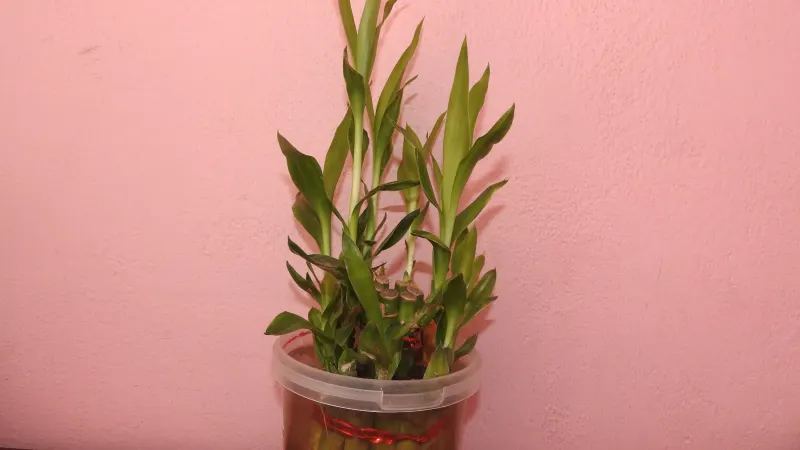

- Light
- Bright, indirect light; tolerates low light but grows pale and leggy there, and direct sun scorches and yellows the leaves
- Water
- Grown in water: keep 3–5cm of the stalks submerged, top up with the right water weekly, and fully change it every 1–2 weeks; in soil, keep it lightly, evenly moist
- Humidity
- Average room humidity is fine; it isn't fussy, though very dry heated air can brown the leaf tips
- Temperature
- 18–24°C; keep it away from cold draughts and heat sources
- Pets & toxicity
- Toxic to cats and dogs — it's a Dracaena, not a true bamboo, so despite the name it contains the saponins that make dracaenas unsafe for pets
- Difficulty
- Very easy to keep alive; the only real skill is using the right water and changing it often enough
Lucky bamboo is neither especially lucky nor bamboo. It's a Dracaena in a vase of water — and once you accept that, it's one of the hardest houseplants to kill.
The plant that's misnamed twice
Lucky bamboo is one of the most-gifted plants in the world, and almost everything the name tells you is wrong. It isn't bamboo — it's Dracaena sanderiana, a member of the same family as the corn plant and the dragon tree. And the jointed green stalks that look so much like bamboo canes are the reason for the confusion, along with a long association with feng shui and good fortune. None of that changes the care, but two facts about what it really is change everything: it's a Dracaena, which makes it toxic to pets, and it's almost always sold growing in plain water rather than soil, which makes the water the single most important thing you manage.
That second fact is what trips people up. Every instinct you've built for houseplants — check the soil, let it dry between waterings, worry about drainage — is beside the point for a plant living in a vase of pebbles. The questions that matter are which water to use and how often to change it. Get those two right and lucky bamboo is close to indestructible. Get them wrong and it slowly browns and yellows no matter how much you fuss over everything else. If houseplants in general are new to you, the beginner's guide to plant care is a good companion — just know that this plant deliberately breaks the usual "read the soil" rule.
Light
In the wild, Dracaena sanderiana grows on the shaded floor of West African rainforests, which is exactly why it copes so well with the moderate light of a typical room. The sweet spot indoors is bright, indirect light — near a window, out of the path of direct sun. There the stalks stay a healthy green and put out new leaves at a steady, modest pace.
It has a real tolerance for low light, which is part of why it survives on so many office desks and bathroom shelves, but tolerance isn't preference. In a genuinely dim spot the growth turns pale, thin, and stretched, reaching toward whatever light it can find. At the other extreme, direct sun is a mistake: a few hours of hot afternoon light through glass bleaches the leaves and scorches them yellow. Bright but shaded is the target, and if your plant looks washed-out and leggy, more indirect light — not more water or feeding — is the first thing to adjust.
Water: which kind, and how often
This is where lucky bamboo is unusual, so it's worth being precise. The plant is notably sensitive to the additives in municipal tap water — chlorine, chloramine, and fluoride in particular. Fluoride is the real villain: dracaenas accumulate it, and it shows up as brown, scorched leaf tips and margins that no amount of other good care will reverse. The fix is simply the water you pour in. Distilled, reverse-osmosis, or filtered water is ideal. Rainwater works well. Plain tap water left uncovered overnight will let some chlorine gas off, but it does not remove fluoride or chloramine, so it's a weak substitute — if your tap water is fluoridated, filtered or distilled is worth the small effort.
The rhythm has two parts. First, keep the water topped up: the roots and the bottom few centimetres of stalk should stay submerged at all times, and because the plant drinks and the water evaporates, you'll add a little every week or so to hold the level. Second, and just as important, change the water out completely every one to two weeks — pour it all away, rinse the roots and pebbles, clean the vase, and refill fresh. Standing water goes stale, cloudy, and eventually smelly, and stagnant water around the roots is what causes them to rot and blacken. Fresh water, changed often, in a clean vase is the entire maintenance routine.
Because there's no soil here, a soil-moisture model has nothing to measure — this is the same honest limitation you'll find with an air plant or a bromeliad watered from its central cup. What a per-plant system like Botanical Legacy is genuinely good for with lucky bamboo is the schedule: a steady, reliable reminder to top up and to do the full water change, which is exactly the maintenance people forget until the vase is half-empty and cloudy.
Feeding and containers
A plant growing in water is growing in a nutrient vacuum, so it does need a little feeding to keep making new green growth — but far less than you'd think. A single drop of dilute liquid houseplant fertiliser, or a specialised lucky bamboo food, added once a month at each water change is plenty. The failure mode is almost always too much: excess fertiliser burns the delicate roots and, combined with light, fuels a bloom of green algae that clouds the water and coats the pebbles.
The container is a quiet lever most people overlook. A clear glass vase shows off the roots and pebbles beautifully, but it also lets light reach the water, and light plus dissolved nutrients is precisely what algae wants. If you're fighting persistent green water, switching to an opaque ceramic container, feeding more sparingly, and changing the water more often solves it without any chemicals. Whatever the vessel, give the plant enough pebbles or glass beads to hold the stalks upright — the roots will thread down through them — and rinse everything each time you refresh the water.
Humidity and temperature
Lucky bamboo is refreshingly relaxed about humidity. Average household levels suit it fine, and it doesn't need misting or a pebble tray the way a fern does. Very dry, heated winter air can contribute to browning leaf tips, but with this plant the more likely culprit for brown tips is the water chemistry, so check that first.
For temperature, think comfortable-room: roughly 18–24°C is ideal. It's a tropical plant with no frost tolerance, so keep it away from cold windowsills in winter, unheated porches, and cold draughts, and equally away from the drying blast of radiators, heat vents, and the tops of warm appliances. Steady, moderate warmth is all it asks.
Shaping, curls, and arrangements
The elegant spirals and lattices you see in shops aren't natural — they're trained. Growers coax the curls by rotating the young stalks beside a light source over months, letting the plant's natural lean toward light bend the stem, then turning it again. You can't un-curl an existing stalk, and trying to force a mature one into a new shape usually just snaps it.
What you can do is keep it tidy. If a stalk grows a long, leggy shoot from the top, you can cut it back to just above a node; the parent stalk will usually branch below the cut, and the piece you removed can often be rooted in water to make a new plant. Yellowing sections should be removed promptly rather than left in the vase, where they'll foul the water. Beyond that, lucky bamboo is a slow, forgiving grower that rarely demands anything dramatic.
Common problems
Brown, scorched leaf tips. Almost always the water. Chlorine, chloramine, and above all fluoride in tap water accumulate and burn the tips. Switch to distilled, filtered, or rain water, trim the damaged tips if you like the look, and new growth should come in clean.
A stalk turning yellow. Yellowing usually means too much direct sun, overfeeding, or poor water quality — and unlike a leaf, a yellowing stalk rarely recovers. Remove a yellowing stalk from the arrangement so it doesn't rot and cloud the water, and correct the underlying cause (softer light, less fertiliser, cleaner water) for the rest.
Cloudy, smelly, or green water. Stale water that hasn't been changed often enough, too much fertiliser, or algae fed by light in a clear vase. Do a full water change, rinse the roots and pebbles, clean the vase, feed more lightly, and consider an opaque container.
Mushy, blackened roots. Root rot from stagnant water. Trim away the black, rotten roots with clean scissors, rinse the healthy pale ones, refresh the water, and change it more frequently from now on.
No new growth. Usually too little light or no feeding at all. Move it somewhere brighter (still indirect) and add a single drop of dilute fertiliser at your next water change.
Frequently asked questions
How often should you change lucky bamboo's water?
Change it completely every one to two weeks: pour out all the old water, rinse the roots, pebbles, and vase, and refill with fresh distilled, filtered, or rain water. Between changes, top the level up about weekly so the roots and the lower few centimetres of stalk stay submerged. Regular changes are what keep the water clear and the roots healthy — stale water is the most common cause of cloudiness, odour, and root rot.
Why is my lucky bamboo turning yellow?
Yellow leaves usually point to too much direct sun, overfeeding, or poor-quality tap water; a whole stalk turning yellow generally means the same causes but is harder to reverse. Move it out of direct sun into bright indirect light, feed only a single drop of dilute fertiliser a month, and switch to distilled or filtered water. Remove any fully yellowed stalk so it doesn't rot in the vase.
Why does lucky bamboo get brown tips?
Brown, crispy tips are the classic sign of tap water — specifically the fluoride and chlorine that dracaenas are sensitive to, which build up and scorch the leaf edges. The cure is the water you use: distilled, reverse-osmosis, filtered, or rain water. Very dry air can contribute, but water chemistry is the usual cause, so change that first.
Is lucky bamboo toxic to cats and dogs?
Yes. Despite the name, lucky bamboo is Dracaena sanderiana, not a true bamboo, and dracaenas contain saponins that are toxic to cats and dogs. Chewing it can cause vomiting, drooling, loss of appetite, and weakness. True bamboo is non-toxic, but this isn't true bamboo — keep it out of reach of curious pets.
Can Botanical Legacy help me look after lucky bamboo?
Yes, in the way it suits best. Because lucky bamboo grows in water rather than soil, the Digital Shadow can't model soil moisture for it — there's no soil to model. Where it earns its keep is the routine: a dependable reminder to top up the water weekly and do the full water change every week or two, which is exactly the maintenance that's easy to forget and easy to get wrong. Log it as a Specimen and let the schedule carry the discipline the plant depends on.
Start your sanctuary
Botanical Legacy's free Observer plan covers up to five Specimens, and lucky bamboo is a gentle, near-unkillable one to start with — as long as you pour the right water and change it often. Every new account also includes a 14-day trial of Cultivator, the paid plan, which adds a local weather feed and soil sensor support for the soil-grown plants in your collection.
Use clean water, change it faithfully, keep it bright but out of the sun — and this misnamed little Dracaena will outlast almost anything else on the shelf.
START YOUR SANCTUARY — FIVE FREE SPECIMENS, NO PAYMENT REQUIRED →
Forget both words in the name. It's a Dracaena, it lives in water, and the whole art of keeping it is keeping that water clean.