Plant care guides · 17 min read
Snake plant care guide: why the 'unkillable' plant is the one people kill most
Snake plants are sold as unkillable, and that reputation is exactly what kills them. Here's how to read the plant in front of you — its light, its pot, its slow week — instead of watering a desert plant on a houseplant schedule.
Botanical Legacy · Field notes ·
The snake plant is sold as the houseplant you cannot kill. It is, quietly, the one most people do — not by forgetting it, but by remembering it too often.
Why "unkillable" is the most dangerous word attached to a snake plant
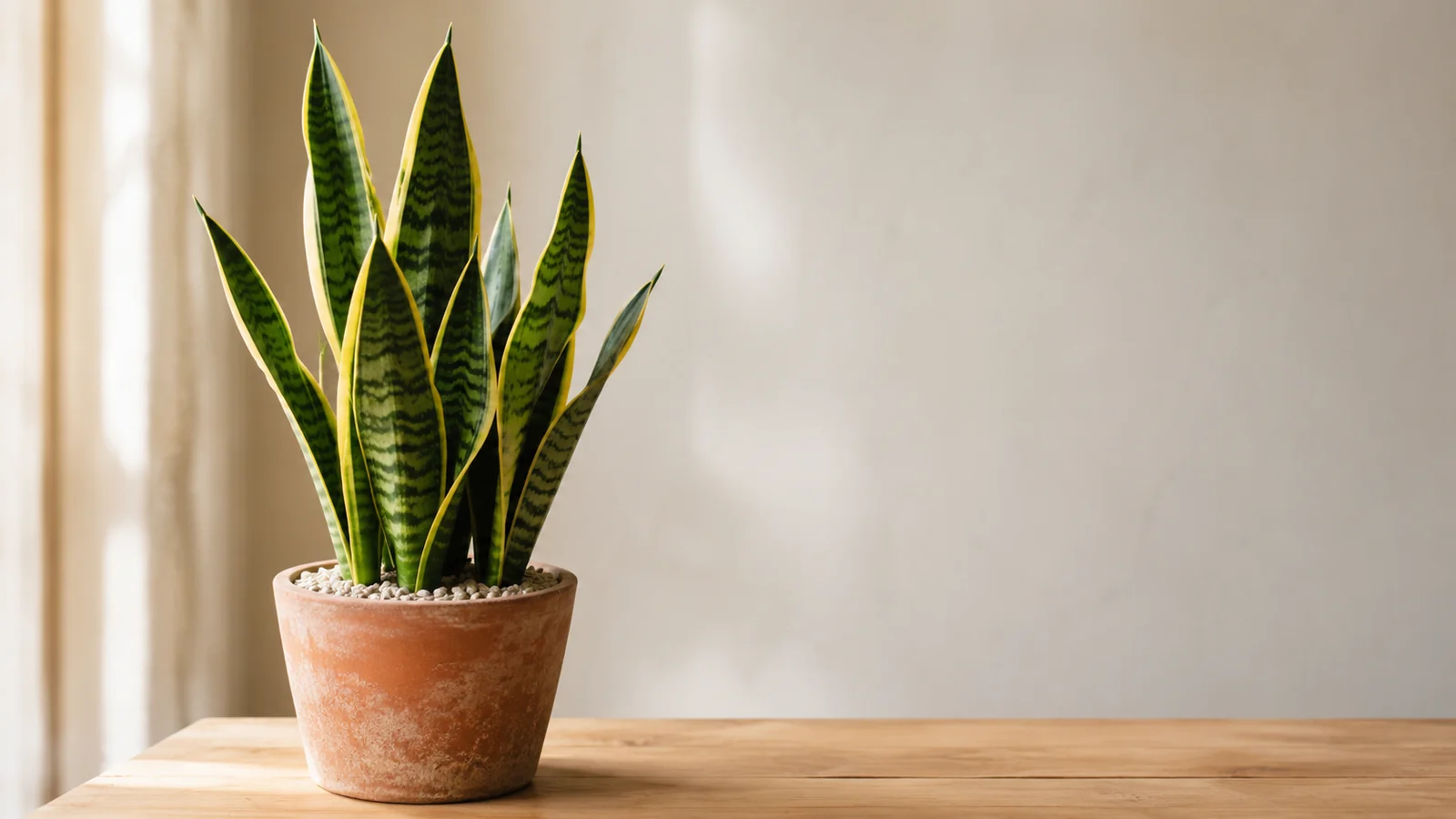
Every listing says the same thing. Unkillable. Thrives on neglect. Perfect for people who forget to water. The snake plant — Dracaena trifasciata, still sold nearly everywhere as Sansevieria — has the toughest reputation in the houseplant aisle, and the reputation is earned. It comes from hot, dry habitats in west and central Africa, built to ride out long dry spells. It stores water in those thick, upright leaves, and it opens its pores to take in carbon dioxide mainly at night, a water-saving trick called CAM photosynthesis, so it loses far less moisture to a hot afternoon than an ordinary leaf would. Left alone in a bright corner, it really will outlast almost anything you own.
The problem is what happens when "low-maintenance" gets misheard as "maintenance-proof." A plant this forgiving invites a particular kind of affection: you water it on the same weekend you water everything else, because that is what caring for a plant looks like. And that single habit — a desert plant on a houseplant schedule — is the one thing Dracaena trifasciata genuinely cannot survive much of. The average snake plant is nearly unkillable. Yours, in this pot, in this light, drinking from your Sunday watering can along with the ferns, is on a slow clock toward root rot.
This guide is about reading the plant in front of you instead of the label it came with. If houseplants are still new territory, the ten mistakes every beginner makes is the companion piece — and overwatering a snake plant is very nearly the whole list in one plant. The same per-specimen thinking runs through the Monstera and pothos guides too; the snake plant is where it matters most, because its margin for a scheduling error is measured in weeks.
Light: "tolerates low light" is not "wants low light"
The most repeated line in snake plant care is that it is perfect for a dark room, and it is half-true in a way that leaves plants stalled for years.
A snake plant tolerates deep shade the way a camel tolerates a desert crossing: by nearly shutting down. In a dim corner it survives, but it barely grows — no new spears from the base, no visible change month to month, just a holding pattern. That is endurance, not thriving, and a lot of owners mistake the stillness for the plant being happy. Give the same plant bright, indirect light and it does something different entirely: it pushes new leaves up from the rhizome, firmer and better coloured, and the variegated types hold their markings instead of fading.
It also takes more sun than most houseplants will forgive. A few hours of gentle morning light from an east window is a genuine benefit, not a risk. What it will not take is harsh, prolonged midday glare through glass in high summer, which bleaches the deep green to a washed-out pale and can scorch a leaf in pale, dry patches.
Here is the part the "low-light plant" label hides completely: the darker you keep a snake plant, the less it drinks. Light drives growth, and growth drives water use, so a plant in a bright window works through the moisture in its pot meaningfully faster than the same plant in a shaded hallway. Move a snake plant from a bright room to a dim one and keep watering it on the old rhythm, and you have just raised the risk of drowning it: same plant, same can, less thirst. Light and water are not two separate care questions for this species. They are one.
Judging indoor light by eye is genuinely hard, because light intensity falls away rapidly with distance from a window: a corner that reads as "bright enough" to you can get a fraction of the light the windowsill does. It is exactly the kind of judgement Botanical Legacy is built to make for you. When the model tracks a specimen's light over weeks and concludes the current spot is holding it back, it surfaces a placement hint — a quiet note that a brighter, better-oriented corner exists in your sanctuary, and which one — rather than leaving you to wonder why nothing has grown since spring. That is the per-specimen logic the whole Digital Shadow model runs on: not "snake plants tolerate low light," but "this snake plant would grow one window over."
Watering: the number is in weeks, and the calendar is the killer
This is the section that saves the plant, so slow down for it.
Almost every houseplant guide argues about days. A snake plant is watered in weeks, typically every few of them from spring to autumn and as little as once every month or two through winter, and it wants the soil to dry out completely, all the way through the pot, between drinks. Not the top few centimetres. The whole thing. This is a plant that would rather be a fortnight too dry than a day too wet, and it means the single most repeated instruction in all of houseplant care — "water when the top inch is dry" — is wrong for this species by a wide margin.
Overwatering is the one common way a snake plant dies, and it dies from the roots up. Water sitting around the thick, water-storing roots and the rhizome, with no air getting in, turns them soft and brown; that rot then climbs into the leaves as a mushy, collapsing, yellowing base. By the time you can see it in the leaves, it has usually been happening underground for weeks.
The cruelty that makes a schedule so dangerous is this: a thirsty snake plant and a rotting one can look alike at a glance — both go soft, both flop — so the natural instinct to water a drooping plant is precisely how a waterlogged one gets finished off. Learn the opposite tells before you touch the can:
- Thirst shows as leaves that wrinkle, pucker, and curl at the edges, while the soil is bone dry and the pot feels light. A long drink fixes it.
- Rot shows as a base that has gone soft and mushy, leaves that wobble or pull out with almost no resistance, while the soil is still damp and the pot feels heavy. Water is the last thing it needs.
Feel the soil and lift the pot before you decide anything. The full symptom-by-symptom breakdown is in overwatering vs underwatering, and it is worth reading before you lose a plant to the wrong diagnosis; the general method for reading soil rather than dates lives in when to water your houseplants.
Two physical variables that no care card mentions swing the right interval enormously, and you control both. Pot material: porous terracotta breathes and wicks moisture out through its walls, while glazed ceramic and plastic seal it in: the same snake plant in glazed ceramic can need water noticeably less often than one in terracotta. Substrate: a gritty, sharp-draining mix lets the pot dry through in days; a dense, moisture-holding compost keeps it wet for weeks and invites the exact rot you are trying to avoid. When you do water, water thoroughly until it runs from the drainage holes, let it drain completely, and never leave the pot standing in a saucer. A finger two knuckles deep reads the top of the pot; a soil probe reads deeper; a real soil-moisture sensor reads the whole slow curve and removes the guesswork entirely — which, for a plant that hides weeks of drawdown, is worth more here than on almost anything else you grow. And with this species specifically: when you are genuinely unsure, wait. It forgives a missed week far more gracefully than an extra one.
Soil and pot: how the wrong container quietly drowns a desert plant
You can do everything right with the watering can and still rot a snake plant, because the pot and the soil decide how long the water lingers.
Start with the one non-negotiable: a drainage hole. A snake plant in a pretty pot with no hole is on death row, because water pools invisibly at the bottom where the roots sit, and no amount of careful watering saves a plant whose feet are permanently wet. If you love a cachepot without drainage, keep the plant in a plain nursery pot inside it and lift that out to water — never let the inner pot sit in what collects below.
The substrate should be gritty and fast-draining: a cactus or succulent mix, or an ordinary houseplant mix cut generously with perlite or horticultural grit. The dense, peat-heavy compost that suits a fern is the wrong tool here; it holds water like a sponge against roots that want to dry out.
Resist the urge to size up. Snake plants like being snug, even pot-bound, and an oversized pot surrounds a modest root mass with a reservoir of wet soil the roots cannot reach — soil that stays soggy for days because nothing is drinking from it. Pot up one size at a time, and lean toward terracotta as the safer default for its breathability. One thing not to panic about: a happy, root-bound snake plant can push hard enough as the rhizome expands to crack a plastic or even a terracotta pot. That is not distress — it is a plant asking to be divided, which is the pleasant kind of problem this species gives you.
Humidity and temperature: the two things it genuinely does not care about
After all that caution, some relief: humidity is a non-issue. A snake plant likes low humidity, which suits essentially every home in every season, and it should never be misted: the leaf is built for dry air. You can stop thinking about humidity for this plant entirely.
Temperature is the one environmental variable that can hurt it, and the danger is cold, not heat. Snake plants sit comfortably between roughly eighteen and twenty-seven degrees Celsius, but sustained exposure below about ten degrees does real, lasting damage to the cells — the leaves develop soft, translucent patches that never firm back up. A snake plant pressed against a single-glazed window on a freezing night, or left on a porch when an autumn cold snap arrives, can be damaged in hours by a chill the rest of the room never feels. The other hidden stressor is a heating vent or radiator blasting hot, dry air directly at the plant, which drives its water use up out of step with everything else. As with light, the plant lives in its specific spot, not in the room's average — which is the whole reason a per-specimen model beats one house-wide setting.
Feeding: even less than you would think
A slow-growing desert plant burns through almost no nutrients, so the snake plant is one of the few houseplants where the honest advice is to feed it barely at all.
Two or three light feedings across the whole of spring and summer, with a balanced houseplant fertiliser at half the strength on the label, is plenty for a plant in active growth. Through autumn and winter, when it pauses, feed it nothing — it cannot use what you give it, and the excess simply accumulates. Fertiliser is salt, and salt piling up in the pot draws moisture back out of the roots and scorches the leaf tips brown from the edges inward. That burn looks almost identical to the browning from other causes, so the classic mistake is to keep feeding a plant that was never hungry. When in doubt, the snake plant would rather be underfed. It usually is, and it does not mind.
Common problems, and how to read them
Nearly every snake plant "problem" is one visible symptom with more than one possible cause, and the whole skill is telling the causes apart before you act.
Leaves splaying outward and falling over from the centre — the classic snake plant flop — usually means one of two things. Too little light is the common one: starved of brightness, the leaves grow long, thin, and weak, and can no longer hold themselves upright. The other is a base weakened by overwatering. Read the light first, then feel the soil; the fix is opposite for each.
A soft, mushy, yellowing base, with leaves that wobble or lift out at a gentle tug is root and rhizome rot from overwatering — the serious one. Stop watering, lift the plant, cut away everything soft and brown until you reach firm white tissue, let the cuts dry, and repot into dry, gritty mix. Salvage the firm leaves as cuttings if the base is too far gone.
Wrinkled, curling, puckered leaves in dry soil are the mirror image: simple thirst. A thorough watering brings them back.
Brown, crispy leaf tips usually trace to inconsistent watering or salt build-up from over-feeding. If you feed often, suspect salt and flush the pot with plain water.
Pale, washed-out, or yellowish leaves point to light at one extreme or the other — bleaching from harsh, prolonged direct sun, or a slow, even fade in a corner that is simply too dark.
No new growth for months is the symptom that is most often not a problem at all. In low light or through winter, a snake plant pauses on purpose, and stillness alone is nothing to fix. Only worry when it comes paired with a soft base or a foul smell from the soil. Otherwise, patience.
Propagation: a leaf will root here — but it can cost you the plant you liked
If you have read the Monstera guide, you know the iron rule there: no node, no new plant, and a bare leaf will never become a new plant. The snake plant breaks that rule, which makes it one of the more rewarding plants to multiply — with one catch that surprises almost everyone the first time.
A snake plant will root from a single leaf. Slice a healthy leaf crossways into a few sections, keeping track of which end pointed down (they only root from the end that was closest to the soil), let the cuts callus over for a day or two, then insert them, bottom end down, into damp, gritty compost. Each section will eventually push roots and, in time, a small new pup. It is slow, but it works, and it costs you nothing but a spare leaf.
The catch is variegation. The popular types with yellow leaf margins, 'Laurentii' and its relatives, lose those yellow edges when grown from leaf cuttings, because the variegation is a chimera: the yellow margin comes from a genetically different layer of cells that the new shoot does not carry. The new pups come up plain green, healthy but not the plant you bought. To keep the variegated variety true, propagate by division instead: lift the whole plant, separate the rhizome into clumps that each carry roots and a few leaves, and pot them up individually. Division is faster than leaf cuttings, keeps the variety intact, and is the natural next step for a pot-bound plant that has started to crowd itself — the same plant that was threatening to crack its pot. The method-by-method walkthrough, including keeping a fragile cutting alive past the first weeks, is in how to propagate plants; the same node-versus-division logic that governs pothos applies once you are working across a shelf of species.
The per-specimen difference
Every section here has circled back to the same place: snake plant care is not a number, it is a reading — of the light, the pot, the substrate, the season — and the reading moves. Generic advice half-works because it is right on average and wrong in the particular, and the particular is the only plant you own.
The gap between the average snake plant and yours is widest precisely because the interval is so long. Water a thirsty fern a day late and you are wrong by a day. Water a snake plant on a calendar when it needed three more weeks and you are wrong by an amount that rots it. A slow-drinking plant also hides its own drawdown — you cannot watch weeks of moisture leave a pot the way you would notice a fern wilting by evening — and that invisible, gradual drying is exactly the blind spot a running model is built to fill.
That is what a Digital Shadow is: Botanical Legacy keeps a continuously running simulation of each specimen in your sanctuary — a live estimate of how much moisture is left in that pot, drawn down day by day on the real temperature and light your plant is living in, anchored by your photos and care actions, and nudged by a placement hint when a brighter corner exists. The species card tells you where to begin. The Shadow tells you what your snake plant needs this week — which, more often than it needs anything, is to be left alone, and knowing that with confidence is the entire point.
If you are weighing this against the reminder and identification apps most people reach for first, the best plant care app comparison for 2026 lays out honestly where each one fits and where a per-specimen model picks up. And for the quick-reference version of everything above — light, water, toxicity, at a glance — the snake plant species card is the companion to this longer read.
You can see what the running model looks like for a single plant before committing anything: start with Botanical Legacy and add your snake plant as your first Specimen.
Frequently asked questions
How often should you water a snake plant?
In weeks, not days: typically every few weeks from spring to autumn, and as little as once every month or two through winter, but the range is that wide because the conditions decide, not the calendar. A snake plant wants its soil to dry out completely, all the way through the pot, before the next drink, and it tolerates going too dry far better than too wet. Read the soil rather than a date: water only when it is bone dry throughout and the pot feels light. A plant in porous terracotta in a bright window drinks far more often than one in glazed ceramic in a dim corner. When you are genuinely unsure, wait — with this plant, erring toward drought is almost always the safer error.
Can a snake plant really survive in low light?
Survive, yes; thrive, no. In deep shade it endures by nearly stopping — holding steady with no new growth rather than growing. Bright, indirect light is where it pushes new leaves and holds its colour. The two facts are linked in a way that matters for watering: the darker the spot, the less the plant drinks, so a low-light snake plant needs water even less often than a bright-lit one. Keep it in a dim corner if the spot needs a plant, but do not expect it to grow there, and cut your watering right back.
Why is my snake plant drooping or falling over?
There are two opposite causes and you must tell them apart before acting. Leaves splaying outward and flopping from the centre usually mean too little light — starved of brightness, they grow long and weak and cannot hold themselves up — or a base weakened by overwatering. Soft, mushy, yellowing leaves that pull out with a gentle tug mean root rot from too much water, which is the serious case and the one where watering again finishes the plant. Wrinkled, curling leaves in dry soil are the opposite problem: simple thirst, fixed by a good drink. Feel the soil and lift the pot before you reach for the watering can.
Are snake plants toxic to cats and dogs?
Mildly, yes. The leaves contain saponins, which can cause nausea, vomiting, or diarrhoea if a cat or dog chews them: unpleasant but rarely dangerous. It is worth keeping out of reach of a determined nibbler rather than treating it as a serious hazard. If you keep pets, Botanical Legacy can flag each specimen's pet-safety status on its card once you tell it there are animals in the home, so the risk is visible at a glance instead of something you have to remember per plant.
Can an app tell me exactly when to water my snake plant?
Not to the day — and with this plant, that honesty is the point. Without a soil sensor, a good app estimates the slow drawdown in the pot from the real light and temperature your plant is living in. That is a running estimate, not a direct reading of the soil, and it is far better than a fixed schedule but not the same as knowing. A real soil-moisture sensor removes most of the remaining guesswork. Even then, a snake plant is drought-tolerant enough that the right recommendation is to lean toward waiting, so the model is built to nudge you to hold off when the reading is close — not to invent a watering day the plant never asked for.
Start your sanctuary
Botanical Legacy's free Observer plan covers up to five Specimens, each with its own continuously running Digital Shadow — your snake plant included. Every new account also includes a 14-day trial of Cultivator, our paid plan, which adds the local weather feed and sensor support, so the Shadow can read your room's real temperature and light instead of estimating them.
You do not need to remember when to water a snake plant. You need to stop watering the average one and start reading the one in front of you — which, more weeks than not, is asking for nothing.
START YOUR SANCTUARY — FIVE FREE SPECIMENS, NO PAYMENT REQUIRED →
The snake plant does not ask for much. Mostly it asks you to notice when it needs nothing at all.
Sources
The plant-care facts on this page were checked against these references.
- NC State Plant Toolbox: plants.ces.ncsu.edu/plants/dracaena-trifasciata
- RHS: rhs.org.uk/plants/sansevieria/growing-guide
- Europe PMC: Environ Sci Pollut Res 2021, doi 10.1007/s11356-020-10342-w: ebi.ac.uk/europepmc/webservices/rest/search
- Europe PMC: Plant Physiology 2022, doi 10.1093/plphys/kiac303: ebi.ac.uk/europepmc/webservices/rest/PMC9434201/fullTextXML
- Penn State Extension: extension.psu.edu/snake-plant-a-forgiving-low-maintenance-house…
- UMD Extension: extension.umd.edu/resource/lighting-indoor-plants
- RHS: poorly houseplant: rhs.org.uk/plants/types/houseplants/how-to-help-a-poorly-housep…
- Clemson HGIC: hgic.clemson.edu/factsheet/indoor-plants-watering
- Iowa State Extension: extension.iastate.edu/news/yard-and-garden-caring-sansevieria
- UMD Extension: extension.umd.edu/resource/watering-indoor-plants
- Colorado State PlantTalk: planttalk.colostate.edu/topics/houseplants/1315-houseplants-con…
- Virginia Tech Extension: pubs.ext.vt.edu/content/pubs_ext_vt_edu/en/SPES/spes-804.html
- RHS: overpotting: rhs.org.uk/prevention-protection/overpotting
- UF/IFAS EP429: ask.ifas.ufl.edu/publication/EP429
- RHS: repotting: rhs.org.uk/container-gardening/how-to-repot-a-plant
- UF/IFAS Extension: blogs.ifas.ufl.edu/hillsboroughco/2026/09/22/a-gardeners-guide-…
- ASPCA: aspca.org/pet-care/animal-poison-control/toxic-and-non-toxic-pl…